

Toward the end of the 19th century, Houston was far from a booming success. It was incredibly difficult to predict the city’s metamorphosis into a metropolis. Houston was a small, provincial town burdened by muddy streets and a stagnant economy. Nobody suspected that something beneath Houston would transform it into the world’s energy capital. That jackpot for the city turned out to be oil. The field’s discovery marked the city’s meteoric rise to economic prosperity. Join us as we journey through this retrospective on houstoname.
Sacred Oil
Native Americans knew about oil long ago. They were aware of the places where “rock oil” would seep to the surface. Such sites were sacred to the indigenous people. They would collect it using special cloth, pressing the gathered substance into containers. The oil was primarily used for lighting.
In 1627, Seneca tribal members shared the secret of “earth oil” with the French Catholic missionary Joseph de La Roche d’Aillon. He was impressed by the strange substance’s ability to keep torches burning. The priest, in awe, wrote about “Seneca oil” to the church authorities in France. However, industrial oil development wouldn’t begin for more than 250 years.
Ascent to Prominence
The pace of human progress was accelerating. Lighting became an everyday necessity. At the time, whale oil was used for lamps. However, the whale population dwindled so dramatically that prices for whale oil soared to exorbitant levels. This scarcity and the frenzy surrounding illumination drove the search for new light sources.
In 1854, Canadian geologist Abraham Gesner patented his illuminating oil in the U.S. He obtained it from bituminous coal and named his invention “Kerosene,” derived from the Greek for “wax oil.” The quality of this new fuel for lighting was poor, but its advantage lay in the price, which was significantly lower than whale oil.
The next stage in improving lighting sources involved an ambitious project by New York entrepreneurs. Surprisingly, they weren’t scientists. Lawyer George Bissell and banker Townshend knew about oil’s ability to burn. To replace coal-derived kerosene and organic oils, they began experimenting with crude oil. The men lacked profound knowledge about petroleum. Therefore, they posed the question, “Is it possible to obtain high-quality illuminating oil from petroleum?” to Yale University chemistry professor Benjamin Silliman Jr. The scientist conducted the research and, on April 16, 1855, provided a report. It confirmed the ambitious men’s hypothesis: good illuminating material could be made from petroleum. The professor was paid $526 for his research.
Buoyed by the results, the entrepreneurs created the first oil drilling company in the U.S., originally called the “Pennsylvania Rock Oil Company.” It was later renamed “Seneca Oil,” in honor of the tribe that first informed the colonists about oil. This marked the very first step in the development of the oil business in the U.S.
The success of Seneca Oil was so compelling that American tycoons followed their lead. Competition became intense and often ruthless. Rivals hired gangs to attack each other; these hired muscle destroyed equipment and sabotaged transport reservoirs. Only the strongest survived. That turned out to be John D. Rockefeller. The entrepreneur became virtually a monopolist in the industry, and oil made him the world’s first billionaire.
It All Started with a Gusher…
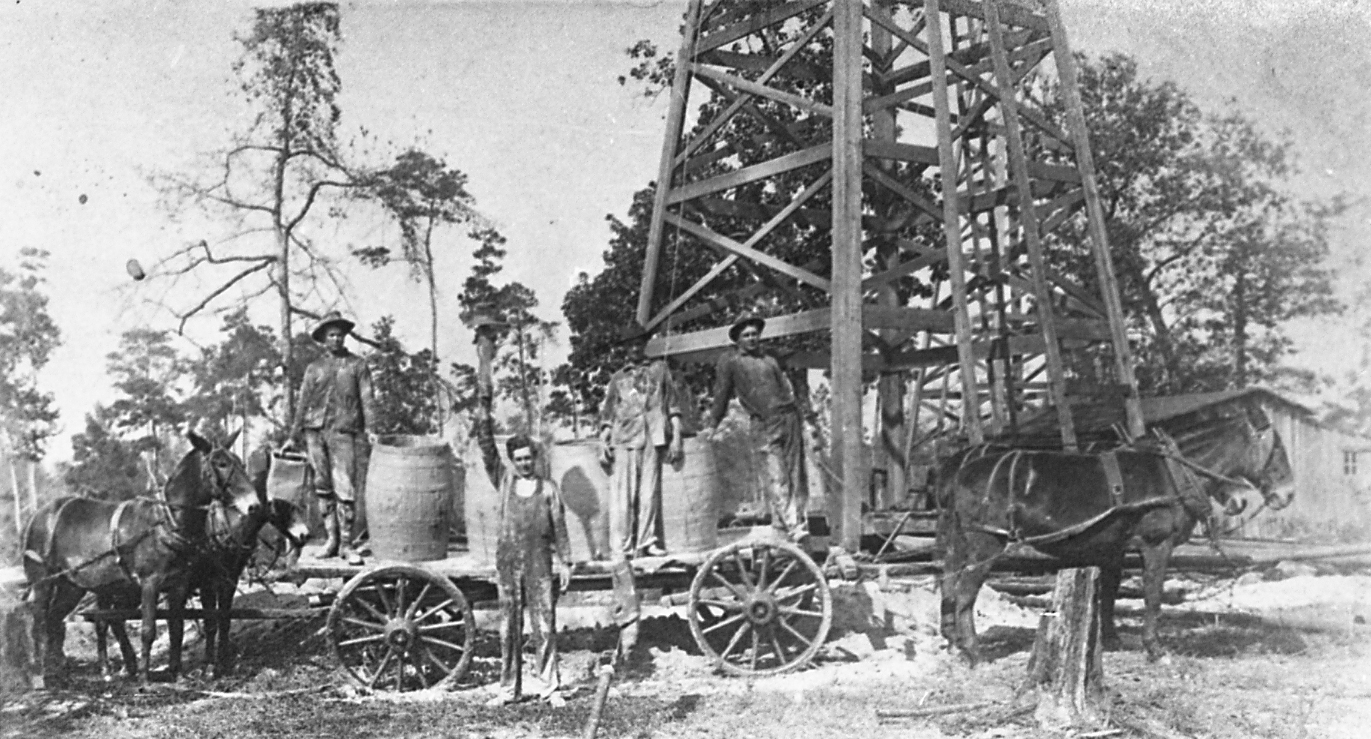
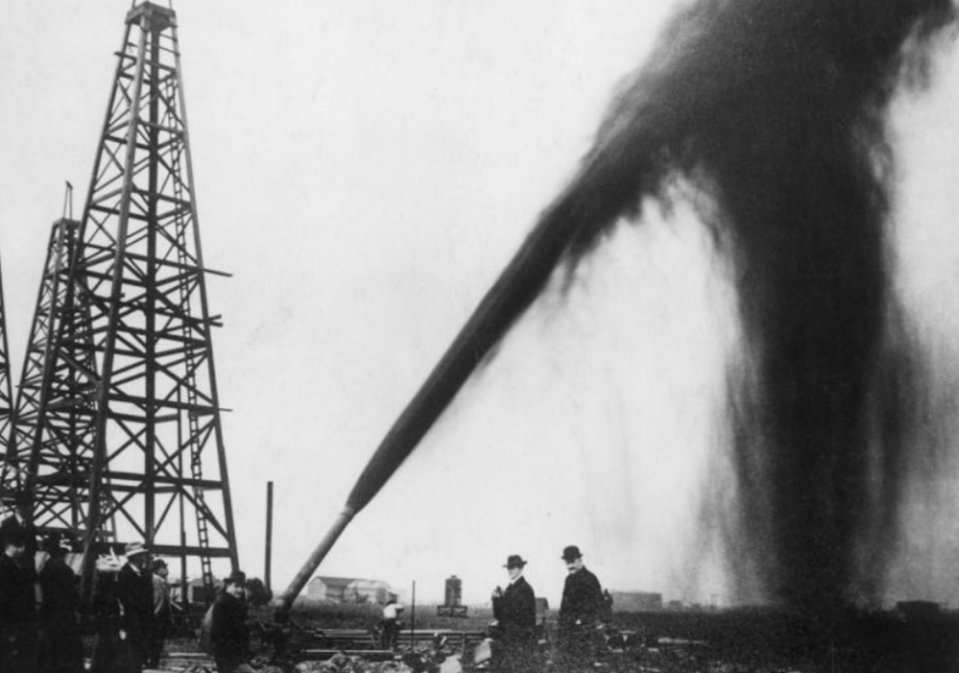
The oil frenzy did not bypass Houston. Geologists were commissioned by oil magnates to survey the region. The beginning of “black gold” extraction near Houston dates back to 1901. Explorer Anthony Lucas’s drilling crew was conducting a routine survey near Beaumont. An unassuming hill gave no hint of the future success. However, as the crew began drilling, a powerful stream of oil violently ejected all the drilling equipment. The fountain of black gold was so immense that the jet of oil shot up over 100 feet (30 meters) high. This caused frenetic activity across all of Texas. The news about the oil near Houston attracted worldwide attention. The oil discovery at Spindletop marked the beginning of the Texas oil boom. Oil workers, investors, and speculators began flocking to Houston en masse.
In an instant, Houston transformed from a sleepy provincial town into a bustling hive. Everyone was scrambling. Hotel owners urgently began renovating apartments for the newly arrived prospectors. Stores and restaurants sharply increased their orders for provisions. The port also started adapting to the large volumes required for oil transportation. The city came alive.
In 1908, Texaco, the largest oil company in Texas, relocated its headquarters to Houston. This move further solidified Houston’s role in the petroleum industry. It was more than just a symbolic act; relocating the headquarters brought new investments, expertise, and specialists to the city. The number of engineers, geologists, and oil executives in Houston surged. Following Texaco, other oil companies began opening offices in the city. This positively impacted Houston’s economy. The city’s landscape began to change, with new office buildings, banks, oil refineries, and other infrastructure emerging.
The Houston Ship Channel
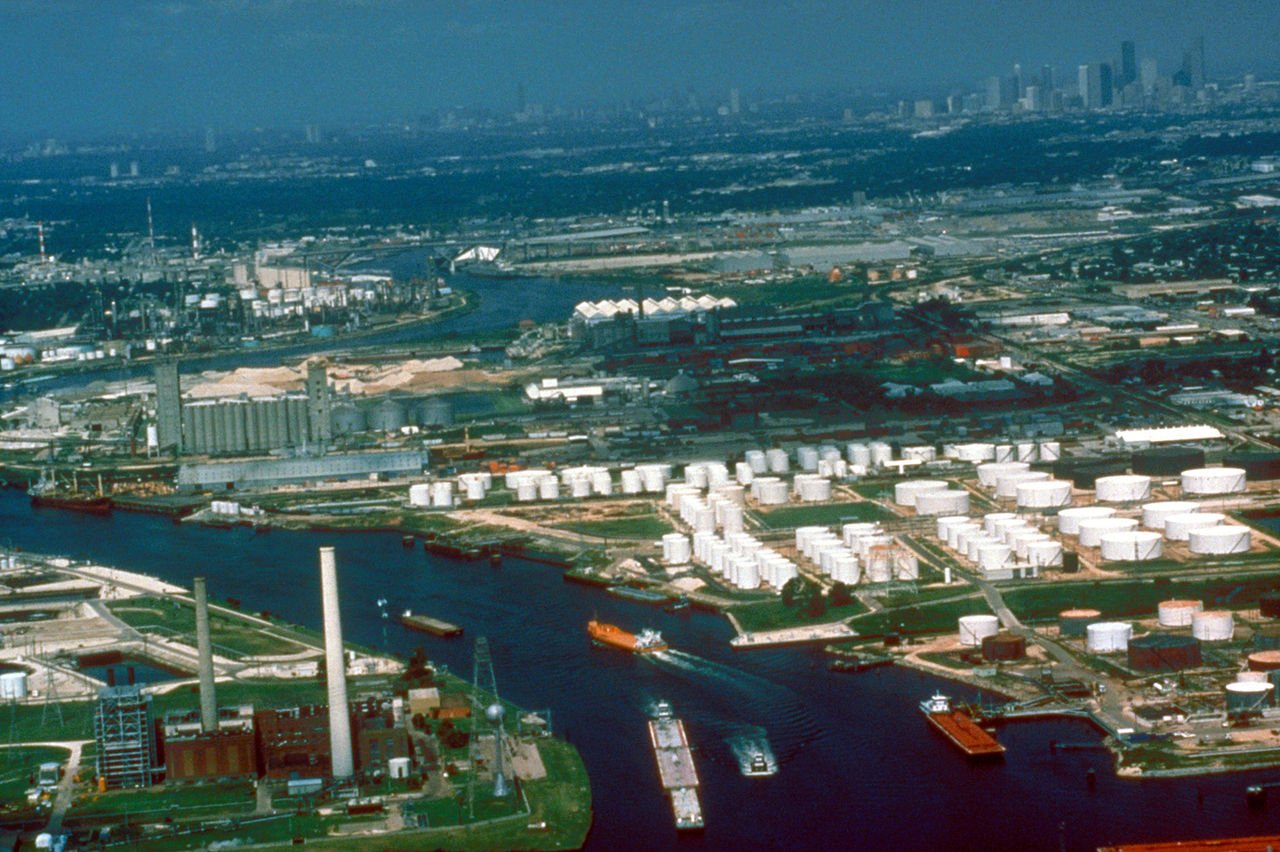
The oil was there, and the production exceeded all expectations, but the problem of transporting the product remained. Connection to the Gulf of Mexico via the Buffalo Bayou River simply could not meet the booming logistical demand. The issue was the shallow nature of the waterway. Small vessels couldn’t handle the sheer volume. Global demand for petroleum products was skyrocketing, and the logistics problem needed a quick fix. Water transport was the best option for this purpose, so the decision was made to deepen the channel. This required significant funds. Dredging of the channel began in 1914. The entire process lasted decades, but by the end of that same year, the first larger vessels were able to transport equipment and oil.
Over $17 million was spent on laying the Houston Ship Channel, a massive sum for that era. However, it was worth the effort and expense. The Ship Channel directly connected Houston’s industry to international markets.
The start of World War I significantly drove up demand for oil. Houston was perfectly positioned to meet the wartime needs.
Processing the Black Gold
The oil boom continued its ascent, and Houston developed new ambitions. The demand for petroleum products grew daily. Selling raw crude oil was profitable, but those who refined the black gold could reap far greater profits. Thus, the next step was to process oil into fuel oil and kerosene. To achieve this, a refinery was built in Baytown in 1920, owned by the Humble Oil and Refining Company.
The plant was innovative in many ways for its time. It boasted a processing capacity of 50,000 barrels of crude oil daily. The facility remains a major player in the oil market even in the 21st century. The company changed its name and is now known as ExxonMobil Baytown, a prominent international brand. Today, the refinery has a capacity of 584,000 barrels per day, making it the second-largest in the U.S.
Energy Capital of the World
Demand for oil continued to soar. In the 1970s, the world experienced the next wave of the oil boom. This was a time of geopolitical tension globally, and energy became a strategic element of the economy. Despite increased petroleum production, the U.S. faced fuel shortages, largely due to the Arab oil embargo. This embargo was imposed on the United States for supporting Israel during the Yom Kippur War, causing oil prices to spike dramatically.
Houston, with its vast reserves of black gold and expertise, became the center of the industry. It was during this period that the city earned the title Energy Capital of the World. New companies joined the oil extraction efforts. Favorable conditions, driven by high demand and flexible terms, allowed smaller players to solidify their positions. Houston saw an unprecedented surge in oil industry investment. Just one fact: from 1973 to 1985, Houston’s population grew by 40%, directly fueled by this second oil boom.
But every boom inevitably leads to a bust. For Houston, the oil frenzy ended in 1986. The cause was a halving of the price of oil, made possible by increased production from other countries, the collapse of the USSR, and various other factors.
Current Status
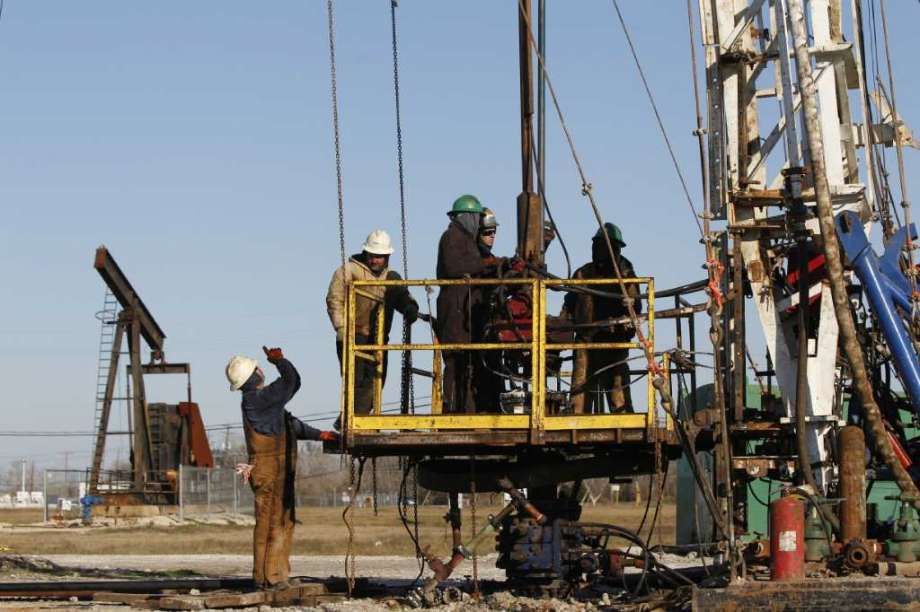
Despite the downturn in the oil sector, Houston has not lost its status as the Energy Capital of the World.
While the city has begun developing new energy sources, petroleum extraction continues to be economically vital for the region. In 2001, the city government established the Energy Corridor, a designated area in Houston. It stretches for 7 miles in the western part of the city and has become the center for various energy companies. Houston continues to be the primary base for the headquarters of energy giants.