

Before the 19th century, transmitting information over long distances was purely the stuff of science fiction. Yet, humanity managed to conquer this frontier. The development of telecommunications in Houston is a story of relentless progress, charting a path from the telegraph to satellite communication. The biggest leaps occurred in the second half of the 20th century, and the invention of mobile connectivity only accelerated this progress. We’ll take a retrospective look at the evolution of long-distance data transmission right here on houstoname.
Telegraph and Wired Telephone
The first reliable way to transmit information over distance became possible after Samuel Morse invented his device in 1844. This marvel of technology didn’t reach Texas until a decade later. Nevertheless, this new method of data transmission quickly spread across the state. The first telecommunications telegraph line in the region began operations on January 5, 1854. The development of the telegraph in the area was spearheaded by the Texas and Red River Telegraph Company, which opened its first office in Marshall. Critically, Houston gained telegraphic connection to the world that very same year.
However, the initial efforts were far from perfect. The company aimed to quickly connect as many cities in the state as possible, so wires were often strung directly over treetops. The light winds characteristic of Texas could easily disrupt data transmission. In many cases, telegraph operators had to close their offices and travel along the lines, looking for breaks. The construction of dedicated telegraph poles for reliable service began in 1856. According to archival data, the line between Houston and Galveston, which passed through Harrisburg, was the first permanent telegraph line and the first railway telegraph line in Texas. It was extended all the way to New Orleans in 1862.
This new form of communication became wildly popular. Investing in the telegraph was considered a guaranteed successful venture. By the 1870s, Texas alone had four telegraph companies. This competition hurt profits, leading to consolidation agreements. As a result, the Western Union Telegraph Company became the sole owner. It controlled 89 of the 105 telegraph lines across the entire United States, including over 1,500 miles of lines in Texas.
Anyone could use the telegraph service by visiting one of the offices found in every major town. The minimum cost for a telegram was 25 cents. The price could change based on several factors, primarily the number of words. If a message exceeded 10 words, an additional fee was charged. If the distance exceeded 25 miles, there was also a surcharge. However, the total cost never exceeded 75 cents. The expansion of telegraph lines was incredibly fast; by 1890, you could send a rapid telegram to practically any city in the US.
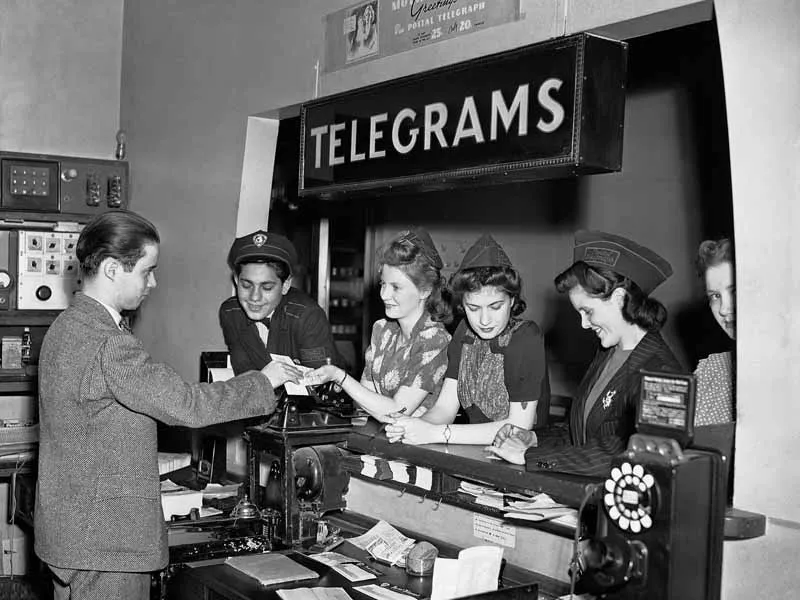
The telegraph boom only continued to grow into the new century. Statistical data shows that in 1949, 2,802 specialists worked in 1,828 offices across Texas. Western Union remained the only telegraph company in Texas. Its domestic success helped make it one of the most modern telecommunications companies in the world.
A breakthrough in data transmission methods occurred in 1960. The company established a subsidiary called Western Union Telex, which focused on direct, real-time transmission of information between subscribers. This teleprinter service could establish an automatic connection between users in just eight seconds, often faster. By 1967, this type of connection was available to all major Texas cities; Houston gained this capability in 1966. By the 1970s, Telex subscribers could direct-dial not only throughout the US but also to hundreds of cities worldwide.
But the capabilities of the telegraph didn’t stop there. With the later introduction of broadband communication, Western Union allowed subscribers to exchange data, fax, and voice communications using touch-tone phones. Dallas and Houston served as the primary switching centers for the company’s Telex and TWX telephone services.
The decline of the telegraph began in the 1990s. By that time, other forms of telecommunication had been implemented, gradually but steadily pushing the telegraph out of use.

Radio Takes the Airwaves
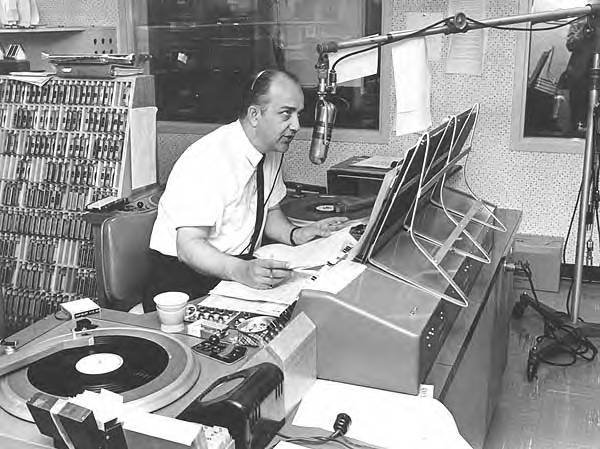
The next telecommunication wonder was radio. It was first broadcast in Texas in 1911 on the University of Texas campus, made possible by J. B. Dickinson, who built wireless equipment to train electrical engineering students. A little later, University of Texas physics professor S. Leroy Brown built radio equipment and began transmitting weather and crop reports from the physics lab. Slowly but surely, radio gained traction.
Radio arrived in Houston in 1919. James L. Autry organized a local amateur radio club. Initially, members of the club broadcast three times a week, sharing weather information and agricultural advice.
Houston’s first local radio station was WEV, which first aired a Sunday concert on May 21, 1922. In 1924, the Houston Post–Dispatch acquired the station and renamed it KPRC. The newly named station debuted in May 1925.
In 1928, Texas had 32 radio stations. By 1971, that number had surged to 392. With the advent of television, radio briefly lost some popularity, but it began to experience a resurgence in the 1990s. In 1993, Texas had 311 licensed AM and 420 FM radio stations.
In the 21st century, radio hasn’t lost its relevance. The number of radio stations in Houston remains high, and FM radio has become a vibrant part of the city’s culture, enjoyed by people from all walks of life.
Television
The next major leap in long-distance information transfer was television. In Houston, its history is inextricably linked with KPRC-TV. The station first aired on January 1, 1949, making it the second television company in Texas. From there, television developed rapidly. New stations emerged, offering diverse programming. Every age group could find something interesting to watch.
KUHT-TV was the country’s first public television station, debuting on May 25, 1953. The company’s innovation included offering the world’s first distance learning program, which broadcast recorded lectures from local universities.
Television reached a new level with the introduction of cable. Picture quality became significantly better, and the variety and number of programs increased. By the end of the century, television gained the ability to broadcast via satellites. Today, in the 21st century, television still maintains a strong following.

The Internet Age
The newest form of telecommunication arrived in Houston in the early 1990s. The internet quickly dominated the city faster than any other method of information transfer. The concept of the internet itself changed at the speed of light. By the 2000s, data transmission was handled by broadband internet. Later, Wi-Fi, 4G, LTE standards, and cloud technologies became widely available.
As a center for the oil and gas industry, Houston was an early adopter of the internet for data exchange and production management. The Space Center also played a vital role in developing telecommunication technologies that influenced internet growth. The center also contributed to the development of satellite communications.
In Summary
Houston has never lagged behind in adopting the latest telecommunications. Throughout its century-long history of developing long-distance data transmission, the city has kept pace with progress. It is safe to assume that human innovation in this field will continue, and as a high-tech city with advanced scientific and space programs, Houston will remain a major player in future innovations.