

Houston is a multifaceted city, yet despite its diversity, it holds several established, symbolic titles. It’s the energy capital of the world and home to the Texas Medical Center, one of the largest medical complexes globally. But Houston is arguably most famous for the Lyndon B. Johnson Space Center (JSC), the heart of NASA’s human spaceflight programs. It’s no surprise that countless breakthroughs have been made at this space center. Let’s delve into these key developments, covered next on houstoname.com.
The Apollo Program
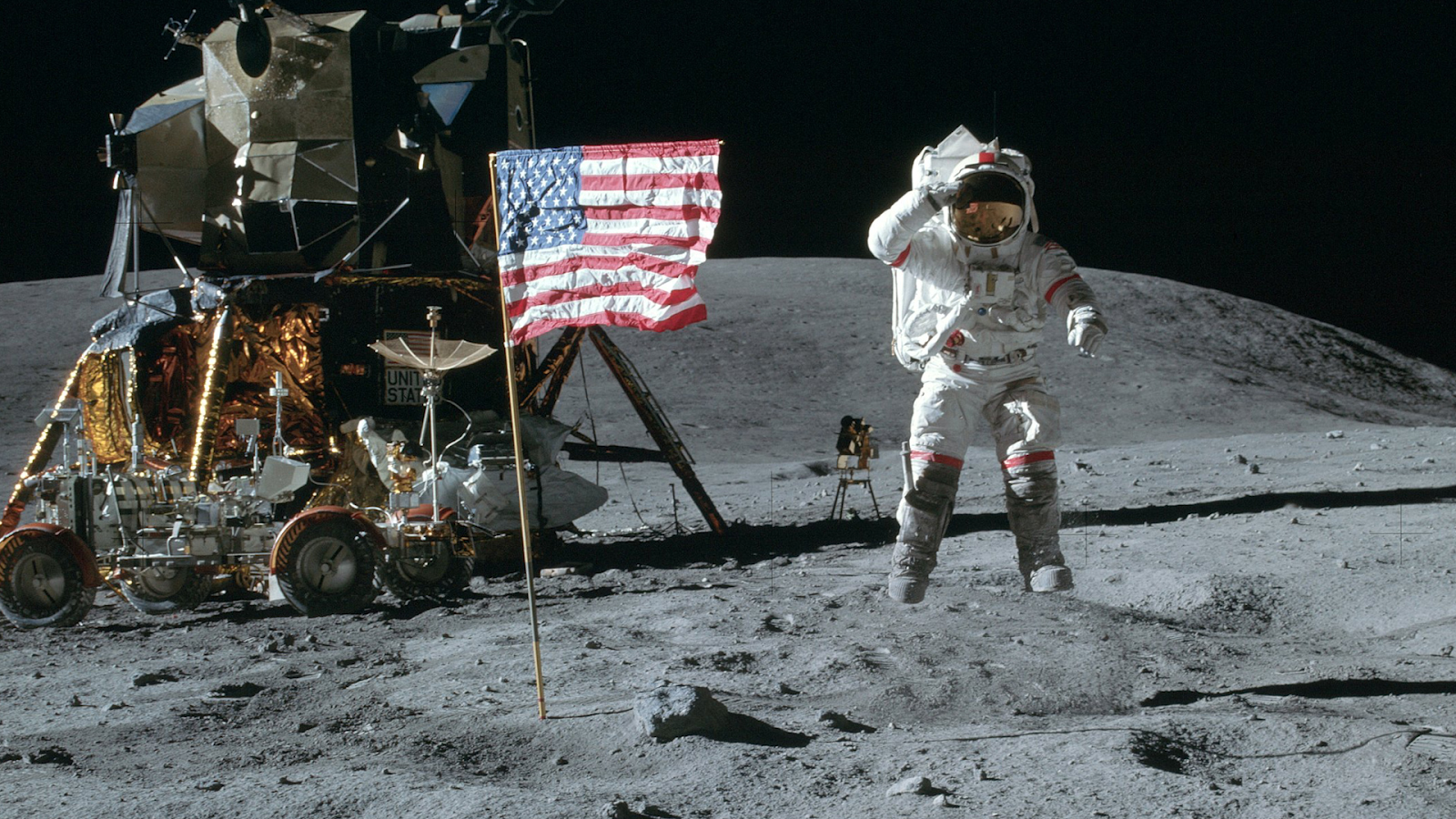
Human spaceflight was long humanity’s dream, yet it once seemed unattainable. Houston scientists, under the umbrella of NASA, took on the challenge, beginning work on the Apollo Program in 1961. The ultimate goal of the project was to land a human on the Moon and retrieve soil samples from Earth’s satellite.
This was not the first space program of its kind; prior to this, NASA had developed the Mercury and Gemini projects. The task was monumental. It took a full seven years to realize the dream of controlled spaceflight—with a person aboard. The program became one of the most expensive ever conducted by NASA, estimated at $25.4 billion USD in 1973 prices. Adjusted to 2025 prices, that sum would be approximately $182 billion. However, the accomplishments stemming from the mission proved well worth the expense.
- The first crewed flight was on October 11, 1968 (“Apollo 7”).
- The first human landing on the Moon was on July 20, 1969 (“Apollo 11”).
- The last Moon landing to date was on December 11, 1972 (“Apollo 17”).
- The Apollo Program officially concluded in 1975.
All of this was made possible by the titanic effort of specialists across many fields, with the bulk of the work conducted right in Houston. As a result of the program, six astronauts were able to walk on the Moon. A total of 382 kilograms (842 pounds) of lunar soil samples were brought back to Earth. The mission led to the development of key algorithms and technologies necessary for all future crewed space missions.
The Space Shuttle Program
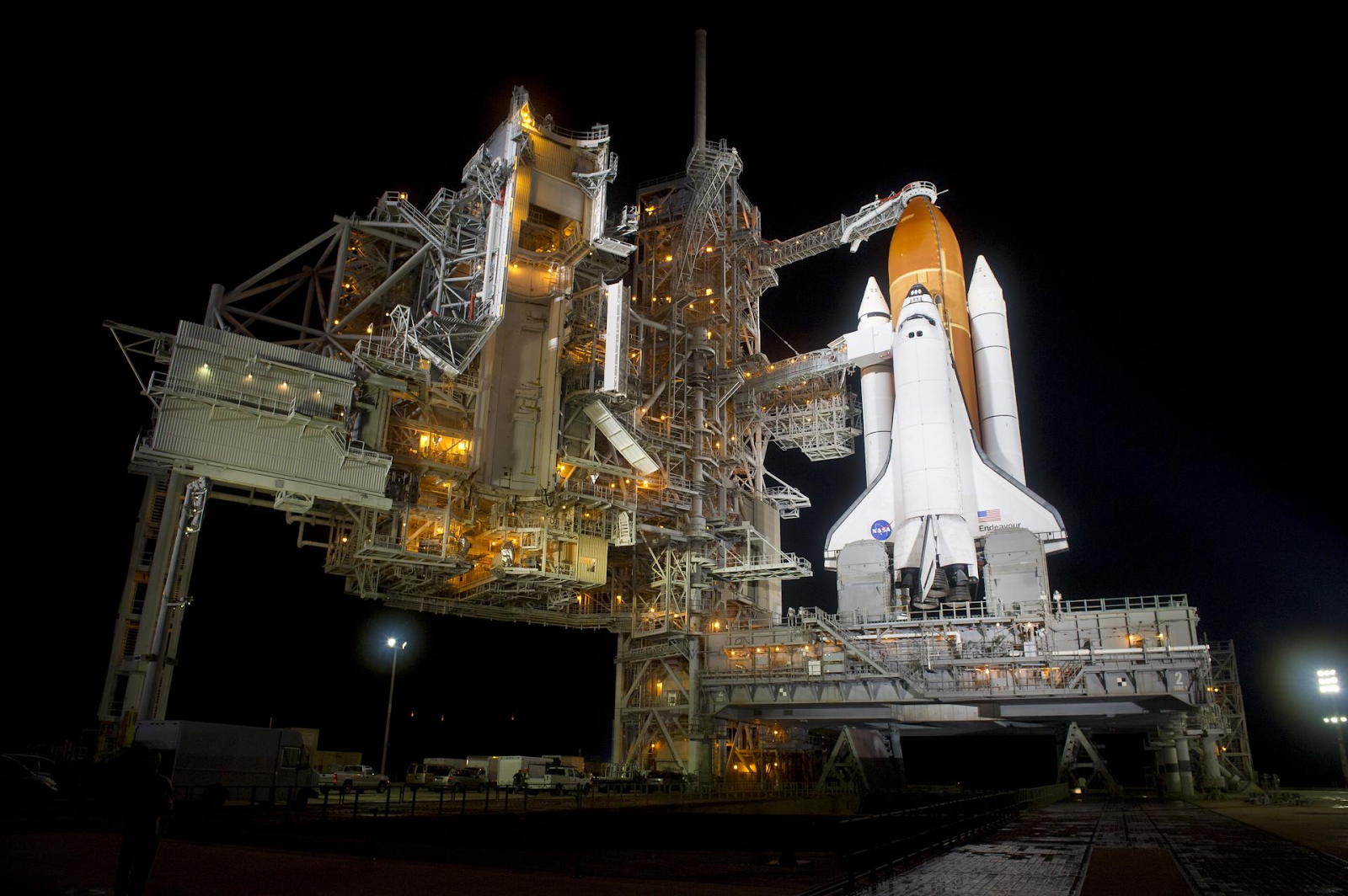
After flying into space and landing on the Moon, humanity’s ambitions didn’t just end—they grew exponentially. The Space Shuttle Program became one of NASA’s most ambitious initiatives, running from 1972 to 2011. The main goal was to create a reusable spacecraft capable of regular flights to Earth’s orbit and back. The shuttle was intended to ferry cargo and astronauts. The Johnson Space Center in Houston eagerly took on this task.
It took almost 10 years to develop the first shuttle. The reusable space plane consisted of the orbiter itself, a large external fuel tank, and two solid rocket boosters. The first successful launch of the Shuttle “Columbia” took place on April 12, 1981.
Key facts about the Shuttle Program:
- A total of 135 missions were flown during the program’s lifetime.
- Shuttles were instrumental in the creation and development of the International Space Station (ISS).
- The Shuttles deployed and serviced the Hubble Space Telescope.
- The program was marred by two major tragedies: the “Challenger” explosion immediately after launch in 1986, and the “Columbia” breakup during re-entry in 2003.
- Five operational shuttles were manufactured during the mission’s existence.
- The launch of the Shuttle “Atlantis” on July 8, 2011, marked the final flight of the Space Shuttle Program.
Despite the great tragedies, the Shuttle Program laid the groundwork for future space research. The mission allowed cosmologists to determine optimal parameters for modern spacecraft designs.
Managing the International Space Station
Sending astronauts into space was a huge breakthrough for humanity. But to truly explore the cosmos, a permanent orbital presence was required. To this end, five space agencies from the U.S., Japan, Europe, Russia, and Canada collaboratively created the ISS. Construction of the station began in 1998 and was completed in 2011.
Here are some key facts about the ISS:
- The station is the largest artificial object in Earth’s orbit.
- It orbits at an altitude of approximately 400 km (250 miles) above our planet’s surface.
- The ISS is used to conduct scientific research in space that is impossible to perform on Earth.
- A crew of astronauts permanently lives aboard the ISS.
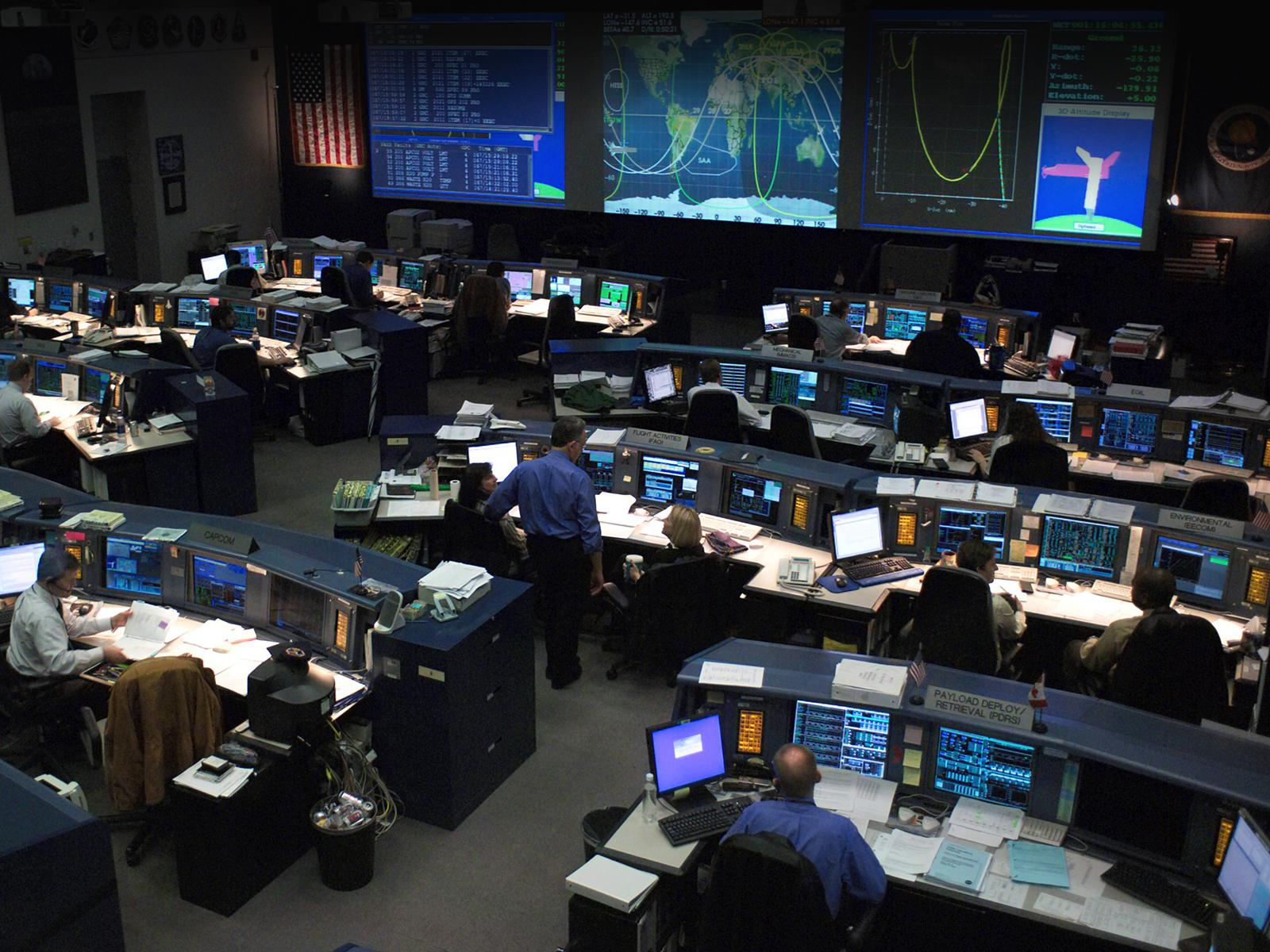
The space station is simply irreplaceable for comprehensive space research. The Mission Control Center for the ISS is located in Houston. It is from here that all astronaut activities are managed, controlled, and coordinated. Technologies for long-duration human space residence are developed here, alongside research that constantly expands our understanding of the Universe.
Aerospace Industry
More than 350 companies operate in Houston, developing new technologies for the conquest of space. Houston scientists develop life support systems for spaceflights. For long-term stays, every detail must be considered, from supplying astronauts with oxygen and food to designing how they take a shower in zero gravity. Most of these crucial systems are planned and implemented at the Johnson Space Center in Houston.
Houston researchers also work on space robotics. This is an important field of study, as robots are employed for repairs and research in open space to avoid risking astronauts’ lives.
To preserve and transmit collected data to Earth in high quality, reliable telemetry systems are essential. Researchers in Houston have been highly successful in developing these systems.
Durable and reliable suits are required for astronauts’ safe sojourns in open space. The materials for these, too, were developed in Houston. NASA spacesuits, including those currently used on the ISS, are a source of pride for the Space Center.
Interestingly, space industry developments often find necessary applications right here on Earth. Through research and testing, space scientists frequently invent useful items not only for specific space objectives. They find application in medicine, materials science, communications, and other fields, improving our lives down here.

Technologies for Mars Exploration
In the 2020s, Mars has become the most promising object for space exploration. Several robotic rovers have already been launched, studying our neighbor from various angles. But humanity wants to visit, and even more ambitiously, technologies for colonizing Mars are being developed. Research and development of technologies for such future missions are underway in Houston.
The Orion Spacecraft
The most ambitious NASA project currently underway in Houston is the development of the Orion spacecraft. To be able to conduct deep space exploration, a new vehicle is needed. It is with this goal in mind that the Houston Space Center has been working for several years on the creation of Orion. It is designed to resemble the interstellar craft found in science fiction movies. While it might seem unrealistic now, work on its creation continues actively.
It’s no accident that NASA has a poster featuring a bee. Beneath it is the caption: “Aerodynamically, the bee’s body is not fit to fly, but it’s a good thing the bee doesn’t know it.” There are no horizons for dreams. The rest is just a matter of technique and time. Houston’s scientists continue to work on these cosmic ambitions.