

For Houston, as for most major cities globally, managing trash remains a persistent and pressing problem that’s been begging for a solution. Yet, serious collective thought about this issue has only emerged relatively recently. Statistics show that in 2023, Houston’s recycling rate stood at a mere 18% of the total volume. That’s a very small fraction; city services were forced to haul the rest to landfills, and some material was incinerated. The complexity of solving this challenge only grows each year. Let’s dive into the prospects for waste disposal and recycling in Houston, right here on houstoname.
The Trash Challenge
The Solid Waste Management Department in Houston released the following data for 2023: Residents toss out over 500,000 tons of waste annually. Only 90,000 tons of that trash are sorted and recycled, which, ironically, represents the best metric in all previous years. This modest improvement is linked to greater public education efforts. More Houstonians have become aware of the harm caused by thoughtless waste disposal—nobody wants to live in a giant garbage dump. However, these figures clearly indicate a long road ahead. According to the head of the Solid Waste Management Department, Houston has only just embarked on its recycling journey. There is still much work to be done, but the initial steps have been taken. For now, the city operates a single sorting facility.
A Forward-Looking Plan for Recycling
Not all waste can be recycled, so imagining a future completely free of trash is unrealistic—it will always exist as long as humanity does. But everyone needs to approach this problem responsibly. The first shift must come from product manufacturers, who should rethink the packaging materials they use. For example, not all plastics are suitable for secondary processing, making material choice the first step toward reducing overall waste.
The next crucial step involves responsible action from Houston authorities. Their primary task must be to conduct public awareness campaigns across all demographics. A culture of responsible consumption needs to become second nature for all Houstonians. They should introduce an incentive system for responsible residents and, conversely, implement a fine structure for offenders.
Furthermore, the city needs to ensure an adequate number of drop-off and recycling locations and guarantee the timely collection of accumulated waste. They must also plan and develop more processing plants; currently, only one full-fledged Material Recovery Facility operates in Houston. Finally, the city must design an effective system for safely disposing of unrecyclable trash, ensuring the process minimizes environmental harm.
Ultimately, every city resident must grasp the scale of the problem and actively work to reduce their personal waste footprint.
How the Sorting Process Works
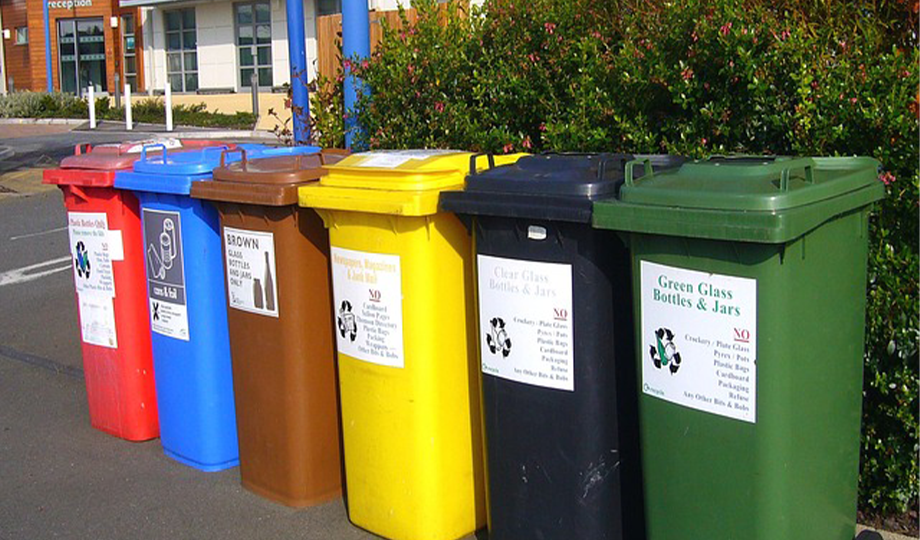
According to the head of the Solid Waste Management Department, Houston only has one operating sorting facility in 2025. All waste from Houston’s green curbside bins ends up there. Despite information posted on all public stands detailing what can be recycled, residents—whether deliberately or accidentally—toss in everything from bed sheets to bicycles. Fully 37% of everything thrown out by Houstonians is actually non-recyclable trash. The official noted that currently, the facility only accepts four types of materials for secondary recycling: paper, plastic, glass, and metal cans. But everything in those containers comes to the plant. This “junk” often includes many problematic items. Our guide recalled finding garden hoses, animal carcasses, and even an AR-15 rifle one time.
Initial Sorting
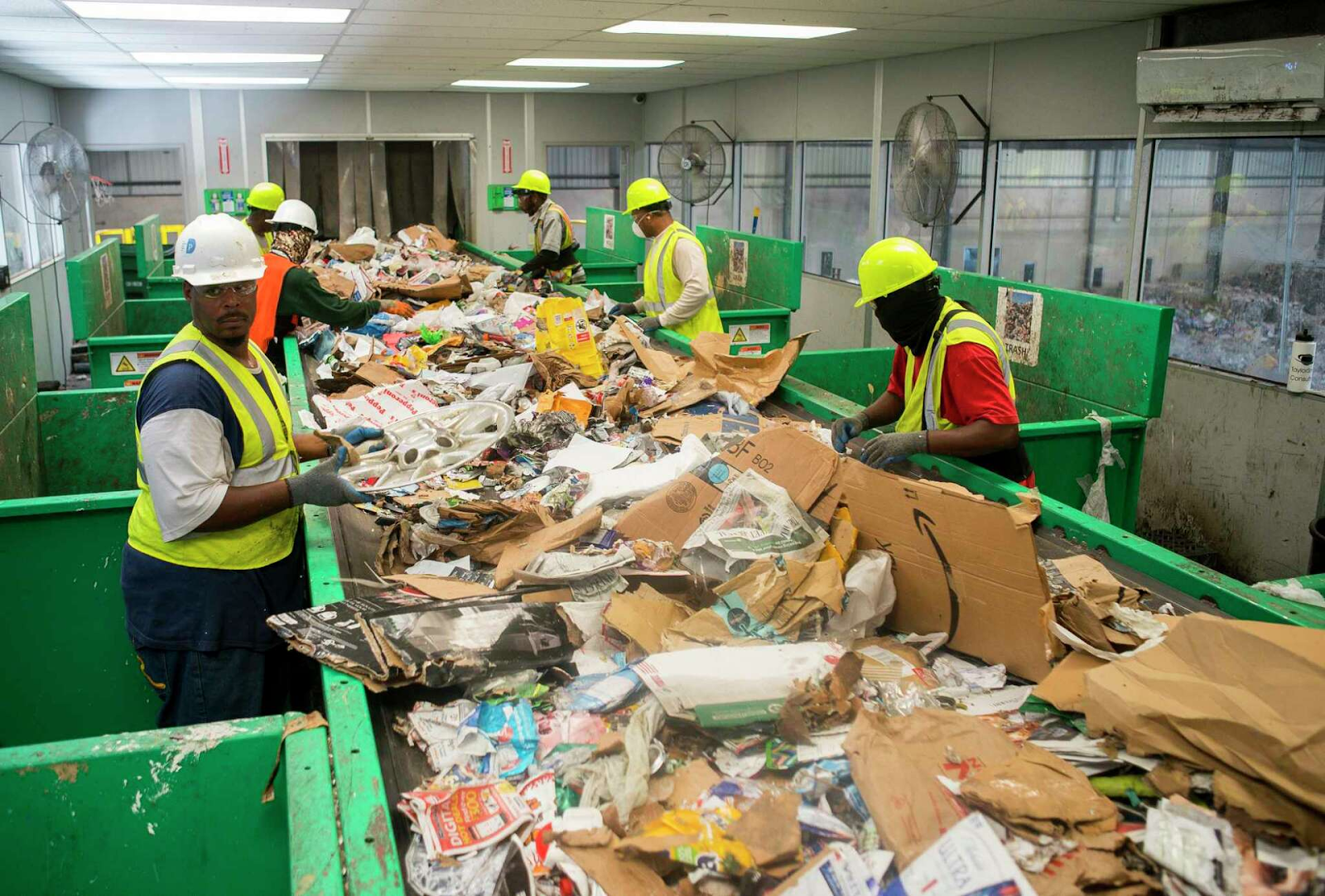
After collection, the trash is delivered to the facility in northeast Houston, operated by FCC Environmental Services. Trucks unload the material into a special bunker, from which the waste travels by conveyor belt into a large hall. Here, workers manually sort the trash. They first pull out three main categories of non-recyclable items. These include bulky metals, such as engine parts, wheel rims, or bicycle frames. The second category consists of rigid plastics, used for things like buckets and laundry baskets. The third is “tanglers”—anything tangled or bound, like measuring tape, string lights, or extension cords. The conveyor belt moves at 45 miles per hour. Workers jokingly report that the constant rotation and the less-than-pleasant odors can be dizzying. This initial sorting is done using peripheral vision: see it, snatch it, set it aside.
Meticulous Separation
Next, the material is sorted by size, passing through special screens. In the first section, air pumps lift paper items upward, while glass falls to the bottom. From the remaining material, a powerful magnet pulls out metal cans. Plastic and other residual waste that somehow missed the initial selection remain on the conveyor. Workers then get back to work, sorting the remaining materials. The entire process of sorting and separation takes no more than 20 minutes—a testament to the incredible speed of the sorters.
Baling
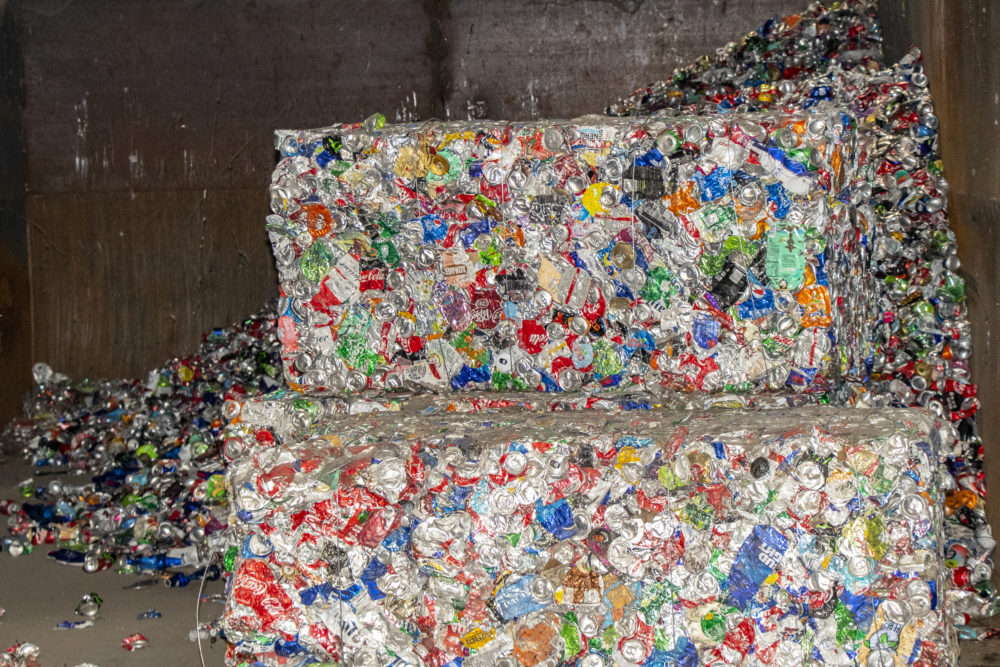
After the meticulous sorting, these four types of recyclables move to the next level. Each type passes through a specialized press where the material is maximally compressed into bales. At the final stage, the bales are inspected one last time to ensure no extraneous material accidentally ended up in the block. These stray items, such as plastic bags, cause considerable headaches for plant workers. The bales are only approved for further processing if they have a contamination level of less than 3%.
Delivery to Processing Facilities
The sorted, cleaned, and baled materials are then transported to their respective destinations for further processing. Each type of waste is recycled at different plants.
Second Life
Paper recycling works as follows: The paper is soaked in water to separate the fibers. The resulting pulp is then cleaned of contaminants. The purified pulp is pressed and dried. After this preparatory process, the material is used to manufacture new paper products such as cardboard, newsprint, and toilet paper.
The situation is more complex with plastic. It requires additional, highly meticulous sorting. There are five main types of plastic, and not all of them can be reused. Mixing them is strictly forbidden. The sorted material is shredded into small pellets. New products are melted and molded from these pellets, though they are usually prohibited from use with foodstuffs. Typically, recycled plastic is used to manufacture pipes or containers.
The situation with metal cans is similar. They are washed, shredded, and then melted down. The resulting aluminum is used to manufacture the same beverage containers. Tin cans are sent to steel mills.
Glass is sorted by color and also crushed. This crushed glass, or cullet, will later be melted and formed into new products.
The Bottom Line
As is clear, this process is laborious and energy-intensive. Yet, there is currently no other viable way to avoid a trash collapse. Therefore, Houston residents are becoming increasingly active each year in sorting their trash and taking a responsible approach to recycling. The city government is also actively partnering with companies ready to commit to this essential work.