

Houston is a city where summer temperatures frequently soar past 104°F (+40°C), and the crushing humidity makes the air feel as thick as soup. In weather like this, air conditioning in skyscrapers isn’t a matter of comfort—it’s a matter of survival.
Instead of crowding the roof or basement of every individual office tower with massive, noisy, and energy-guzzling AC units, Downtown Houston relies on an elegant engineering solution: District Cooling. Managed by CenTrio, this sprawling network chills over 18 million square feet (1.7 million square meters) of prime real estate, including the iconic Daikin Park stadium and the historic Niels Esperson buildings.
Let’s dive in with houstoname.com to see how this giant urban “refrigerator” actually works.
The Heart of the System: The Central Plant
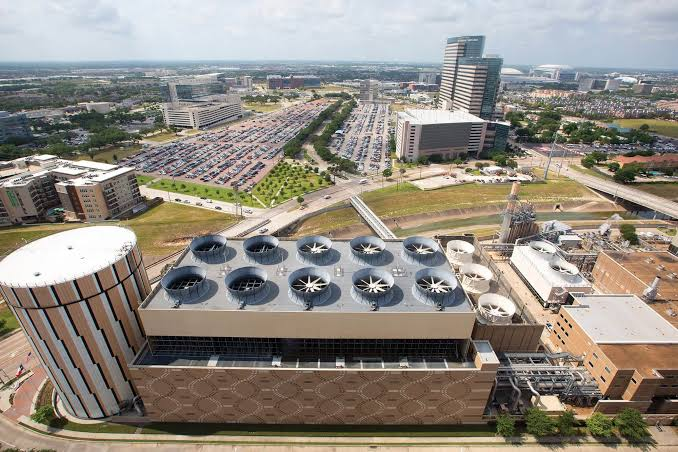
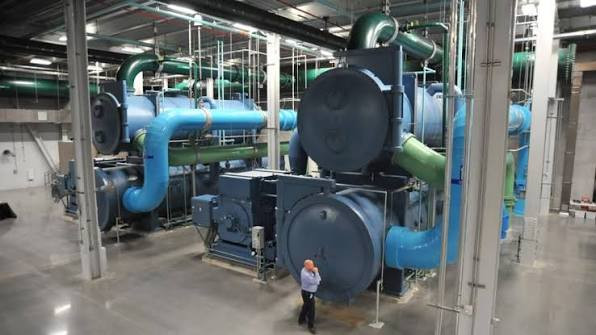
In a traditional setup, every building generates its own cold air. With District Cooling, everything starts at a high-capacity central plant. This facility houses massive industrial chillers that cool water down to about 39°F–43°F (+4°C… +6°C).
Centralization offers a massive advantage: heavy-duty industrial machines are far more efficient than hundreds of smaller, localized AC units. On top of that, maintaining a single consolidated facility is significantly easier and cheaper.
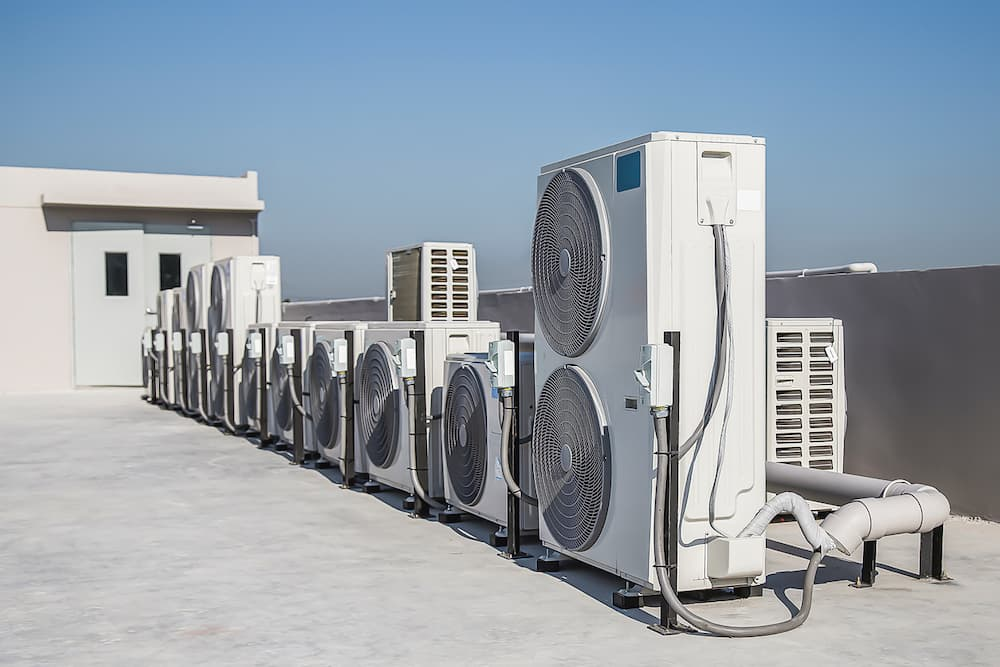
Shifting from decentralized cooling to large-scale, industrial-grade cold production transforms more than just commercial real estate economics—it reshapes the architectural skyline. Clearing roofs and facades of hundreds of compressors and cooling towers frees up valuable square footage for better uses, while eliminating a constant source of noise and localized heat emissions. The scalability of central plants also allows operators to dynamically balance the city’s power grid, shifting the heaviest energy-consuming processes to nighttime hours when electricity rates hit rock bottom and cooling efficiency peaks due to lower outdoor temperatures.
Ultimately, the Central Plant concept introduces new sustainability standards for entire metropolises. Operating a few ultra-powerful units allows for closed-loop, high-tech systems and safer refrigerants managed under the strict supervision of professional engineers. It’s not just about cutting utility bills; it’s a transition to a seamless, energy-efficient infrastructure where cooling becomes as accessible and invisible as running water or electricity.
Underground Arteries: The Pipeline Network
Chilled water from the central plant is pumped under high pressure through a closed loop of insulated underground pipes. In Houston, this subterranean network stretches over 6.5 miles (10 kilometers) beneath the business district. The water flows under city streets directly to the foundations of skyscrapers. After absorbing heat from the buildings, the water—now warmed to about 54°F–57°F (+12°C… +14°C)—returns to the central plant through a parallel return pipe to be chilled all over again.
The success of this underground logistics network and its ability to seamlessly power giant corporate hubs relies on three fundamental engineering pillars:
- Extreme Thermal Insulation. Advanced, multi-layered coatings on the main pipelines minimize heat exchange with the surrounding environment. This allows icy water to travel miles beneath the scorching Texas soil without losing a single degree of efficiency.
- Hydraulic Loop Stability. Operating the system under constant high pressure in a closed loop delivers the coolant directly to heat exchangers at any height. This significantly cuts down on circulation energy costs compared to open engineering systems.
- Protection and Autonomy. Burying the infrastructure deep underground completely shields it from destructive weather events like hurricanes or severe gales. This guarantees that climate control systems keep running even during major emergencies on the surface.
These hidden arteries essentially act as a thermal buffer for the entire downtown core. Designing and laying these networks requires pinpoint precision from engineers, as massive pipelines must be threaded through existing underground infrastructure—alongside fiber optics, power grids, and traditional water mains—all without disrupting daily operations.
Beyond pure logistics, this two-pipe setup dramatically improves the city’s microclimate. Instead of dumping excess heat into the streets via local compressors and worsening the “urban heat island effect,” skyscrapers transfer their heat into the water network. The water then safely carries that energy back to the central hub for high-efficiency disposal or recovery.
“Ice Batteries”: A Lifeline for the Texas Power Grid
The Texas power grid (ERCOT) is notorious for straining under the weight of summer heat waves when everyone turns on their AC at the same time. To prevent grid overloads and save millions of dollars, Houston’s district cooling systems utilize Thermal Energy Storage (TES)—often called “ice batteries.”
This energy balancing and resource redistribution process runs on a tightly coordinated daily cycle:
- Nighttime Storage. When the outside air cools down and commercial electricity rates drop to their lowest, the central plant goes into overdrive. It freezes massive reservoirs of water, turning them into ice and locking in cheap energy.
- Daytime Relief. During peak heat, when the city’s electricity demand skyrockets, the chillers are throttled down or turned off completely. The system switches over to the storage tanks: warm water from the underground loop passes through the melting ice, instantly cooling before being pumped out to the skyscrapers.
- Shaving Peak Demand. By taking the heaviest industrial units offline during the hottest hours of the day, the system seamlessly takes dozens of megawatts of pressure off the municipal power grid when it needs it most.
This technology elevates the centralized cooling plant into a powerful regulator for the regional energy market. Effectively, “ice batteries” serve as giant, non-chemical batteries that buy up excess nighttime power and release it during the day as a ready-to-use climate resource.
From an engineering perspective, thermal storage systems boast a much longer lifespan and a cleaner environmental footprint than standard lithium-ion batteries. They don’t lose capacity after thousands of cycles, require no toxic disposal, and experience virtually zero wear and tear.
Space and Economics: What Do Skyscrapers Gain?
Adopting district cooling fundamentally alters both the architecture and the economics of high-rises.
| What District Cooling Brings to a Skyscraper | The Benefits |
| Massive Space Savings | Roofs are cleared of bulky cooling towers, opening up prime space for penthouses, pools, green terraces, or solar arrays. Mechanical floors can be scaled down. |
| 99.99% Reliability | If a traditional building’s chiller breaks down, the entire office bakes. In a centralized setup, redundant backup compressors at the plant ensure uninterrupted service. |
| Zero Noise and Vibration | The top floors are free from the hum of giant commercial fans, driving up the rental value of premium upper-level spaces. |
| Lower Capital Expenditure | Developers don’t need to purchase expensive, heavy cooling equipment during construction—they can simply plug into the “chilled outlet.” |
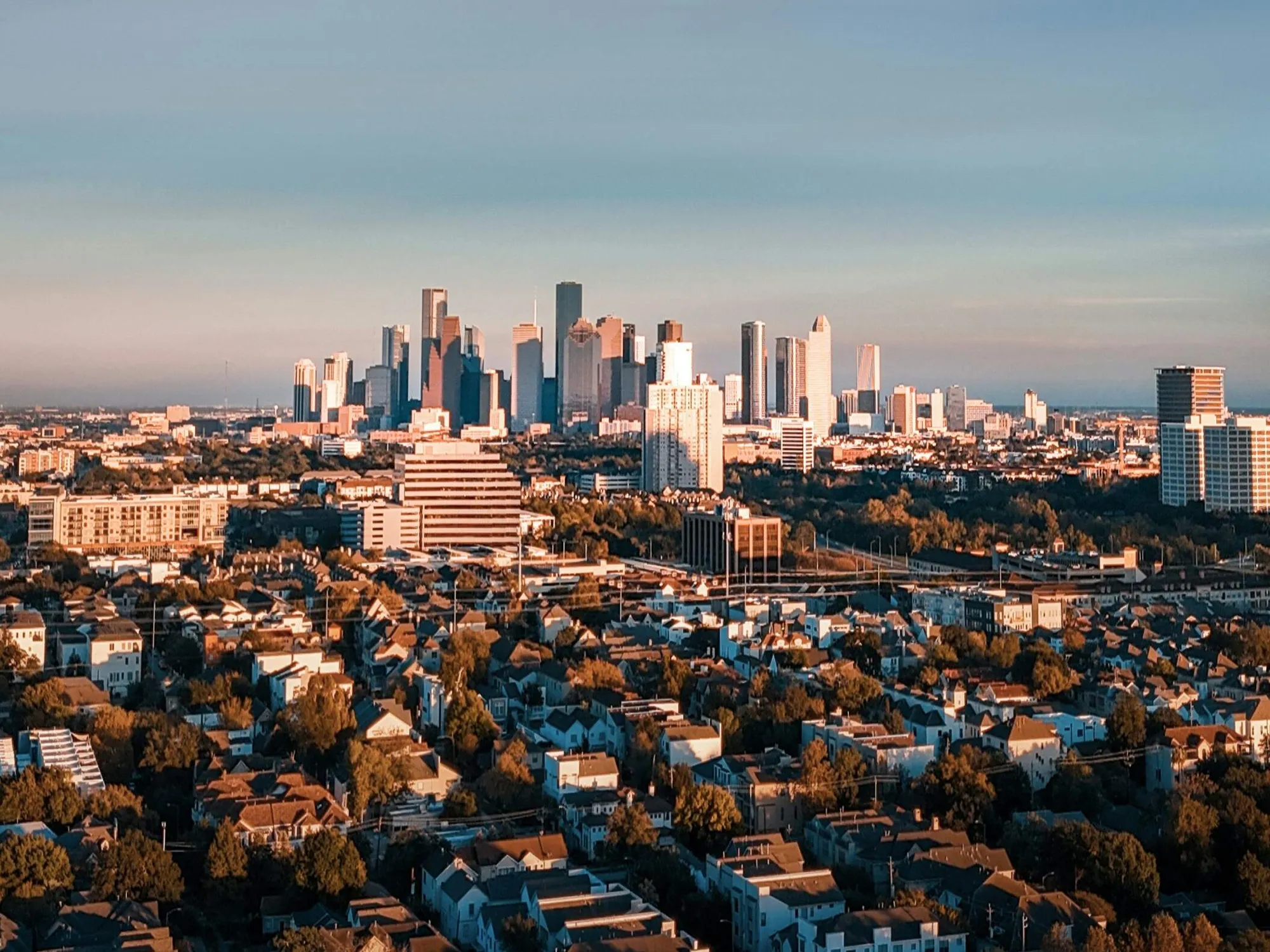
District cooling effectively links Houston’s skyscrapers into a single, synchronized thermodynamic organism—one that keeps the city cool and comfortable even when the Texas sun is trying to melt the asphalt.
