

The United States has spent more than a century building a world-class fishery, with some unintended consequences. Unregulated fishing reached such a scale that in 1874, Texas restricted the coastal use of nets and meshes. In addition, lawmakers banned the use of poison to catch fish. For the first time in its history, the state intervened in the complex matter of regulating fish populations. But later, it became clear that the restrictions did not improve the situation. The reservoirs turned into fishing anarchy. Read more about the history of Texas fishing at houstoname.
Import of fish from Europe
The first settlers of Texas built their homes mostly along rivers, where they caught countless fish with reckless efficiency. As the population grew, Texans became more and more dependent on catfish, crappie and other fish species that formed the basis of their diet.
In the 1870s, more than 100 species of fish and shellfish were imported to Texas, more than half of them by state or federal agencies. Imports changed the state’s freshwater fisheries forever.
In 1879, a brand new position, the Texas Fish Commissioner, founded a hatchery in the Barton Springs Basin in Austin. Here they began to breed and raise fish imported from Europe and sell them as “German carp.” The commissioner was happy to share the carp with landowners to distribute them in private ponds and then transport them to the state’s rivers.
Restrictive measures
In 1879, the Texas Parks and Wildlife Department created the Fisheries Division called the Texas Fish Commission. The main responsibilities of the department were to protect and manage the state’s water resources. In the same year, legislators ordered the construction of fish passage structures over dams and the Fish Commission was to enforce the law. These are hydraulic structures that pass or move fish over dams to spawning grounds, where females lay eggs.
In 1881, the state’s first fish hatchery, Barton Springs, was built to breed the then-popular German carp. Four years later, the Texas Fish Commission was abolished due to public opposition, which advocated for stricter game protection laws.
By 1887, fishing in the Gulf of Mexico was restricted due to the alleged destruction of eggs by nets, and in 1895, the Texas Fish and Oyster Commission was established. Two years later, Texas lawmakers banned the use of poison, lime, or explosives for fishing in public waters. 10 years later, the Fish and Oyster Commission was joined by the Game Commission. It was created on the condition that the department could sell enough licenses to pay for its operation.
Numerous innovations
In 1911, the Game, Fish and Oyster Commission managed shells, marl (rock) and sand. Thanks to the sale of shells and sand in Dallas, they were able to build a new fish factory in 1913.
In 1919, the entire state was patrolled by only 6 game wardens and the allocation for oyster farming was $15,000. In the mid-1920s, another state fish hatchery appeared and over the next 25 years, 10 more were built, serving both fresh and saltwater.
In 1937, the Coastal Division was added to the Commission. In 1948, a marine laboratory was opened in Rockport. Five years later, marine fish were moved from saltwater to freshwater for the first time in the state.
In 1957, sea fishermen were first licensed. The fee for fishing then was $2.15. At the same time, a nationwide study of water quality was launched to combat pollution, and a year later, an artificial reef for lucians (bass-like fish) was created in Port Aransas.
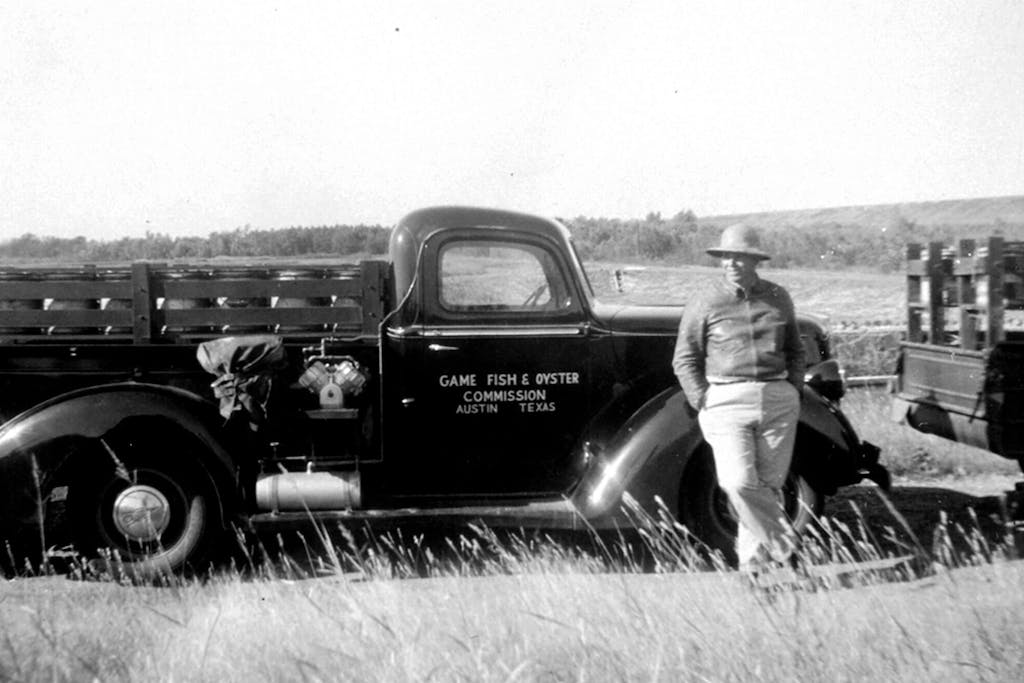
Austin Fish Hatchery, ca. 1950.
In 1959, the Shrimp Conservation Act was passed in Texas, and the following year, the marine fish were successfully transplanted from the Gulf of Mexico to Imperial Reservoir in Pecos County.
New species of fish
In 1961, Texas created the Game and Fish Commission, which consisted of 9 members, an executive secretary, a headquarters in Austin and 5 regional headquarters. Two years later, the Texas Parks Board was merged with this Commission to form the Texas Parks and Wildlife Department, with a 3-member commission. In 1968, the Legislature established the Seafood Marketing Program to educate consumers about the state’s seafood.
In the 1970s, the most famous breakthrough in the Texas fish breeding program occurred when the state introduced the Florida largemouth bass, which is impressive in size. The arrival of this species boosted the local bass population to a stunning effect: in 1986-1992, 6 Florida largemouth bass were caught in Fork Lake, a 60-year record. Since then, the Texas Parks and Wildlife Department has brought Florida bass every year, although the catch left much to be desired. The reason lies in the natural features of the state. It takes many years for Florida bass to adapt to the warm winters of the sunshine state.
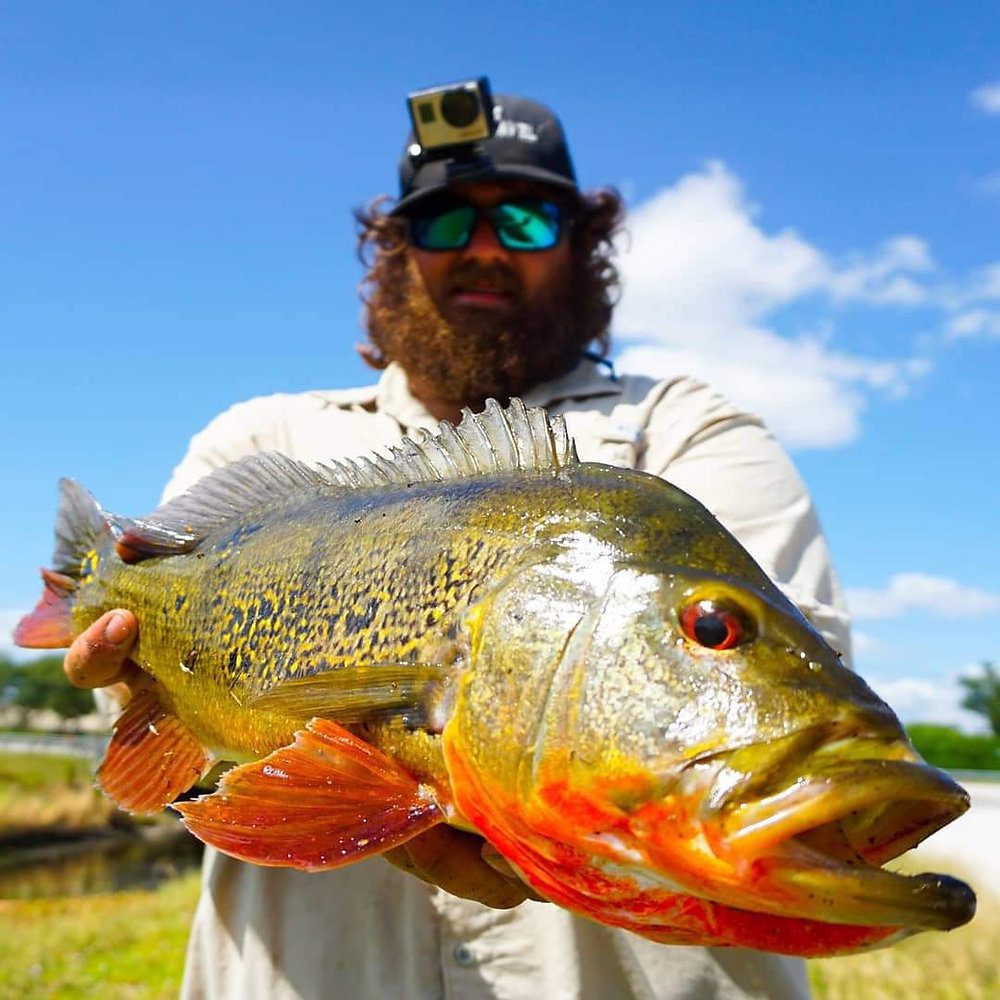
Florida largemouth bass
In general, the Florida bass is distributed not only in Florida but also in the coastal river systems of the southeastern United States. The fish can be found in large lakes, rivers and reservoirs, as well as swamps, ponds and stream basins.
By the early 1970s, Texas was already farming red and black drum, Atlantic char (Micropogonias undulatus), flounder and speckled trout. In 1973, 150,000 speckled trout were bred in Brownsville.
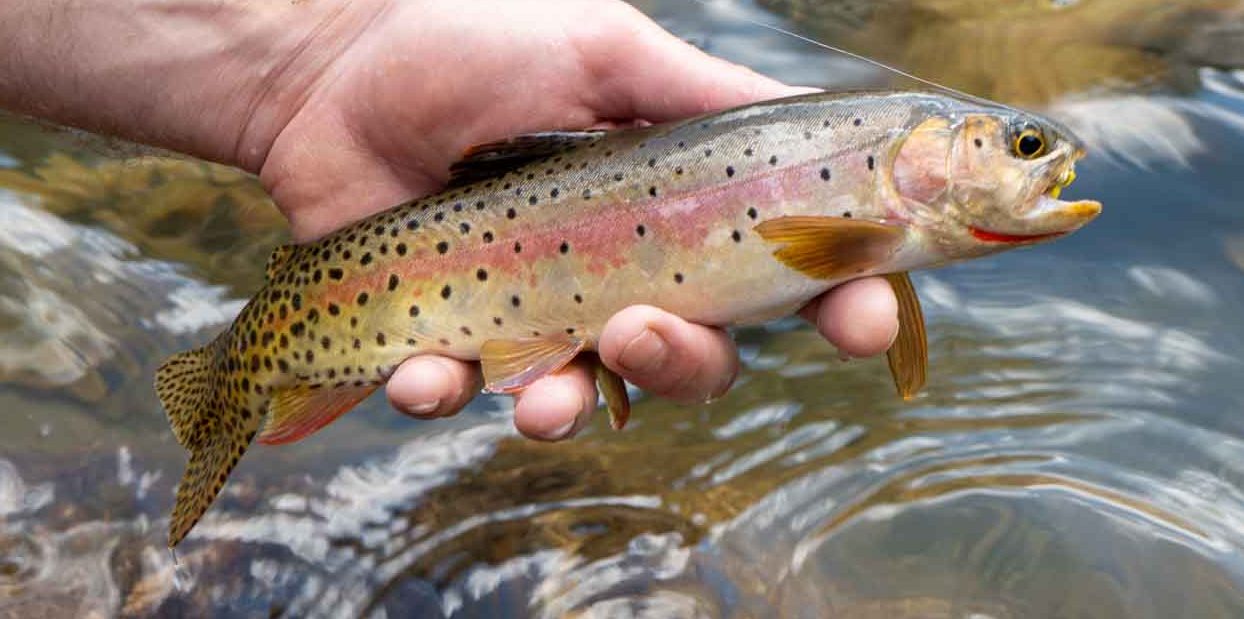 Speckled trout
In the 1970s, fish hatcheries also began releasing smallmouth bass, a species native to midwestern North America that easily interbreeds with Guadalupe bass (Micropterus treculii), a rare fish in Texas, into the state’s waterways. This program almost wiped out the Guadalupe bass. Fortunately, in 1973, employees of the Texas Parks and Wildlife Department caught several thousand Guadalupe bass and released them in the Texas Hill Country, where the fish had never been found before. The descendants of these fish have become the last self-sustaining population of pure Guadalupe bass in all of Texas.
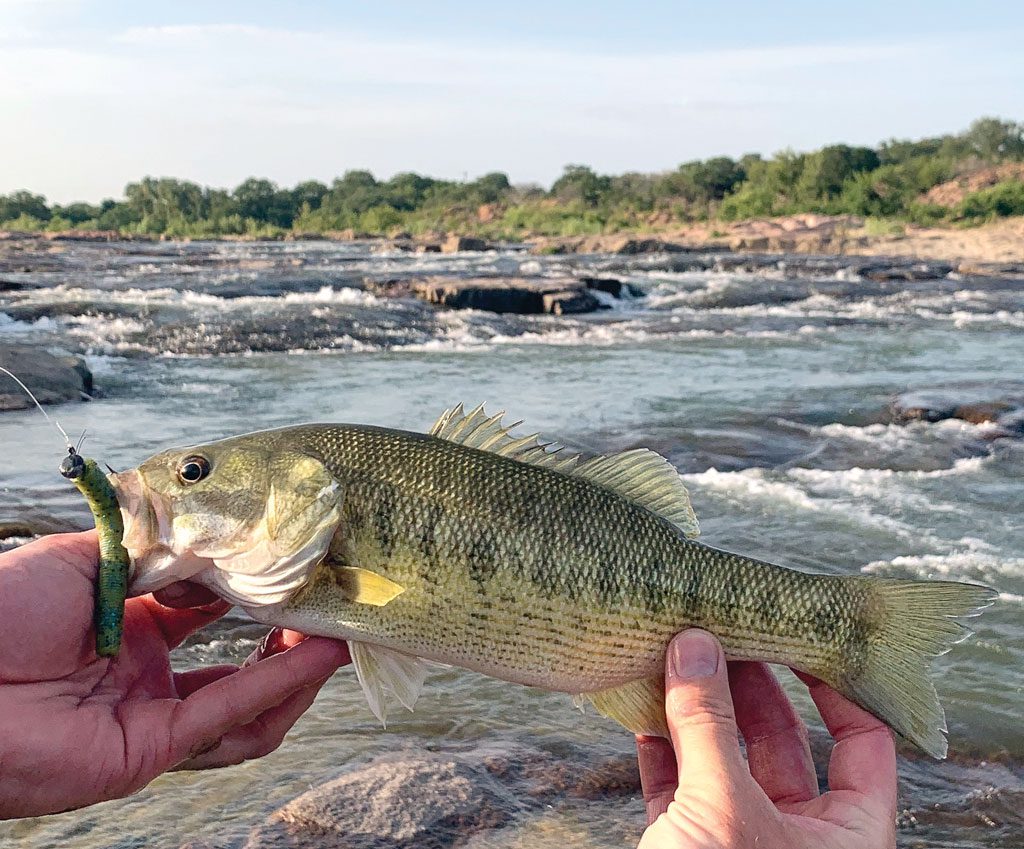
Guadeloupe perch
Interestingly, the Guadelupe bass is most often found in streams and ponds. The fish uses large stones and cypress trees as a shelter. Juvenile fishes are found in fast-flowing water, but begin to move to deeper, moderate flows by the end of their first year.
In 1974, researchers at the laboratory in Port Aransas were able to successfully reproduce red snapper in captivity for the first time. The same year, the first state survey of marine fisheries was launched. Lawmakers passed strict dredging regulations and the state began researching ways to protect the Gulf.
In 1974, the Texas Parks and Wildlife Department expanded its efforts in surveying coastal recreational fishing areas to assess catches, species and sizes of fish, fishing gear, bait used, etc. A year later, the Department began a continuous coast-wide fish assessment based on a random sampling program and work to standardize monitoring programs for fish, shrimp, blue crabs and oysters. These studies were then utilized in efforts to halt the decline of red drum, speckled sea trout, and oysters.