

As the energy capital of the world, Houston is home to countless petroleum engineers who have fueled innovation in the oil industry. Naturally, they all wanted to make their difficult jobs—and the jobs of their colleagues—easier. This professional necessity gave rise to many revolutionary ideas. Some of these were brought to life and eventually became assets for the entire global energy sector. Below, we explore the most promising innovative developments conceived and implemented by Houston-based engineers. More details ahead on houstoname.
Horizontal Drilling
Directional or horizontal drilling has been widely used in the petroleum industry since the early 20th century. This method allows for the extraction of mineral resources without the need for open excavation. While the original inventor of the concept is unknown, it was in Houston where the technique was perfected and industrialized. Over the years, the idea has only been optimized and modernized. A significant leap forward for this drilling method came in 1991 when the Houston-based company Schlumberger began applying geosteering technology to accurately plan drilling trajectories in horizontal wells.
This innovation by Houston engineers was quickly adopted and spread to other industries. Today, it’s used, for instance, for laying pipelines, cables, and other utility lines beneath highways, rivers, railways, and other major obstacles.
Hydraulic Fracturing (Fracking)
Another major innovation championed by Houston engineers is the technology of hydraulic fracturing, commonly known as fracking. After oil is discovered at a certain depth, instead of simply punching through the rock layer, special materials are pumped in under extremely high pressure. When this method was invented in the late 1940s by the Stanolind Oil and Gas Corporation, sand was used. Gas and oil flowed easily through the sand, making extraction simpler and preventing the hole from being clogged by harder rock.
However, the method had some drawbacks. Using ultra-high pressure to fracture hard rock causes minor, but measurable, earthquakes. This phenomenon negatively impacts the environment and can lead to structural damage. Furthermore, later innovations began using inorganic compounds instead of sand, and because drilling depths are often significant, there is an inherent risk of contaminating groundwater. That said, the technology was modernized and improved in the second half of the 20th century and continues to be successfully used in shale gas extraction. The technique is also vital in geothermal energy, making this environmentally friendly method of clean energy production possible.
Subsea Oil Production Technology
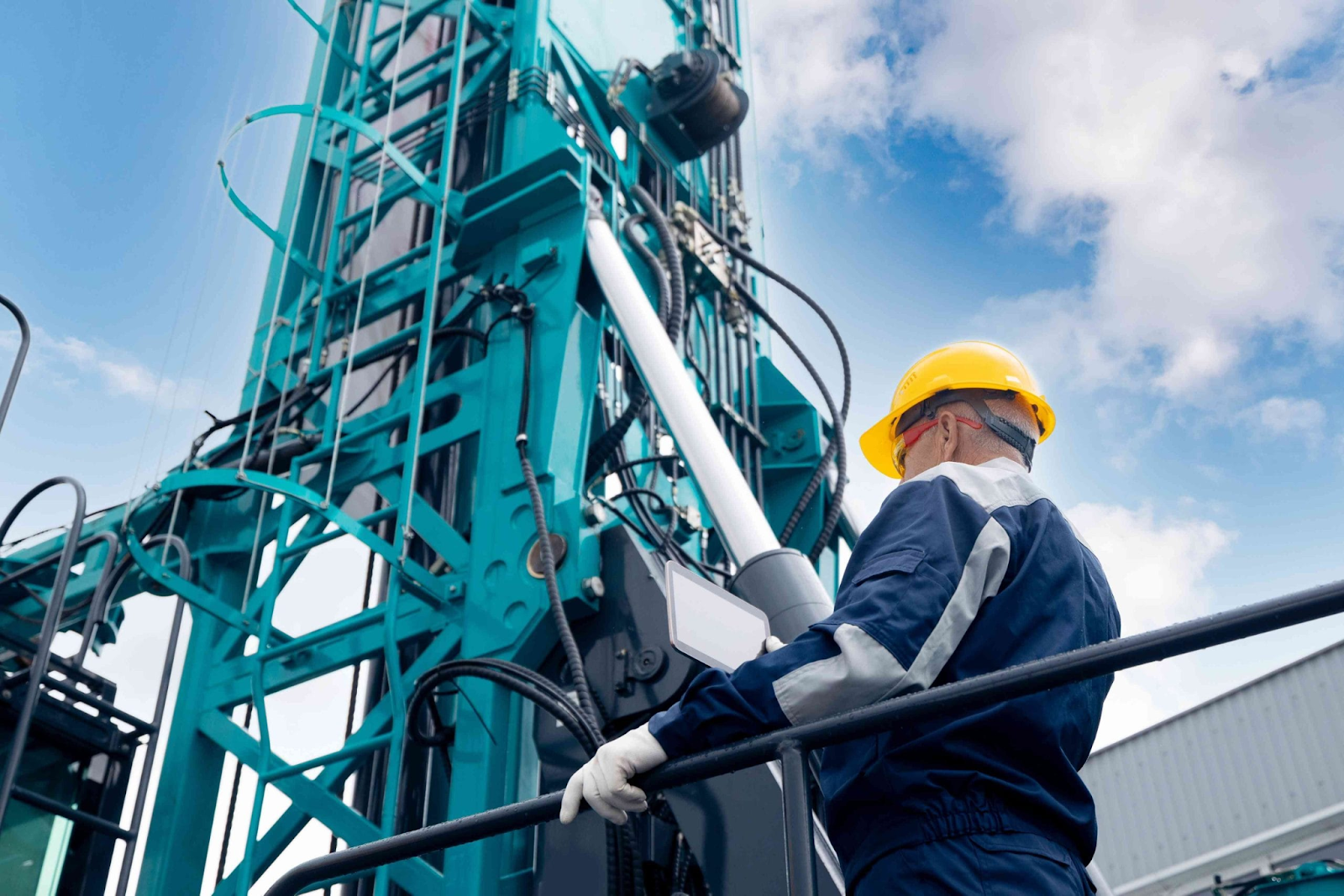
The early 21st century marked the peak of oil production. Statistical data suggests that global oil consumption in 2024 reached 104.32 million barrels per day—a colossal figure. Even with optimistic forecasts, this resource may only last for a few more decades. For this reason, oil companies are actively seeking new reserves. Many undeveloped deposits lie beneath the seabed of seas and oceans. Therefore, engineers in Houston developed and continue to refine subsea systems for oil and gas extraction. This is meticulous and highly critical work. It is essential to avoid damaging the marine environment from which the “black gold” is extracted. To meet this need, engineers developed so-called “smart” subsea wells, which allow oil to be extracted from the deepest ocean floors with minimal visible environmental impact.
Water Purification Systems
No matter how diligent or careful oil producers are, leaks and, consequently, water contamination occasionally occur during the extraction process. When these events happen, a rapid response is necessary to minimize the negative impact. To address this, Houston petroleum engineers have developed not just one, but several methods for cleaning water from oil spills. For example, they’ve created advanced filtration systems that reduce contamination and even allow for the reuse of water that has been exposed to petroleum products.
Furthermore, to prevent such disasters from happening in the first place, Houston engineers developed the Smart Wells intellectual monitoring systems, which allow for real-time control over well conditions, optimize production, and preemptively prevent accidents.
Carbon Management
Another project was developed specifically to prevent and avoid dangerous incidents at depleted sites. To prevent collapse and the leakage of unextracted oil from an exhausted shelf, a technology was conceived to inject and seal carbon dioxide into such wells. This method, pioneered by Houston engineers, is now widely used across the globe as a form of carbon capture and storage.

Autonomous Drilling Rigs
Houston engineers have also developed a method of oil extraction that operates with minimal human intervention. After initial exploration and the installation of the drilling tower itself, the subsequent work is performed automatically without the participation of on-site workers. The entire process can be monitored and controlled remotely via the internet. This drastically increases employee safety while boosting productivity several times over.
Continuous improvements are being made in this area. In the 2020s, robots and drones are being actively integrated into extraction automation. For instance, drones are heavily used to monitor oil platforms and the integrity of pipelines. This allows for faster and safer inspection, assessment of the situation, and necessary action when damage is detected. It also significantly reduces risks for human personnel.
Energy Synergy
Given that oil is, arguably, yesterday’s news, Houston engineers are gradually transitioning to alternative sources. To ensure this transition is smooth and not abrupt, scientists are progressively integrating modern renewable energy developments into the oil production sector. Wind energy is actively used to power drilling rigs, an innovation especially vital on offshore platforms where the wind is consistent and strong. Solar panels are also utilized on these same towers for power generation. Sometimes, geothermal units are employed for the same purpose.

Conclusion
Houston continues to be the world’s energy capital, and it looks set to remain so. A third of all global oil companies are currently concentrated in Houston. They aren’t just using the city for their headquarters; they are also heavily investing in the development of cutting-edge methods and technologies for the petroleum industry. This involves creating specialized departments and research centers and encouraging young specialists and students to participate in these innovations. It is this multi-year effort and significant investment that has allowed Houston to remain at the pinnacle of the “black gold” sphere.
Although the era of oil is gradually approaching its logical conclusion, new energy sources do not arise in a vacuum. The developments pioneered in the oil sector are often those now being utilized to tap into renewable energy. Furthermore, the advancements made by petroleum engineers frequently prove useful in a wide variety of other industries, ultimately helping to improve human well-being.