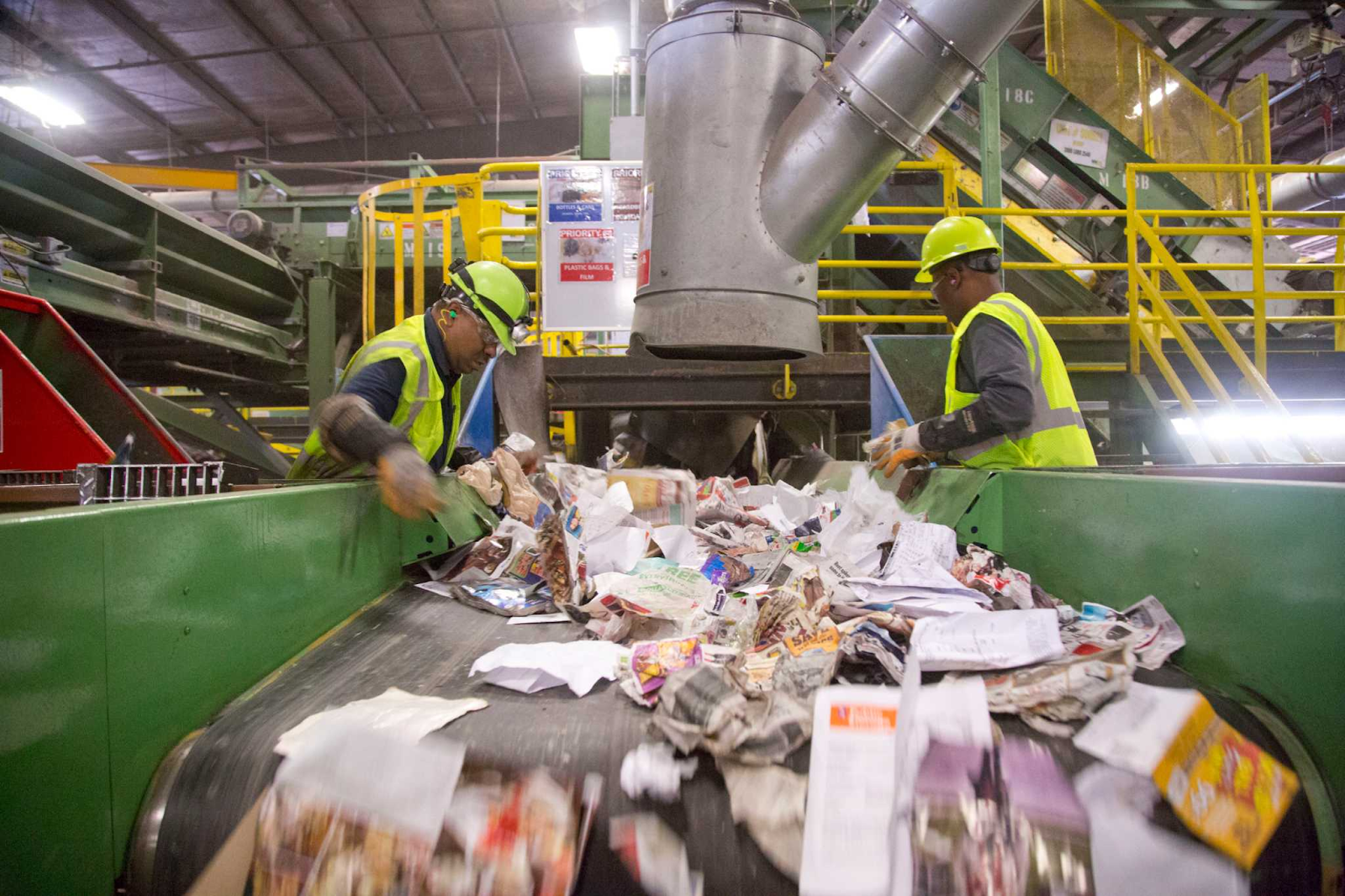
The problem of trash and what to do with it has existed ever since people began living in communities. Houston is no exception to this rule. Even today, despite notable progress in waste sorting, recycling, and smart disposal, the issue hasn’t been definitively solved. It seems to be a legacy we must learn to manage. But the story of Holmes Road in Houston serves as an example of how a losing situation can be transformed into a winning one. Find out how on houstoname.
Toxic Waste, Racial Injustice, and the Birth of a Health Crisis
During the first half of the 20th century, Houston’s population grew rapidly. With more people, a corresponding increase in accumulated waste became inevitable. While the city initially paid little attention to disposal in its early days, the issue became acute by the 1930s. To prevent the proliferation of illegal dumps, authorities decided to create a special municipal landfill. After searching and compromising, they agreed the waste site would be located 10 miles south of downtown Houston. The location chosen for this necessary facility was in the long-established Sunnyside community. From its founding, this settlement was a predominantly Black neighborhood. The reason for choosing this site is tragically clear: 1937, the year the Holmes Road Landfill opened, was the height of discrimination and oppression against the African-American population, meaning there was little effective protest or concern over the future landfill’s location.
The designated area was substantial, covering 300 acres, enough for the city to forget about the trash problem for a while. However, just 23 years later, the site was overwhelmed. In 1964, another landfill, Reed Road, was opened adjacent to Holmes Road. This time, there was a slightly greater sense of urgency: it became obvious that waste needed to be eliminated, not just piled up. Consequently, within three years, an incinerator plant was built next to Holmes Road to burn the accumulated waste.
This solution also offered only temporary relief from the trash deluge but created many new problems. First and foremost, it caused significant environmental degradation. Air pollution, contaminated runoff, and soil contamination were just the tip of the iceberg. The true fatal consequences became apparent in the early 1970s. Residents of the Sunnyside neighborhood began suffering from respiratory illnesses en masse. The rate of cancer increased dramatically. Initially, no official authority wanted to link these factors to the nearby incinerator. However, as the situation worsened and the number of sick residents grew, the city was forced to take notice.
Houston city officials long tried to “overlook” these problems, but the very location of the landfill and the plant in Sunnyside eventually forced a reaction. As the city expanded and the population grew, residential areas began to encroach on what had once been the city’s outskirts. Thus, the landfill, originally built on the periphery, was shifted deeper into the city, becoming a nuisance not just for the immediate neighborhood but for other communities too. All these factors combined compelled the city government to make a difficult but radical decision: to close the landfill.
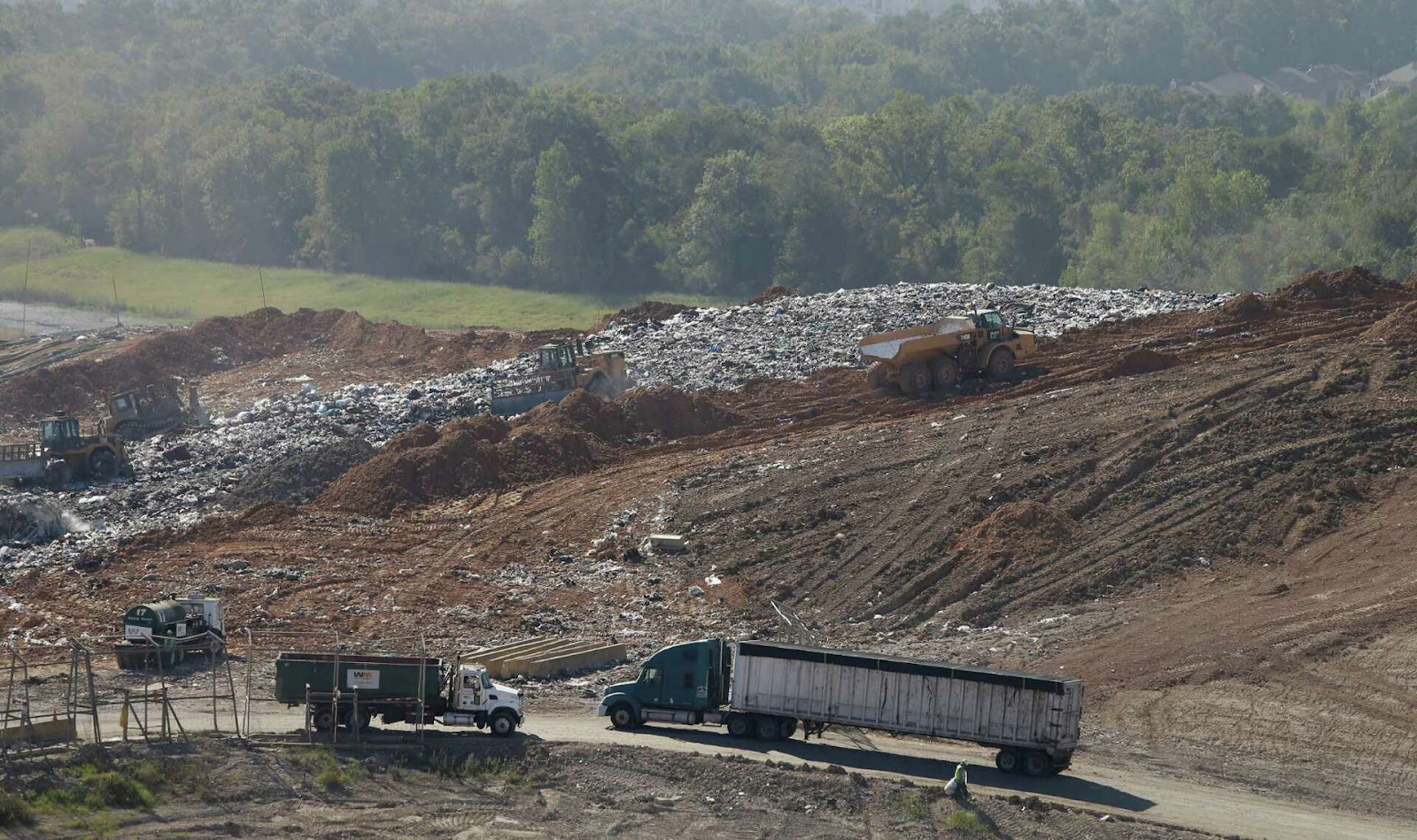
Making the decision was easier than implementing it. For a long time, the situation at Holmes Road remained in limbo. It was still used for its original purpose, often semi-legally. There was even a period when residents of surrounding homes had to stand guard at night to prevent trash from being dumped there. But finally, due to the combination of environmental concerns, regulatory requirements, and the health status of its residents, the Holmes Road Landfill was officially shut down.
Landfill Reclamation: From Dump to Destination
To prevent further environmental contamination and reduce public tensions, the landfill was officially closed and underwent reclamation. Funds were allocated and a plan was developed: the trash was compacted, the area leveled, and covered with a thick layer of soil. A special system was even installed to monitor the emission of methane and other gases to track environmental changes. For a time, the site became a deserted island of grass.
But such a large tract of land on the edge of the fourth-largest city in the U.S. couldn’t remain vacant for long. In the mid-1990s, investors became interested in the site. Long discussions ensued about what could be built there. Ultimately, there was consensus: instead of simply constructing buildings, the former landfill should be converted into a recreational area—a symbol of successful reclamation and a lesson for future generations.
Thus, in 2001, the magnificent Wildcat Golf Club opened on the former landfill site. This club features two unique courses for both amateur and professional golfers. The courses were designed by renowned golf course architect Roy Case, who brought the ambitious plans to life. Case created two 18-hole courses, each with unique characteristics and offering diverse challenges for golfers of all levels. It’s a true oasis for golf enthusiasts in Houston, combining elements of Scottish links, the Texas landscape, and modern comfort. Today, in the 21st century, the site is one of Houston’s favorite spots for recreation.

Incinerator Becomes Solar Farm
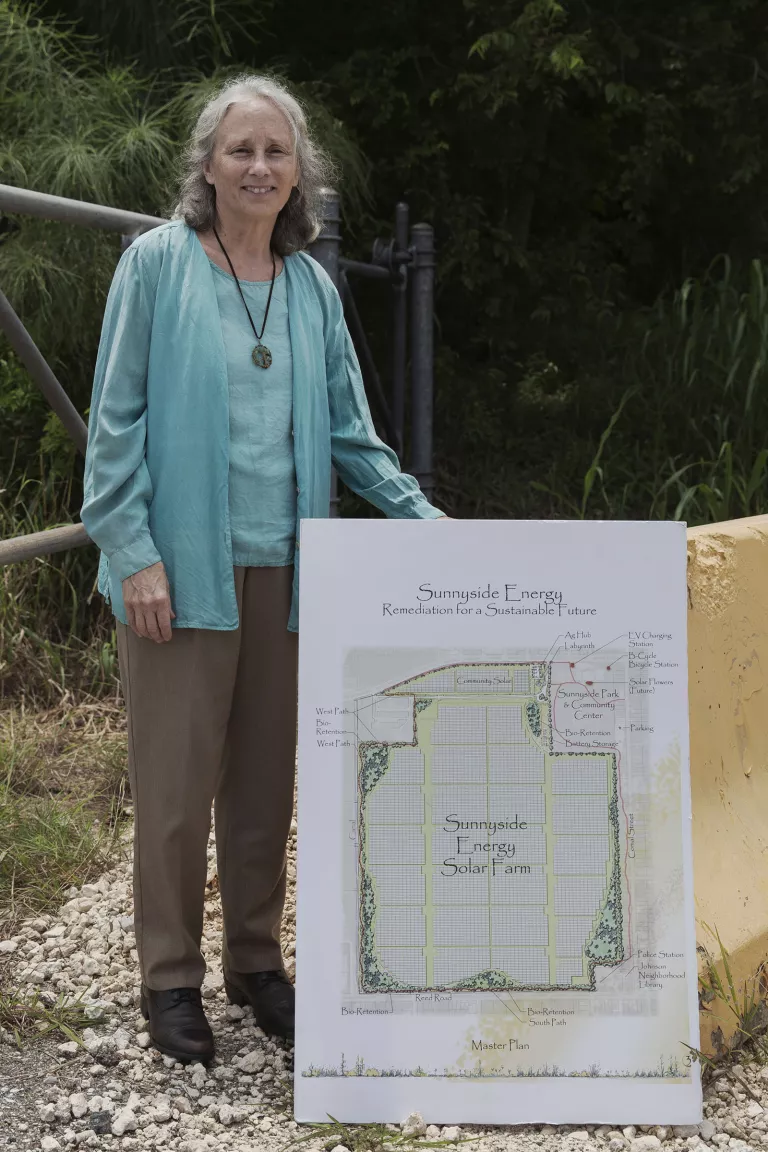
While the right choice was made for the landfill, the adjacent incinerator remained derelict for a long time. This status quo persisted until early 2020, when a chemical engineer and local resident named Jernigan led a push for radical change. He and his neighbors proposed placing a solar project on the abandoned plant’s land. The initiative attracted the interest of Sunnyside Energy. Their approved plan divided the site into four sectors. One was dedicated to a solar array capable of generating up to 50 MW of energy. The next sector would house an aquaponics center with greenhouses for agriculture. The third would be an educational space, and the fourth a new training facility. The project was approved, and construction began in 2022. The company appointed Jernigan as Vice President. Upon completion, the solar farm is expected to power up to 10,000 homes. Furthermore, scientists monitoring the project claim it offsets 120 million pounds of CO₂, a fantastic number that otherwise would have been carelessly released into the atmosphere.
Another significant advantage of these modern implementations was the creation of jobs. The Sunnyside district was once poor and depressed, as no one wanted to settle there due to its poor reputation and scarcity of work. Everything changed with the landfill’s closure. The project’s realization was made possible by the combined efforts of the local government and proactive, concerned citizens.
The Evolution of Environmental Sustainability
So, what happened to the trash? It didn’t disappear—it actually increased manifold. Houstonians, or rather the majority of them, have simply become more responsible regarding waste disposal. Of course, the authorities had to find and open new sites for landfills. Thus, the McCarty Road Landfill and the Atascocita Landfill emerged as new sites for waste disposal and burial. Crucially, learning from past mistakes and incorporating new knowledge, these new landfills were constructed with strict adherence to environmental standards. Along with their opening, Houston began actively implementing waste sorting and recycling programs. The city also continues to develop sustainable waste management strategies, including composting, material reuse, and deploying technologies to reduce environmental impact.