

Shale gas was a true discovery of the 21st century. Although known before, its extraction was initially considered impossible and later deemed unprofitable. With the invention of horizontal drilling and hydraulic fracturing (fracking), petroleum engineers finally gained the ability to extract this gas. The United States is the largest producer of shale gas globally, and Houston plays a significant role in this achievement. Here is a detailed overview of the industry’s development on houstoname.com.
History of the Industry’s Development
Houston is considered the energy capital of the world, so it’s no surprise that the initial efforts to extract shale gas in the U.S. centered around this city. The industry’s timeline begins in the 1970s. During this time, Houston petroleum engineers launched successful experiments with hydraulic fracturing. This extraction method was quickly dubbed “fracking.” Only through fracking did shale gas extraction become technically feasible.
However, success was not immediate. Not all oil companies welcomed the new method. The majority preferred to remain conservative about energy sources, focusing on crude oil and natural gas extraction. This industry conservatism delayed the commercial development of shale gas deposits for a long time.
The next boom for the industry occurred in the 1990s. This period saw the refinement of fracking techniques. New research and improved extraction methods prompted a reassessment of the economic viability of shale gas. Across the globe, gas from shale formations began to be viewed as a potential major energy source.
The Shale Revolution
The true “Shale Revolution” began in the 2000s. The U.S. started aggressively exploring and developing shale gas fields, particularly in Texas. Houston became a key hub for companies specializing in shale gas extraction. Beginning in 2007, shale gas production in the U.S. increased by more than 50% year-over-year. This trend continued until 2015, when a sharp drop in global energy prices led to a temporary decrease in shale gas production. The industry began to recover in the 2020s.
Environmental Risks
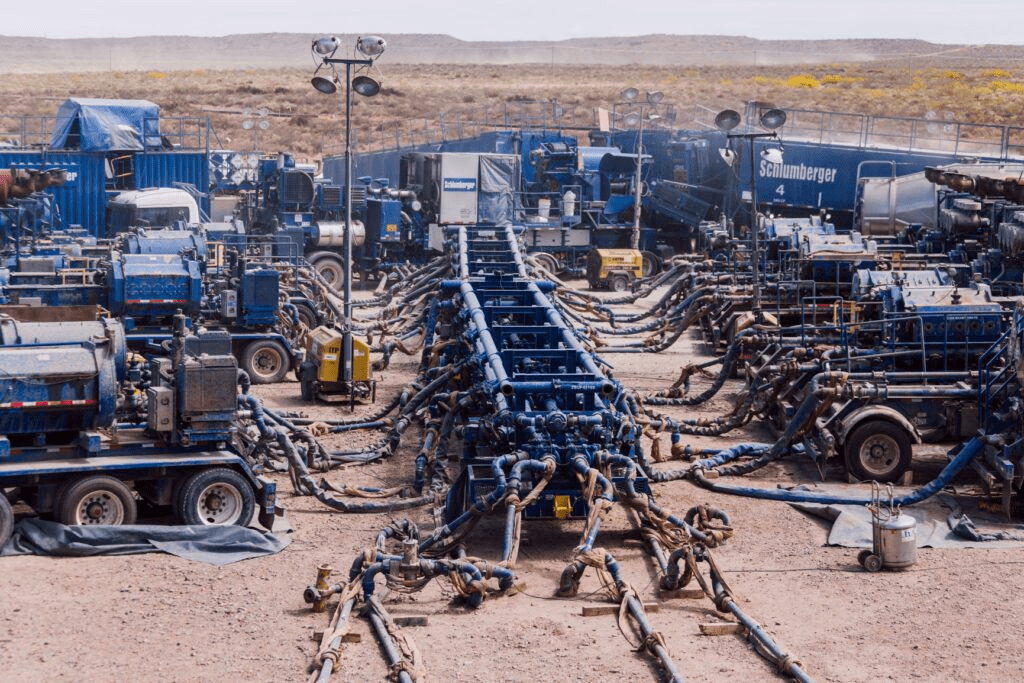
Following the slowdown in extraction volumes during the mid-2010s, environmentalists began actively scrutinizing shale gas. They highlighted the problems arising from the extraction of this fuel source. The fact is that fracking, or hydraulic fracturing, causes significant environmental disruption. This process unfolds as follows:
- First, a vertical well is drilled until it reaches the shale layer.
- Next, the well turns horizontally and is drilled along the gas-bearing shale.
- A mixture of water, sand, and chemical agents is injected into the well at high pressure.
- This mixture creates fractures in the shale layer, allowing the gas to flow freely to the surface.
- The gas is then collected in specialized reservoirs and transported for further processing.
Several factors in this technological process drew the ire of environmental activists. A significant amount of water treated with special chemicals is used for extraction. After fracturing, this water enters the groundwater, thereby polluting it.
Another point environmentalists raised is that hydraulic fracturing carries a high probability of creating subsurface fault slippage, which often leads to earthquakes. Furthermore, a substantial amount of methane is released into the atmosphere. Methane, being a potent greenhouse gas, contributes to climate change. This is another negative aspect of gas-bearing shale.
Environmentalists delivered their concerns, supported by statistical data, directly to the oil companies. Since the press actively covered the controversy, the producers were forced to address the risks. When demand for shale gas recovered in the 2020s, extraction resumed with a renewed emphasis on environmental safety.
Positive Changes
Despite the downsides, shale gas extraction brought numerous benefits to Houston.
- Economic growth.
- Creation of thousands of new jobs.
- Increased revenues for oil and gas companies and local budgets.
- Reduced U.S. dependence on energy imports.
- Lowering of natural gas prices.
- Influx of investment and new residents.
These factors largely offset the negative aspects. However, the future of the planet is undoubtedly worth considering. Therefore, it is important to approach continued shale gas extraction responsibly and thoughtfully.
Is It Profitable for the U.S. to Abandon Shale Gas?
In short—no. Shale gas has brought enormous profits to the United States. This fuel source has enabled the country to substantially boost its strategic gas reserves. For consumers, it has led to lower household energy prices. As of 2024, shale gas accounts for approximately 25% of total U.S. energy. Since the development of shale fields began, the United States has achieved energy independence from imported gas.
Therefore, the economic benefits of extracting this energy source are exceptionally high. The key challenge remains minimizing the environmental risks. To do this, companies must continue to refine the extraction method and prioritize safety. This is precisely the focus of today’s petroleum companies.