

When the lunar module Eagle was hurtling toward the surface of Earth’s moon on July 20, 1969, a breathless silence gripped Mission Control in Houston. Computer alarms threatened to abort the mission of the century just meters away from its goal. Yet, back on Earth, one man sat at the console whose ironclad composure and precise engineering calculations made this historic step possible. Thomas John Kelly—the chief designer of the Apollo program’s lunar module—shouldered a responsibility that permanently altered the course of human history.
The story on houstoname.com below is not about space romance; it is about hard mathematics, sleepless nights, and engineering decisions where the cost of the slightest error was the lives of the astronauts.
A Bold Choice of Concept: Thomas Kelly’s Daring Calculation
In the early 1960s, NASA was weighing several options for achieving the first-ever human flight to the Moon. Launching a massive rocket directly from Earth (the direct ascent concept) seemed like the most obvious and safest route to management. However, it required building a colossal launch vehicle and demanded an unthinkable amount of propellant.
At this critical juncture, Thomas Kelly, who led a team of forward-thinking designers at the Grumman Aircraft Engineering Corporation, became a passionate advocate for Lunar Orbit Rendezvous (LOR).
The Economics of the Lunar Maneuver
This revolutionary concept relied on cleanly splitting the spacecraft into two autonomous modules, each serving a strictly defined function. This approach fundamentally overhauled the logistics of interplanetary travel.
The advantages of Kelly’s engineering proposal were backed by airtight mathematical modeling:
- Spacecraft Separation: One massive ship remained in a stable lunar orbit, while another—engineered to be as light and compact as possible—made the actual touchdown on the surface.
- Reduced Fuel Mass: Eliminating the need to lift a heavy return vehicle out of the Moon’s gravity well saved dozens of tons of propellant.
- Minimizing Dimensions: The lander shed the bulky heat shield capsule required solely for re-entering Earth’s atmosphere, streamlining its design to the absolute limit.
- Accelerated Development: The ability to design and test the lunar spacecraft independently of the main Command Module significantly optimized the overall production schedule.
Winning with Math Over Conservatism
Winning over the conservative leadership of the space program was incredibly difficult. No one had ever attempted such complex separation and docking maneuvers in deep space. However, Thomas Kelly’s detailed engineering calculations proved flawless and undeniable.
His figures clearly demonstrated that this unconventional approach would save critical tons of weight, guaranteeing the American nation could meet the tight deadline set by President Kennedy. Ultimately, Houston put its faith in cold mathematical analysis, discarding gigantomania in favor of an elegant orbital strategy that opened humanity’s path to the stars.
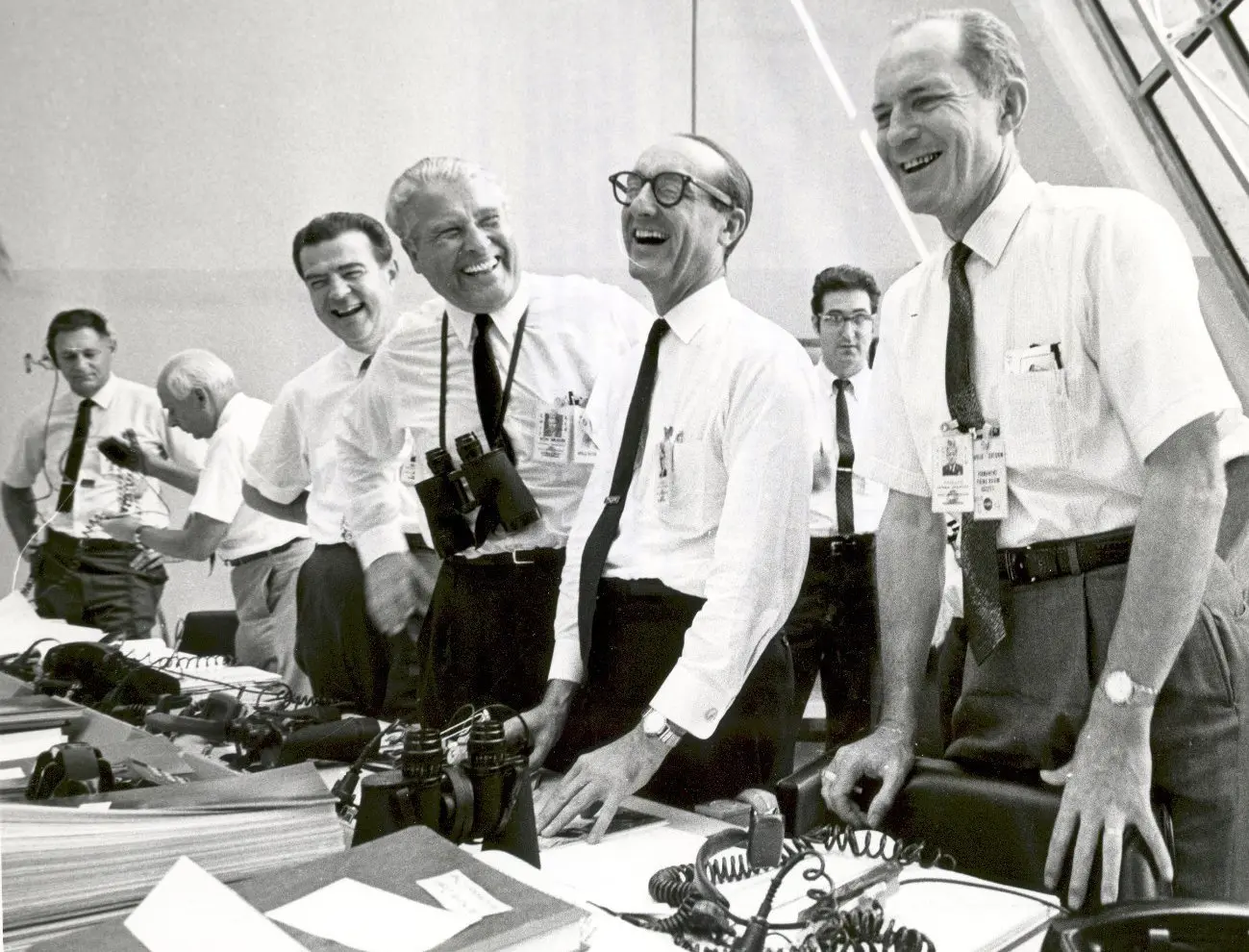
A Project with Zero Margin for Error: Building the Most “Un-aerodynamic” Spacecraft in History
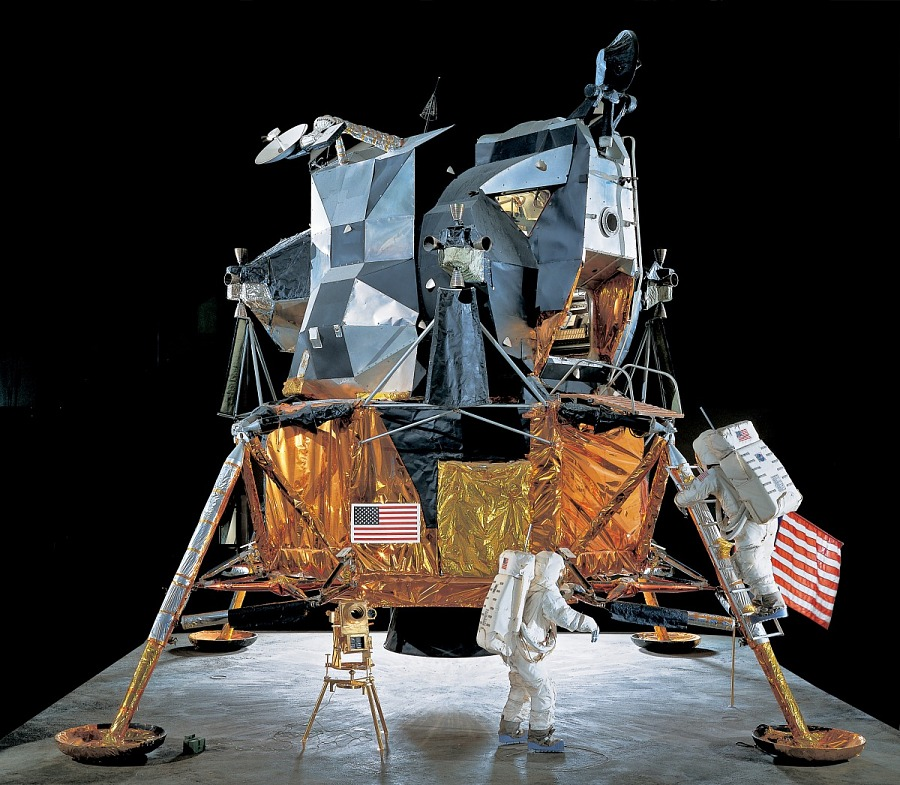
Securing the coveted NASA contract injected Thomas Kelly’s engineering team into an era of unprecedented technical challenges. Because this unique spacecraft was meant to fly exclusively in the vacuum of space, the designers completely and ruthlessly abandoned traditional aerodynamic shapes and sleek lines. They engineered the vehicle strictly from the inside out, guided solely by functionality and crew safety.
Every single gram of payload was strictly accounted for. Designers meticulously calculated the length of every electrical wire, swapped heavy metal parts for ultra-lightweight alloys, and waged a grueling, continuous war against any excess weight.
To shave every possible ounce off the spacecraft, engineers resorted to radical solutions:
- Ditching the Seats: To drastically reduce cockpit mass, astronauts Neil Armstrong and Buzz Aldrin stood throughout the entire descent and ascent phases, secured only by a specialized system of tethers and pulleys.
- Paper-Thin Walls: In certain spots, the protective aluminum skin of the pressurized cabin was no thicker than a few layers of standard kitchen foil—meaning it could literally be punctured by a misplaced finger or tool.
- Specialized Landing Gear: Four deployable landing legs featuring shock absorbers packed with compressible aluminum honeycomb gave the vehicle the distinct look of a giant space spider.
- Micro-Sized Windows: Bulky review windows were replaced with tiny, triangular panes made of specialized safety glass, preserving structural integrity and discounting the weight.
Deploying such an uncompromising, progressive frame clearly demonstrated the superiority of the American school of design, where engineering logic completely overrode classic notions of aircraft aesthetics. The module Kelly created became the first true spacecraft—one that had no Earthbound equivalent and could never survive a return through the dense layers of the atmosphere.
Every daring engineering decision forged in metal proved its viability during actual lunar missions. Despite its external fragility and bizarre, spider-like silhouette, this technical masterpiece delivered absolute reliability, proving that space operates on its own harsh laws, where efficiency of design always triumphs over outward beauty.
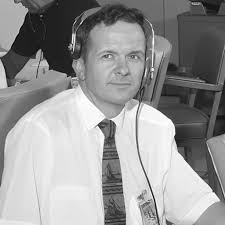
Five Minutes to Immortality: Testing Nerves in Orbit
The ultimate trial by fire for Thomas Kelly arrived during the actual touchdown of the Apollo 11 mission. The onboard computer began flashing 1201 and 1202 overload alarms. The radar system was flooding the computer’s memory with redundant data, pushing the equipment to the brink of failure.
In this high-stakes moment, engineers on Earth rapidly diagnosed the situation. Knowing the built-in margins of safety and the system architecture Kelly had established, the team gave the go-ahead to proceed. With fuel down to mere seconds, the Eagle settled onto the lunar soil in the Sea of Tranquility. The chief designer, watching the live feed, later recalled that the moment took his breath away—his life’s work had functioned flawlessly.
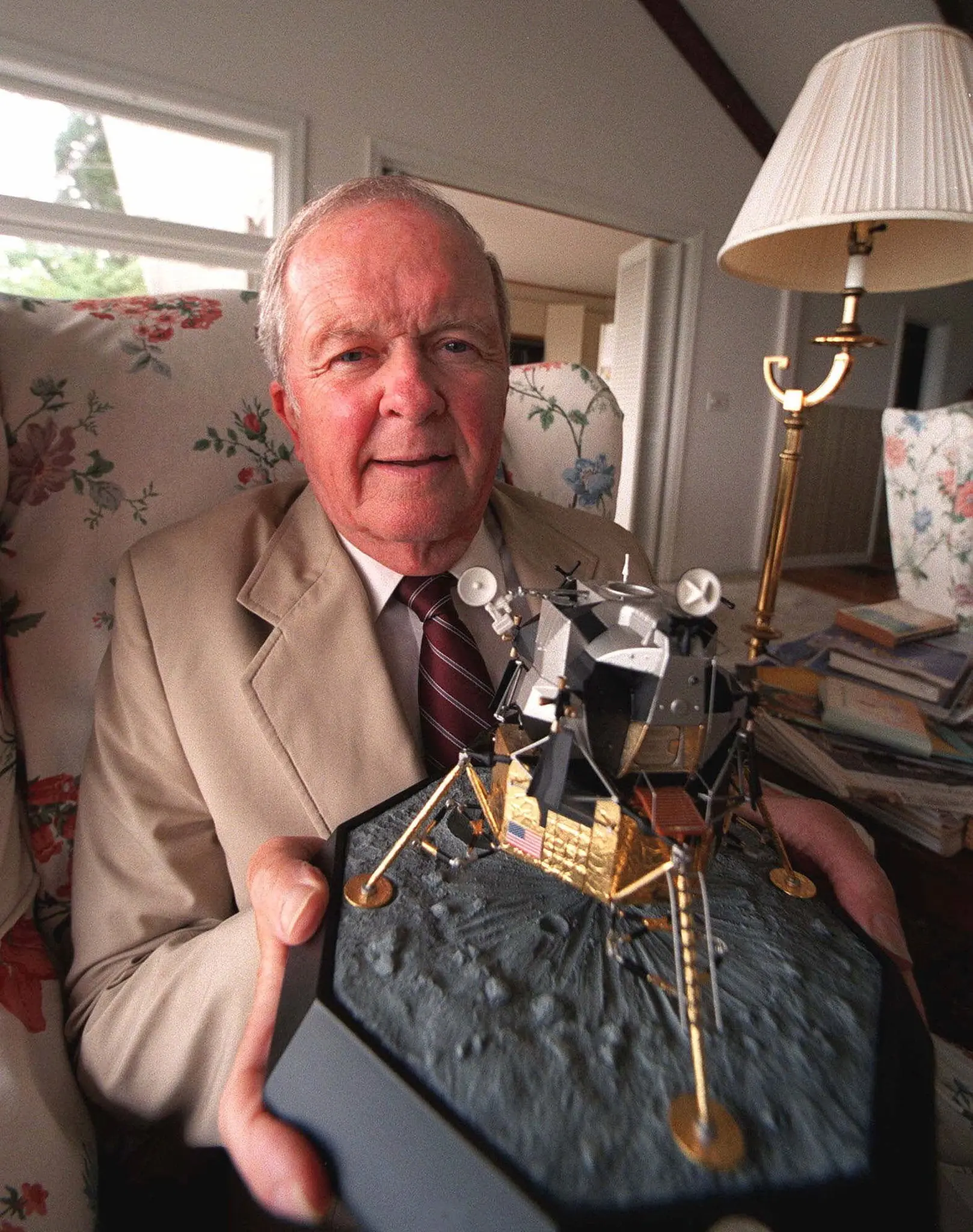
A Lifeboat for the Crippled Apollo 13
The lunar module faced its truest test of resilience during the dramatic flight of Apollo 13 in April 1970. An oxygen tank explosion in the service module stripped the crew of power, water, and breathable air on their way to the Moon. Three astronauts were trapped in a crippled spacecraft thousands of miles from home.
It was then that Kelly’s creation transformed into a cosmic lifeboat. A vehicle designed to sustain two people for a single day managed to keep three men alive for four full days. Grumman engineers, working around the clock under Thomas’s leadership, developed improvised instructions to reroute power and scrub carbon dioxide, bringing the crew back alive.
A Technological Legacy Driving Modern Spaceflight
The triumph of six successful Moon landings laid the foundation for modern aerospace engineering. Thomas Kelly’s methodology, built on extensive redundancy for critical components and rigorous systemic risk analysis, became the gold standard in rocket science. His approach to building lightweight space platforms is utilized by private aerospace firms today when developing modern crewed vehicles.
The chief designer of the lunar module passed away in 2002, leaving behind a technological legacy still widely regarded as a pinnacle of twentieth-century engineering. His story serves as a permanent reminder that behind every giant leap for mankind stands the quiet, monumental labor of Earthbound experts.
