

The history of the Houston Ship Channel is a chronicle of a massive engineering counter-offensive against geographical isolation. Once a shallow and temperamental river, Buffalo Bayou was the primary obstacle to the state’s economic growth. However, the ambitions of Texas industrialists transformed it into America’s most vital maritime super-corridor. Today, this artificial waterway does more than just connect an inland metropolis to the Gulf of Mexico; it serves as an autonomous economic ecosystem where the energy security of an entire nation rests on the iron discipline of navigation and advanced environmental standards. Below, on houstoname.com, is the story of the creation and development of this metropolitan economic artery.
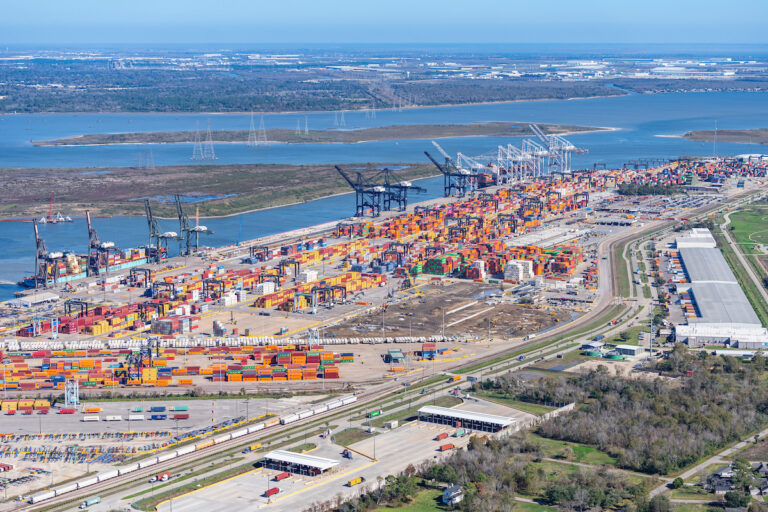
Confronting Nature: The Victory over Buffalo Bayou
The history of the Houston Ship Channel began with a daring desire to tame a small, winding, and capricious river. In the late nineteenth century, Houston was effectively a dead end for major maritime logistics, as the existing geography could not accommodate significant cargo flows. Attempts to deepen the bed and clear the channel lasted for decades, but they lacked a systemic approach and yielded only temporary results.
The Galveston Tragedy as a Catalyst for Change
A true strategic breakthrough in planning occurred following the devastating Galveston Hurricane of 1900. This catastrophe vividly demonstrated the vulnerability of coastal facilities to the open elements of the Gulf of Mexico. It was then that the state’s engineering and political elite realized once and for all: a reliable and safe harbor must be located deep inland, far from the open sea, where the natural landscape could serve as additional protection.
Realizing such a massive project required not only technical but also financial innovations:
- Unique Financing Scheme: Local Houston authorities, in collaboration with the federal government, developed an unprecedented partnership model where the city covered 50% of all costs.
- Public-Private Leadership: This was the first instance of such a large-scale distribution of financial burden in U.S. history, allowing capital works to begin immediately.
- Massive Excavation Works: Using specialized equipment, thousands of tons of long-standing silt and dense clay were extracted from the riverbed, reclaiming space from nature every day.
- Channel Widening: The formerly shallow river transformed before everyone’s eyes into a deep-water fairway, with parameters designed to accommodate the largest vessels of the era.
A Remote Signal for a New Era
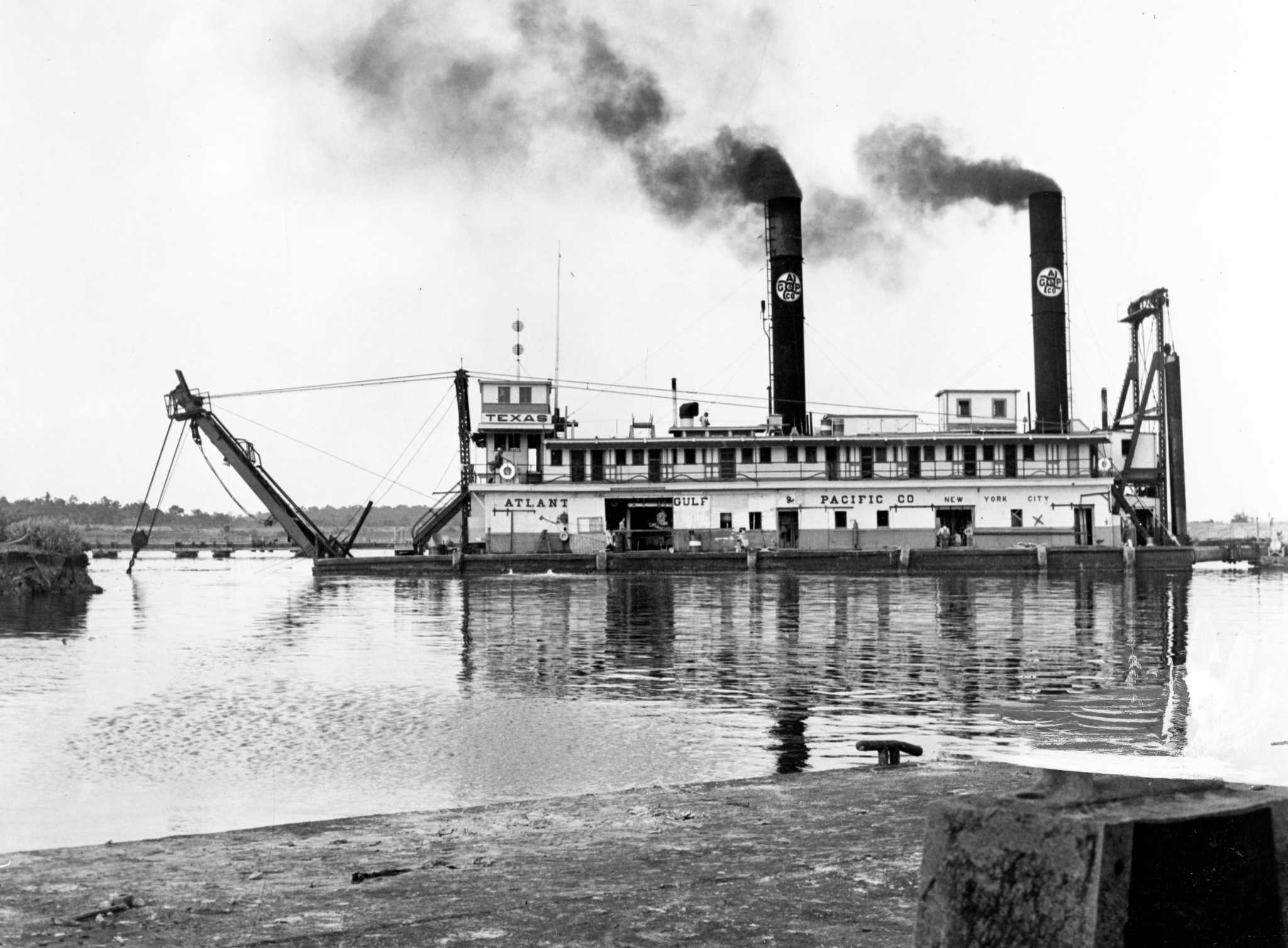
The final chord of this multi-year labor came in November 1914. The event gained national significance, highlighting the strategic role of the new facility for the entire country. President Woodrow Wilson, while in Washington, D.C., remotely pressed a symbolic button, sending an electric signal to officially open the waterway.
This moment served as a symbolic victory of human ingenuity over the region’s challenging landscape. From that point on, natural geography was no longer an obstacle to Texas’s ambitions. The creation of the channel turned an inland city into a full-fledged seaport, laying the foundation for Houston’s economic dominance for decades to come. The old limitations of Buffalo Bayou were left in the past, replaced by precisely calculated engineering parameters that guaranteed the stability of logistics chains under any conditions.
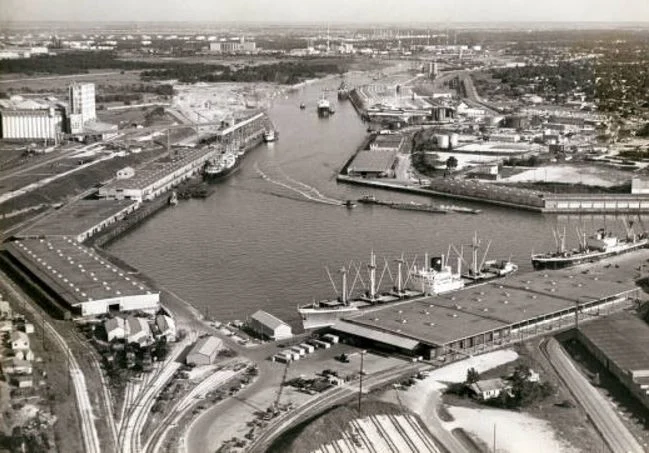
The Energy Heart on the Banks of an Artificial Channel
The rise of the channel is inseparably linked to the oil boom that swept Texas at the beginning of the last century. When “black gold” began to be extracted in massive quantities, there was an urgent need for a powerful refining base located directly by the water for rapid export. Throughout the twentieth century, the banks of Buffalo Bayou radically changed their appearance, becoming a forest of steel distillation towers and giant storage tanks.
The Industrial Landscape
The development of coastal territories followed a strict engineering plan designed for the maximum concentration of production capacities. This allowed the artificial channel to become an artery that feeds not just the state, but the global economy.
The transformation of the shoreline included these strategic stages:
- Petrochemical Cluster: The emergence of the largest petrochemical complex in the Western Hemisphere, where raw materials are converted into fuel and polymers directly at the point of extraction.
- Specialized Terminals: The construction of technological sites for the storage and pumping of liquid hydrocarbons, equipped with leak protection systems and automated pressure control.
- Transport Synergy: Deep integration of railway lines directly to the wharf walls, creating a seamless logistical chain between oil fields and tankers.
- Economic Incentives: The formation of free trade zones and tax breaks that attracted colossal foreign capital and technologies from global industry leaders.
The Region’s Economic Foundation
This industrial conglomerate provided jobs for hundreds of thousands of skilled workers, turning the region into a global fuel hub. Smart planning of the coastal strip allowed production to be concentrated in one place, radically minimizing logistical costs and making Houston’s petroleum products competitive on the world market.
The channel became the very foundation upon which the economic power of modern Houston was built. Today’s infrastructure on the banks of Buffalo Bayou serves as an example of how engineering thought can turn an ordinary waterway into a complex mechanism that ensures the energy stability of an entire nation. Every terminal and every steel tower here is part of a single code that guarantees Houston’s status as a leader in the global industrial hierarchy.
Ocean Giants in a Tight Space
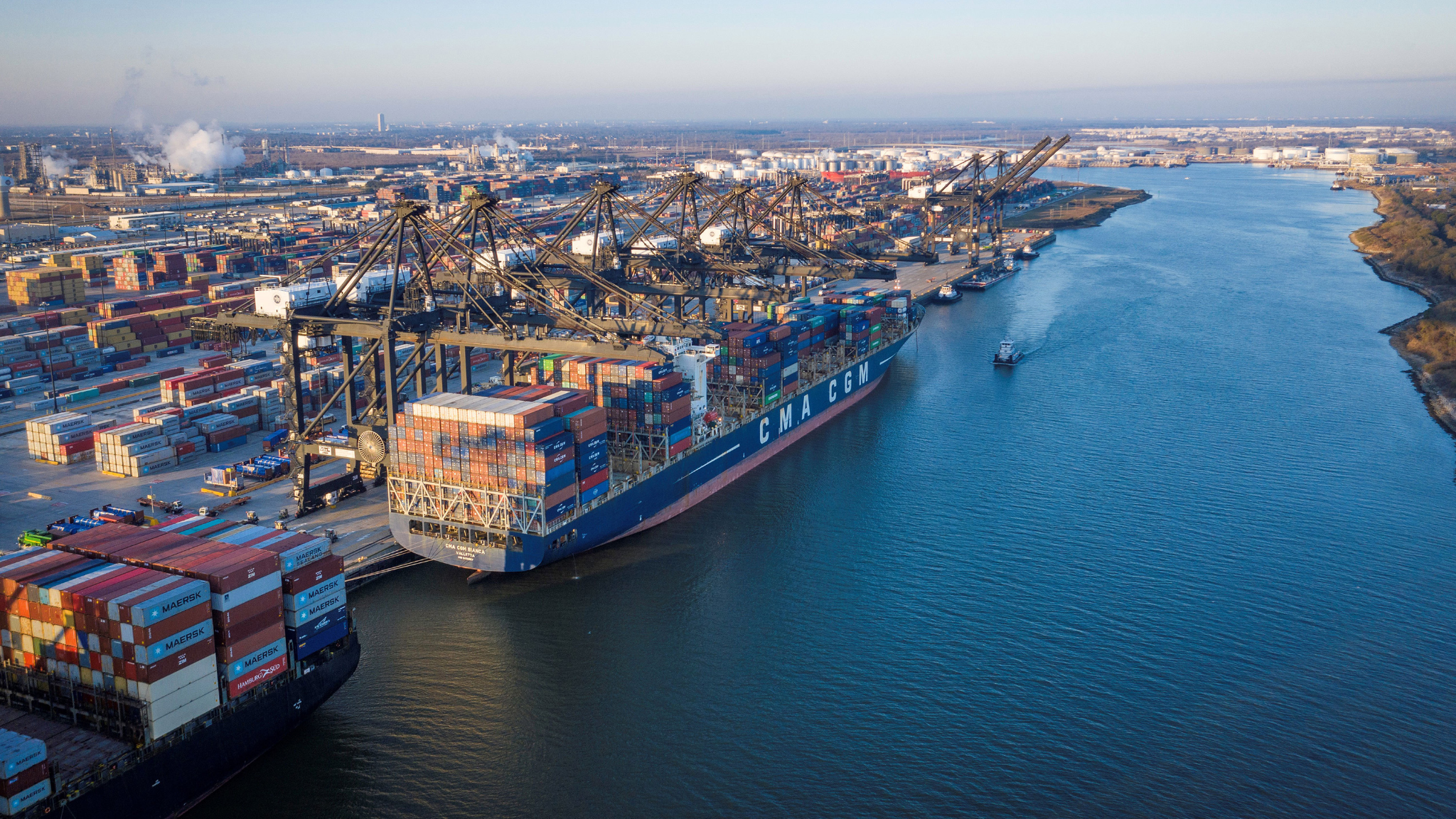
Navigating the Houston Ship Channel is a daily test of skill for captains and pilots. The waterway has a strictly limited width, forcing giant tankers to pass each other within arm’s reach. A phenomenon known as the “Texas Kiss” (or Texas Three-Step) requires navigators to use surgical precision when maneuvering, as the narrow fairway does not forgive the slightest error in course calculation.
Dynamics of Ultra-Dense Traffic
Safety in such extreme conditions is ensured by a combination of traditional pilot experience and the latest technological solutions. The use of powerful tugboats and a modern vessel traffic service (VTS) allows for the avoidance of accidents in this ultra-dense traffic, where thousands of tons of hazardous cargo move every minute.
The efficiency of the channel’s operation rests on several critical factors:
- Precision Maneuvering: Utilizing hydrodynamic effects to turn vessels in confined spaces without losing control.
- Hydrographic Control: Constant maintenance of depth is critical, as even a few centimeters of unplanned silt can stop a vessel carrying cargo worth millions of dollars.
- Digital Monitoring: A state-of-the-art digital dispatch center tracks every vessel 24/7, coordinating the sequence of passage to minimize delays at anchorage.
- Pilot Mastery: Specialized training for personnel capable of guiding giant tankers through narrow sections in any weather conditions.
The Triumph of Intellect over Geometry
The Houston Ship Channel remains one of the busiest stretches of water in the world, where human intellect consistently overcomes natural spatial limitations. Constant dredging and the widening of specific sections allow the channel to adapt to the growing size of modern container ships and gas carriers.
This waterway is an example of a dynamic engineering system that is never truly finished. Every successful vessel passage confirms the correctness of the chosen strategy: instead of waiting for ideal conditions from nature, Houston created its own coordinate system, where safety and logistical speed are guaranteed by iron discipline and technological superiority. Because of this, the channel remains the most reliable link in the global energy supply chain.
Environmental Challenges and Technological Response
The development of heavy industry around the channel raised serious environmental protection issues for the city. Over the last twenty years, Houston has implemented ambitious programs to clean the waters and monitor air quality, turning the industrial zone into a testing ground for advanced environmental standards. Companies invest billions of dollars in closed-loop processing cycles to completely prevent industrial waste from entering the water.
Technological Monitoring and Ecosystem Regeneration
The modern response to environmental challenges is based on continuous digital control and the active restoration of the region’s bio-resources. This allows for timely reactions to potential threats and minimizes the anthropogenic impact on the river delta.
The measures implemented for biosphere protection include the following technologies:
- Drone Patrolling: Autonomous drones conduct regular patrols of the shoreline, detecting even the smallest leaks using thermal imagers and gas analyzers in real time.
- Purification Barriers: Installation of intelligent filtration systems at wastewater outlets capable of capturing micro-particles of petroleum products and chemical compounds.
- Artificial Islands: The creation of new land zones from soil extracted during dredging, which have become ideal nesting sites for rare bird species.
- Air Sensor Network: Deployment of hundreds of sensors around the perimeter of residential areas for instant notification regarding changes in the chemical composition of the atmosphere.
The Path to Sustainable Symbiosis
The restoration of the waterway’s ecosystem has become an absolute priority, as the health of residents in nearby areas is an integral part of the region’s long-term success. Creating new natural zones directly within the industrial hub demonstrates the possibility of a real symbiosis between global industry and living nature.
This is an honest path toward sustainable development, where technological progress does not just serve as a source of profit but attempts to compensate for damage done to the biosphere in the past. Thanks to such initiatives, the Houston Ship Channel is gradually transforming from a purely technical facility into an example of responsible natural resource management. Today’s successes in restoring the channel’s flora and fauna prove that even the most powerful petrochemical complex can coexist with a clean ecosystem, provided the right engineering approach is taken.
The Future of the Project
The artery is constantly undergoing transformation. The goal is to deepen and widen the channel to accommodate the new generations of container ships passing through the expanded Panama Canal. This allows Houston to maintain a competitive advantage over East Coast ports. Automation of terminals and the implementation of “smart” logistics systems make cargo processing nearly instantaneous. The channel accounts for over 30% of Texas’s GDP, remaining a key player in U.S. foreign trade. Investments in infrastructure ensure that this man-made path will serve many generations to come, remaining a symbol of human perseverance and engineering genius.
