

In Houston’s digital ecosystem—ranging from the oil and gas developments of the Energy Corridor to NASA’s space programs—data is the most valuable currency. However, until recently, a critical vulnerability existed: data was protected during storage and transmission but became completely “transparent” the moment it was processed by a CPU. This “In-Use Data Gap” opened the door for espionage at the cloud platform administrator level.
Today, Texas is becoming the epicenter for the implementation of Trusted Execution Environments (TEE)—a technology that transforms ordinary cloud applications into impenetrable digital enclaves. This is not just a software update but a fundamental paradigm shift in security: moving from trusting people to trusting the processor silicon. We explore at houstoname.com how the “Space City” is building the world’s first confidential computing ecosystem, where security is guaranteed by hardware architecture.

The Problem of Transparent Memory
This crisis, known in the industry as “The In-Use Data Gap,” is one of the greatest challenges to information security. For Houston, where intellectual property in oil and gas extraction and aerospace technology is of critical importance, solving this problem has become the catalyst for the transition to confidential computing.
Anatomy of a Vulnerability: Why is Memory “Transparent”?
In traditional computer architecture, data is protected while it sits on a disk or travels over a network. But as soon as a program begins its work:
- Data enters Random Access Memory (RAM).
- It exists there in an open (decrypted) form so that the processor can perform calculations.
- A cloud administrator, with access to the hypervisor or the OS kernel, can perform a memory “dump” and read everything: from passwords to algorithms for predicting extraction rates.
This is the essence of “transparency”—to a system with high privileges, your memory looks like an open book.
The Technological Solution: Trusted Execution Environments
To make memory “opaque,” Houston’s tech giants are implementing hardware enclaves. The most prominent examples include Intel SGX, AMD SEV, and NVIDIA Hopper Confidential Computing. To achieve this, the processor encrypts data immediately before writing it to RAM and decrypts it only within itself (inside a protected enclave).
Even if an attacker gains full control over the server’s operating system, they will see only “white noise” in the memory, the keys to which reside inside the processor crystal.
Application Examples in Houston
In the Texas metropolis, where privacy and security matter across the entire industry, this technology is taken very seriously. Therefore, the development of reliable protection is always a priority.
Seismic Modeling in a “Foreign” Cloud
Major oil companies, such as those in the Energy Corridor, often lack their own supercomputers to process terabytes of seismic data and rent capacity from AWS or Azure.
- The Risk: Strata blueprints and coordinates of potential wells are “Trade Secret #1”.
- The Solution: Using instances with Confidential Computing support. The entire reservoir analysis process takes place in an isolated enclave. The provider sees that the processor is 100% loaded but has no idea which specific offshore shelf area is being analyzed.
Collaborative Development in the Medical Center
In the Texas Medical Center, several competing clinics can work on a shared AI algorithm to diagnose rare diseases.
- The Problem: Clinics cannot share real patient data due to HIPAA regulations.
- The Solution: Multi-party Computation in protected memory. Data from different hospitals merge into a single “black box” (enclave) where the AI is trained. No party sees the others’ data; they only see the final result—the trained model. Memory remains opaque to all participants.
Critical Infrastructure Management (Smart Grid)
Companies managing Texas’s power grids use protected memory to process high-voltage line switching logic.
- The Risk: If a hacker intercepts commands in memory during their formation, they could cause a massive blackout (similar to the impact of Storm Uri, but via attack).
- The Example: Controllers receive data through encrypted channels, process it in a TEE, and the output command just as encrypted. An “intermediate” point where an attacker could substitute numbers in memory simply does not exist.
Software development for the Houston market is no longer possible without an understanding of Confidential Computing. It is a transition from a “We trust the cloud administrator” model to a “Zero Trust Architecture,” where you trust no one except the processor hardware itself.
Leading cloud providers in the Houston region already offer services based on fourth-generation Intel Xeon (Sapphire Rapids) and AMD EPYC, which support full memory encryption without significant performance loss (less than 5% overhead).
The Space City Security Ecosystem
The implementation of TEEs is transforming Houston into the world’s first “Confidential Metropolis,” where data security is based not on provider promises, but on the laws of physics and processor microarchitecture. The Energy Corridor has become the epicenter of this ecosystem, which professionals call the “Space City Security Ecosystem”.
Hybrid Model: Bring Your Own Enclave (BYOE)
Previously, Houston companies chose between security (private on-premise servers) and scalability (public clouds). Now, the BYOE standard allows them to combine both worlds.
- How it works: The corporation keeps encryption keys and management logic locally, while the actual computations (e.g., complex reservoir fluid dynamics modeling) run in Azure or Google Cloud enclaves.
- The Result: The cloud provider provides only the “iron” and electricity but has no technical ability to look inside the computing process. This removes legal barriers to moving secret developments to the cloud.
Joint Development without Source Code Disclosure
In the Houston Spaceport area, startups work on deep-space navigation software alongside NASA.
- The Problem: Startups would rather not hand over their unique code to government entities, and NASA cannot upload unverified code into its systems.
- The Solution: A Confidential Pipeline is created. The code is compiled and run inside a TEE. NASA sees the results of the algorithm and confirms its safety without having access to the startup’s intellectual property. This creates an atmosphere of “trust by default”.
Federated AI Training
The Texas Medical Center (TMC) and energy giants use TEEs to train neural networks on pooled data that physically never leaves the walls of the owning organizations.
- The Example: Ten oilfield service companies want to train an AI to better predict drilling rig failures. They merge their failure databases into a shared cloud enclave.
- The Technology: AI trains inside the TEE. Upon completion, the enclave self-destructs, leaving companies with only the ready model, not copies of each other’s data.
New Attestation Standards
A key element of the ecosystem is the Remote Attestation standard. Before uploading data to the cloud, a client system in Houston sends a request to the processor in the data center (e.g., in Dallas or Austin).
- Verification: The processor sends a cryptographic signature proving, “I am a genuine chip with TEE support, I am running in a secure state, and no malware is running on me”.
- Automation: This process happens instantly at the API level. If attestation fails, the data simply does not leave the company perimeter.
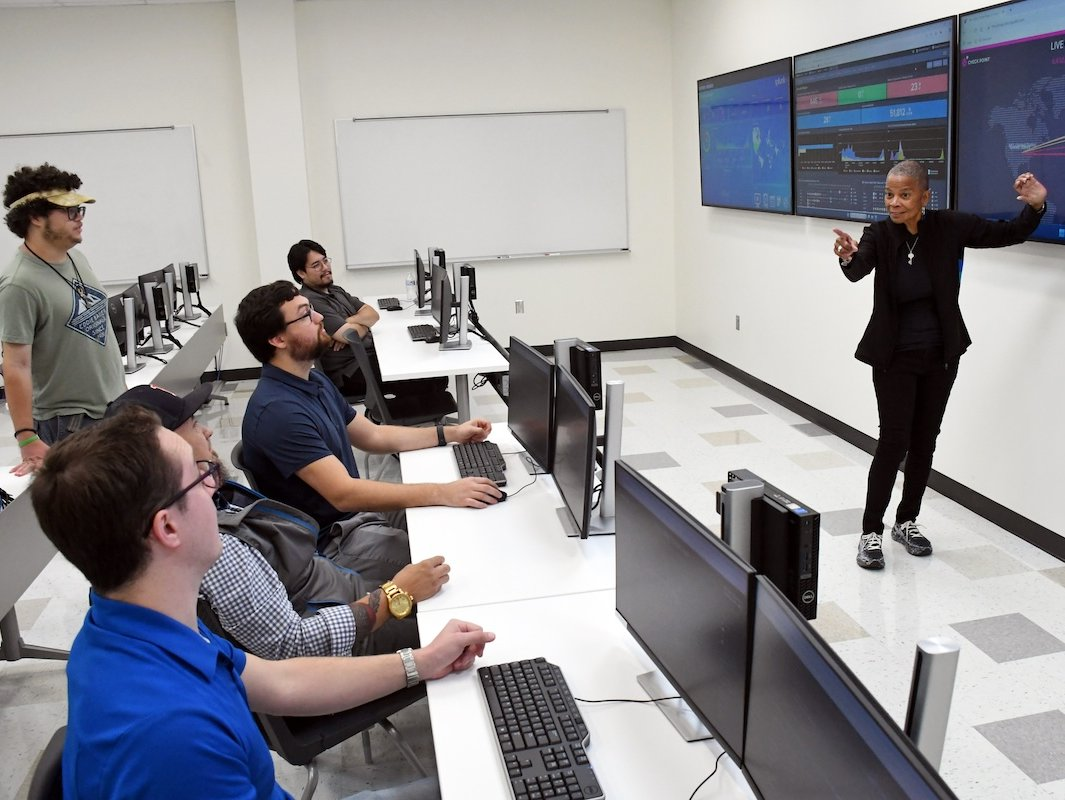
Why Is This Important for Houston?
For a city where a calculation error or data leak could cost an environmental disaster or the loss of billions in investment, TEE is not just a security “feature.” It is a technological foundation that allows the following:
- Reduction of costs for proprietary data centers by 40% through a secure transition to the cloud.
- Acceleration of R&D through secure collaboration between competitors.
- Compliance with the strictest US cybersecurity requirements (CMMC) without excessive effort.
This ecosystem makes Texas a global leader in Confidential Computing, creating new jobs for developers capable of building Zero Trust architectures.
The Future of Confidential Texas
As of the first quarter of the 21st century, Houston has firmly established itself as a leader in hardware-based information protection. TEE integration is becoming a mandatory condition for government contracts and cooperation with NASA. The only challenge lies in the complexity of adapting legacy applications to new processor requirements, but the economic impact of preventing cybercrime outweighs the costs of modernization.
Comparative Analysis of Digital Asset Protection Strategies
| Comparison Parameter | Encryption at Rest | Protection in Transit | Trusted Execution Environments |
| Object of Protection | Files on storage devices | Network traffic | Processes in RAM |
| Lifecycle Stage | At rest | In transit | In use |
| Isolation Level | Software-based | Protocol-based | Hardware-based (chip) |
| Threat Mitigated | Disk theft | Packet interception | Administrative espionage |
| Implementation Complexity | Low | Medium | High (requires new CPUs) |
Sources:
- https://houston.org/news/houstons-biotech-ecosystem-ideal-launchpad-life-sciences-startups/
- https://www.dhiria.com/en/blog/are-trusted-execution-environments-trustable
- https://www.13wmaz.com/article/news/education/new-cybersecurity-pathway-program-houston-county/93-bb8f8c45-14be-4ee4-9d27-bd6ed37941cf
- https://houston.org/news/tech-innovation-landscape-takeaways/
