

Traditional academic education has ignored the needs of production personnel for years, focusing instead on training managers and theorists. However, modern industry in Houston has faced a colossal deficit of skilled technicians capable of maintaining complex, next-generation equipment. EdTech platforms offer a solution through gamification and digital simulation of complex processes, transforming dull learning into an interactive experience. Details on the latest trends in training new personnel are in our article on houstoname.com.
Evolution of Learning Beyond Offices
Today, a future welder or electrician begins their journey not with dangerous practice at an expensive site but with a virtual simulator equipped with haptic feedback. This allows novices to practice critical skills in a safe environment where the price of a mistake is merely a program reboot, rather than equipment damage or injury.
The implementation of simulators provides Houston’s training centers with significant operational advantages:
- Economic Optimization: Companies radically reduce costs for consumables, such as welding metals, expensive electrodes, or industrial lubricants that were previously consumed by the thousands of liters during training.
- Accelerated Learning: Statistics indicate that skill acquisition through interactive simulations occurs twice as fast as reading manuals, thanks to the rapid formation of neural connections.
- Reduced Depreciation: Real high-tech equipment is not at risk of breaking due to student inexperience, preserving its lifespan for direct production.
- Accessibility and Scale: Digital solutions allow for mass retraining of personnel simultaneously across multiple locations, regardless of available space in a physical workshop.
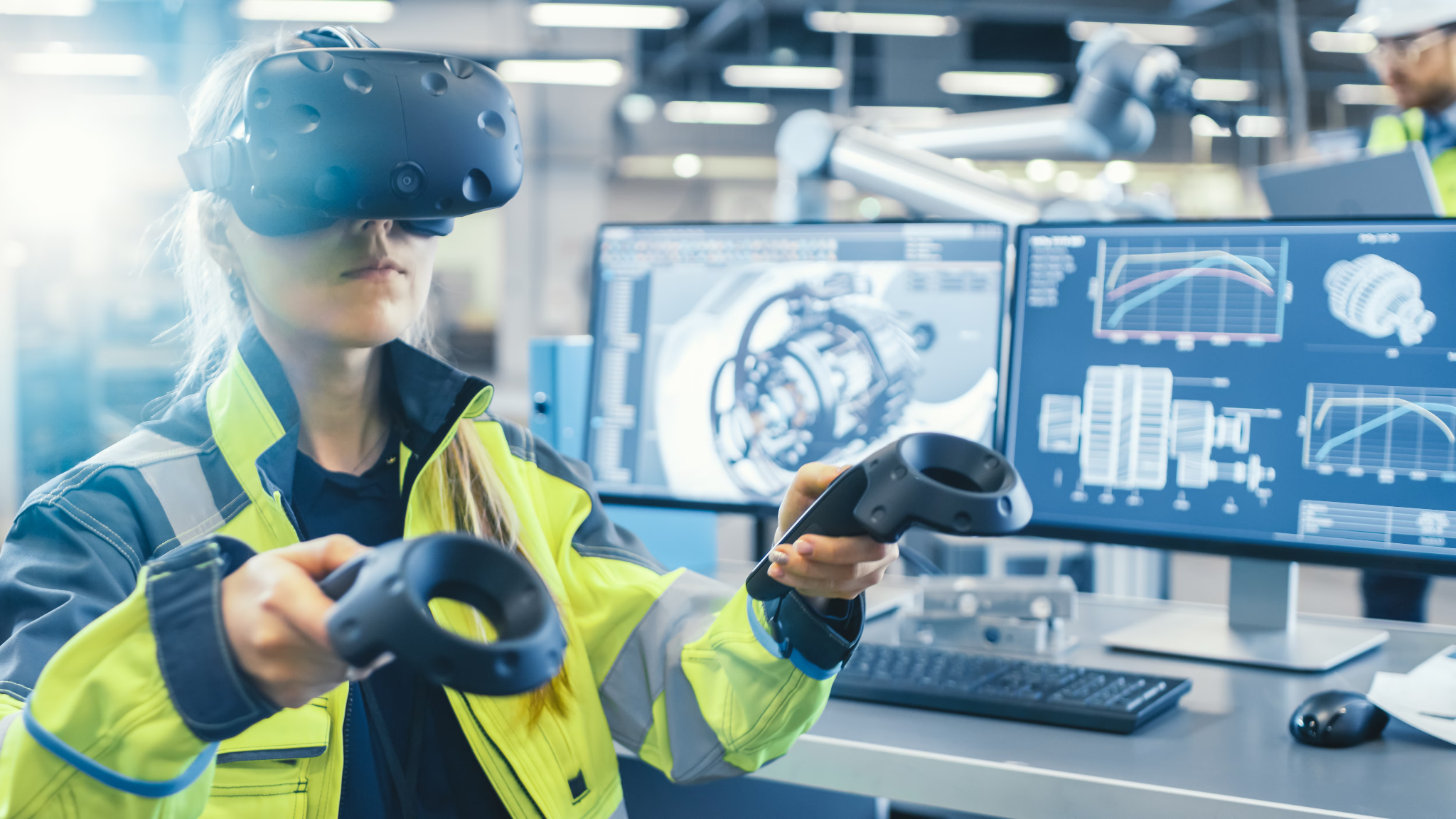
Transformation of the Concept of Mastery
Through the use of VR and AR technologies, the training of technical specialists in Texas moves beyond boring classrooms. Programs automatically track movement precision, tool tilt angles, and adherence to safety protocols, providing instant error analysis. This creates conditions for an individual learning pace, where each student can perfect their mastery before stepping onto a real site.
For Houston’s industrial sector, especially in renewable energy and aerospace manufacturing, such simulators have become the key to quickly closing the talent gap. Mastery is no longer the result of decades of monotonous labor; it is the result of intensive, intellectual, and safe training in a digital environment. EdTech for “blue-collar” workers proves that technology can make complex professions attractive to a new generation of specialists, guaranteeing a stable influx of skilled labor for the industry.
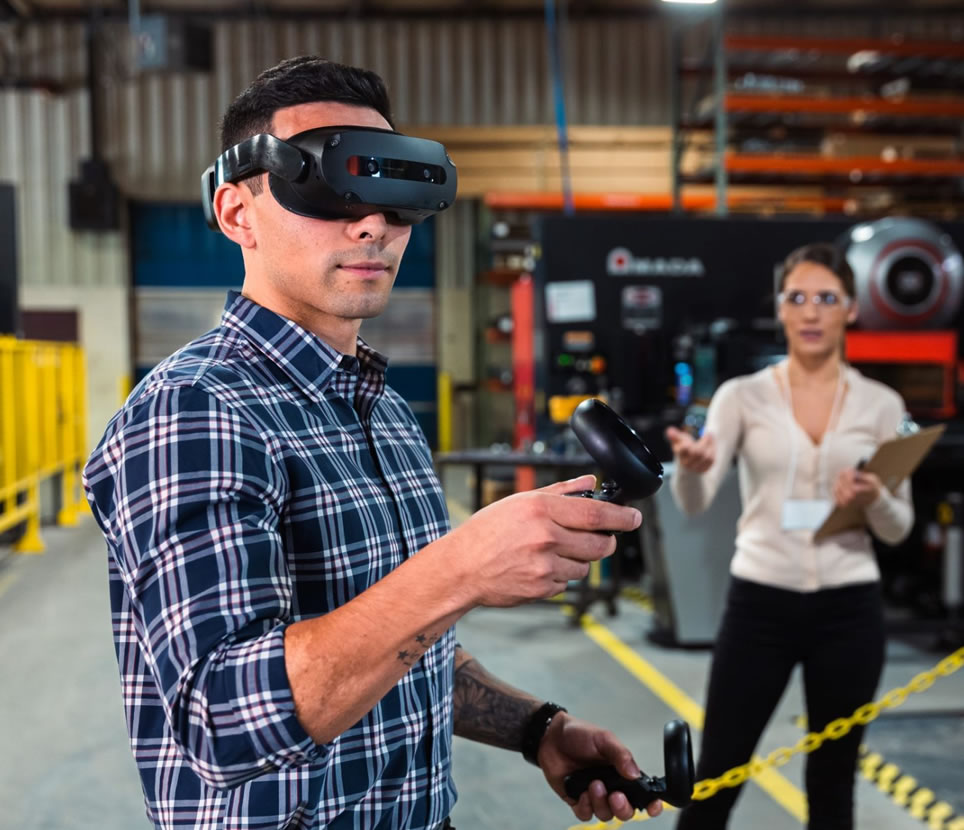
Digital Twins of Tools: Immersion Technology
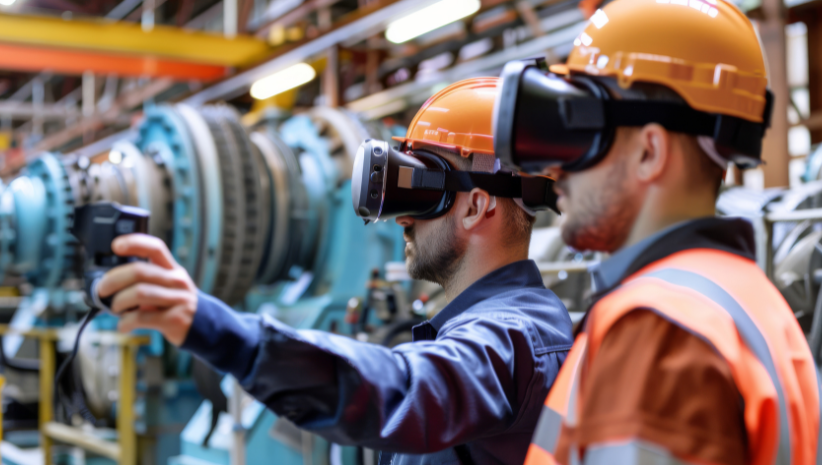
The transition from textbooks to interactive learning has become possible through the combination of digital twins, real machinery, and augmented reality technologies. In training centers near the Energy Corridor, trainees use VR headsets to practice emergency response scenarios on oil platforms that are physically impossible or too dangerous to recreate in reality. This creates conditions for deep immersion, where every movement of the technician is recorded by an analytical system for further study.
The application of such technologies in industrial training is based on several technical principles:
- Haptic Feedback: Modern manipulators transmit metal resistance, tool vibration, and part weight, allowing for the development of real muscle memory without contact with a physical object.
- High-Risk Scenarios: Simulators allow for the repeated practice of actions during fires, gas leaks, or critical pressure failures, forming automatic responses in stressful situations.
- Objective Assessment: The system records every millimeter of deviation from the standard, eliminating instructor subjectivity and ensuring that only the best specialists are permitted to work on real sites.
- Remote Mentorship: Experienced masters can connect to a student’s virtual session from anywhere in the state, providing real-time prompts via an augmented reality interface.
These systems integrate with corporate databases, allowing instructors to track each worker’s progress in real-time. The use of artificial intelligence helps adapt the complexity of tasks to an individual’s capabilities, eliminating boredom or overexhaustion. Every move of the manipulator is captured by sensors, turning a master’s subjective assessment into an objective digital success metric.
For Houston’s industrial giants, the use of retraining simulators has been the answer to rapid technological development. When a plant upgrades a robotics line, personnel do not need to wait for the physical installation of equipment—training begins months in advance in a virtual environment. This shortens the launch time for new capacities and minimizes errors at the start.
The Economics of Mass Retraining
A global shift in the technological order requires millions of people to quickly change their professional profiles. Simulators are becoming the only way to implement this transition without stopping global production chains. For example, Houston’s oil giants use mobile VR stations to train personnel directly on remote platforms, eliminating the need for long trips to training centers and saving time and logistical resources.
The flexibility of EdTech platforms allows for weekly updates to training courses, responding to new safety standards or equipment types. The cost of a software license is significantly less than the cost of an inexperienced operator’s mistake, which could cost a company millions of dollars in damages. Consequently, the market for educational services for vocational trades shows steady annual growth of fifteen percent, attracting increasing venture investment.
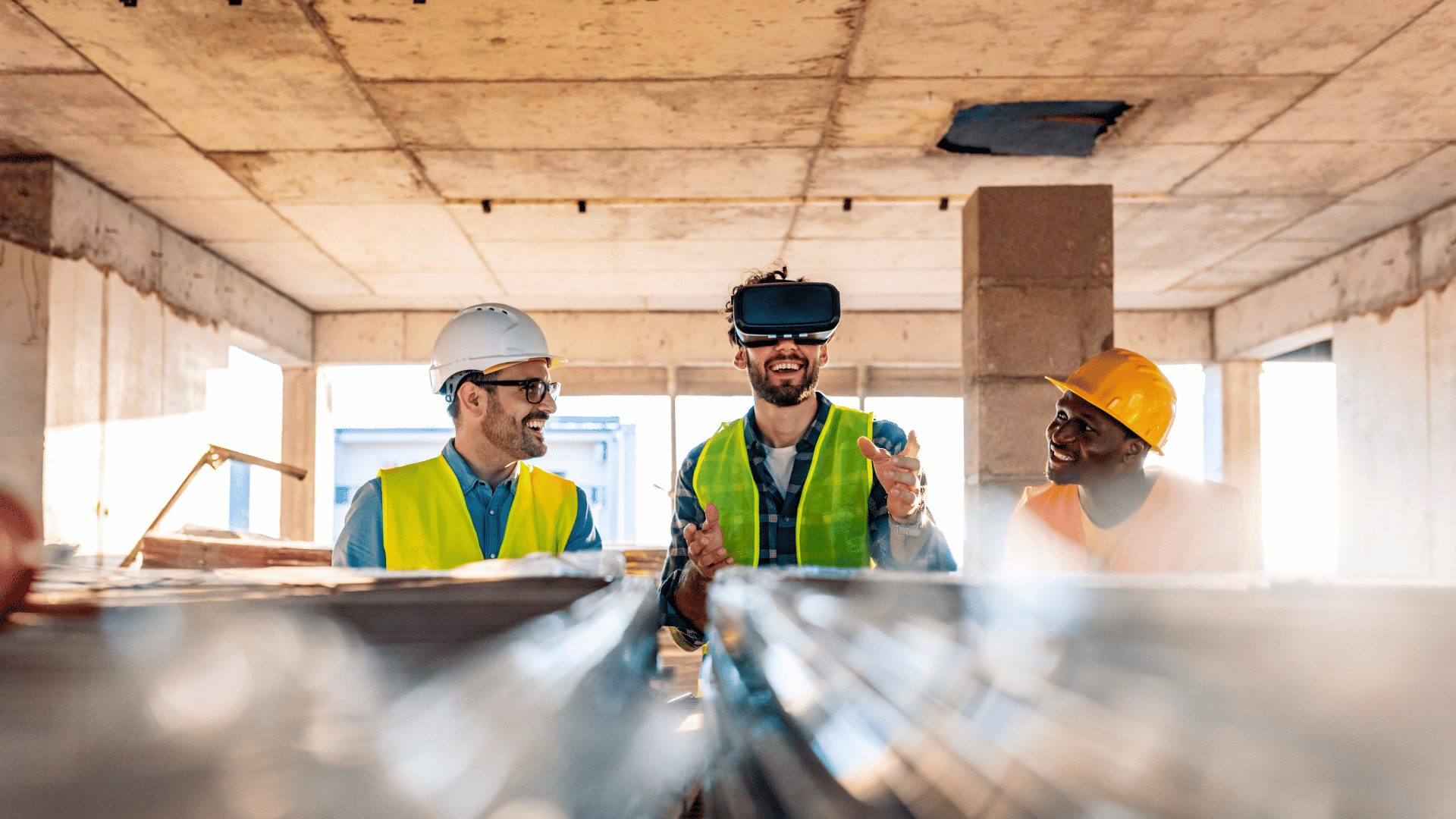
The Future of the Workforce
By the middle of this decade, the boundary between digital learning and real labor has nearly vanished. Augmented reality glasses are becoming a standard piece of equipment, guiding technicians through procedures directly during repairs. This reduces the cognitive load on the individual, allowing them to focus on execution quality rather than memorizing instructions.
Further development of the sector will depend on the integration of 5G networks, which will ensure the seamless operation of cloud simulators in the most remote corners of the planet. Unions and government bodies are already beginning to recognize hours spent in virtual reality as official professional experience.
We are witnessing the formation of a new class of workers—“techno-collars”—who are equally skilled with both a heavy wrench and complex software code. This is a fair transformation where technology does not replace the person but empowers them with super-capabilities.
Comparative Effectiveness of Personnel Training Methods
| Analysis Parameter | Classical Training (Lectures + Internship) | EdTech Simulators (VR/AR/Haptics) |
| Speed of Preparation | Months / Years | Weeks / Days |
| Injury Risk | High (during practice) | Zero (virtual environment) |
| Cost of Mistake | Equipment breakage, downtime | Only a scenario restart |
| Material Mastery | 20-30% (passive perception) | 75-90% (active action) |
| Mobility | Tied to a training center | Training in any location |
Sources:
- https://process.honeywell.com/us/en/news-and-events/newsroom/press-releases/honeywell-introduces-virtual-reality-based-simulator-to-optimize-training-for-industrial-workers
- https://atsindustrialautomation.com/blog-posts/virtual-reality-in-manufacturing-how-to-solve-training-gaps-with-immersive-tech/
- https://fatfinger.io/benefits-and-limitations-of-virtual-reality-vr-training-for-hazardous-work/
