

Houston is a diverse and multifaceted city. It’s the space hub of the USA, the medical capital of the world with the largest center, a port city, and the energy cluster of the region—the list could go on. Each of these factors shows that the city has many facets. However, all of this also has an extremely significant impact on the environment, and it’s not a positive one. Let’s examine the environmental circumstances in Houston further on houstoname.
The Current State of Affairs
The beginning of the 21st century was marked by an increase in Houston’s population and the growth of the city’s economic power. This created many new jobs and contributed to the financial stability of its residents. However, such urbanization has led to negative environmental changes in Houston. And although these changes have been a common occurrence for Houstonians for several decades, the situation remains nearly critical. According to the latest analytical reports from the 2020s, the city’s environmental situation has improved slightly compared to the 1990s when smog was as common as the morning sunrise. Houston remains the city with the most polluted air in all of Texas. The biggest contributor to air pollution is motor vehicles, and Houston’s streets are always congested with them. The environmental report for 2023 presents alarming figures: due to high levels of ozone and fine particles in the air, including microplastics, 50,000 to 100,000 people die annually in the USA. These deaths are associated with respiratory diseases caused by poor air quality, lung cancer, and cardiovascular damage.
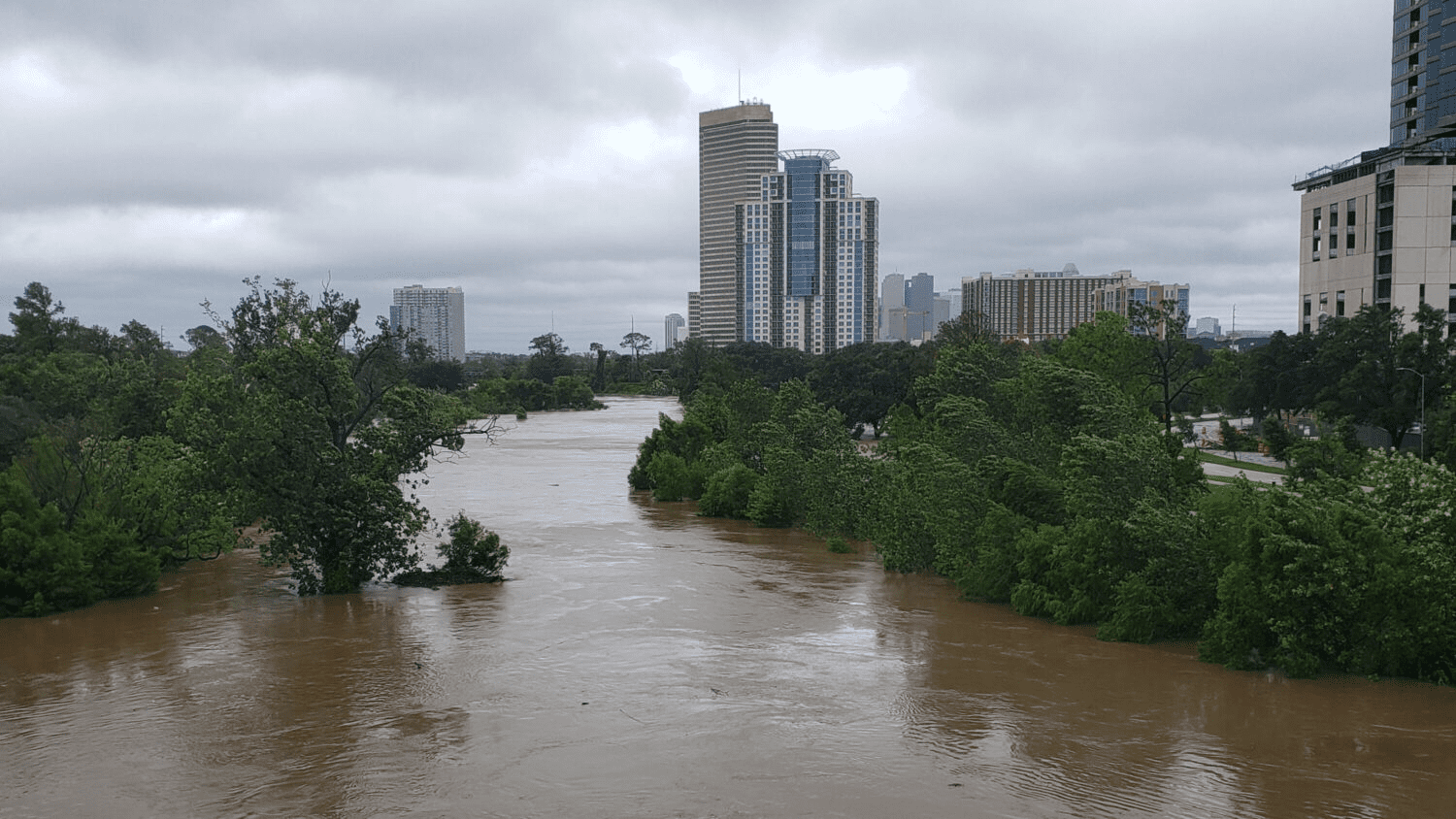
The situation with water is not much better. According to the latest monitoring data, 67% of the city’s water bodies are not suitable for drinking as they are contaminated. Houston is known for having many water bodies, rivers, and smaller streams that are home to entire ecosystems and used to meet a significant portion of the residents’ drinking water needs in the past. The stated percentage of pollution calls for serious consideration and decisive action. The main contributors to water pollution are industrial discharges, which account for the lion’s share, residential and commercial wastewater, litter, and stormwater runoff. Thus, this is a citywide problem that concerns everyone, with each resident being a direct or indirect participant in this pollution.
A Chance for Recovery and Restoration
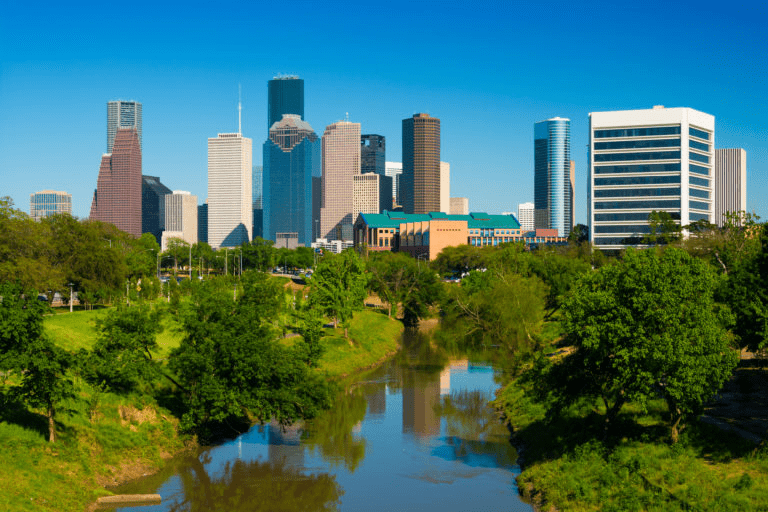
Let’s not paint too bleak a picture; the situation is quite challenging but not hopeless. Moreover, similar conditions exist in practically all cities worldwide. Therefore, it is still entirely possible to save the situation. Many environmental organizations and activists are conducting educational work among the city’s residents, and it’s showing results. For instance, over the past decades, the number of Houstonians who have switched from cars to bicycles or walking to work has increased by 12%. In a metropolis like Houston, that’s significant. The city’s industrial enterprises are also making efforts to reduce harmful emissions into the atmosphere and water pollution. Those not working in this direction face hefty fines.
Priority Environmental Campaigns
To change the situation for the better, everyone’s goodwill is needed: government officials should develop and fund environmental projects, industrial companies should involve specialists in implementing the latest environmental mechanisms that will help reduce harmful environmental impacts, and every citizen should contribute in their own way, like not using a car for at least a day or two each week. And as lofty as it may sound, the world will be saved, and with it, our descendants will have hope for a normal life.