

The Texas Medical Center (TMC) in Houston—the world’s largest medical complex—is undergoing a profound transformation. Its research institutions are shifting from merely cataloging biological systems to deliberately engineering them. Here, synthetic biology is treated not just as an extension of molecular biology, but as a full-fledged engineering discipline with its own standards, modularity, and automated design workflows.
Driven by the combined power of institutions like Baylor College of Medicine, Houston Methodist Research Institute, UTHealth Houston, and MD Anderson Cancer Center, TMC’s laboratories have evolved into cutting-edge bioengineering hubs. Within these facilities, cells are programmed like living computers, and DNA is compiled like software. Learn more about this pioneering work at houstoname.com.
The Synthetic Biology Tech Stack: From Genetic Circuits to Cell Fabs
Inside the center’s labs, biology has permanently outgrown its legacy as a purely descriptive science. Today, researchers view living organisms not as impenetrable mysteries of nature, but as programmable hardware—running on DNA instead of silicon chips, and operating via biochemical cascades rather than electrical currents.
Synthetic biology has reshaped classical genetics into a structured engineering discipline complete with standard parts, modular architectures, and rigorous production protocols.
The DBTL Cycle: How the Biological Assembly Line Works
At the center of this technological leap lies the DBTL (Design — Build — Test — Learn) framework, borrowed directly from mechanical engineering and software development. It transforms what was once an unpredictable scientific endeavor into an automated, high-throughput production line.
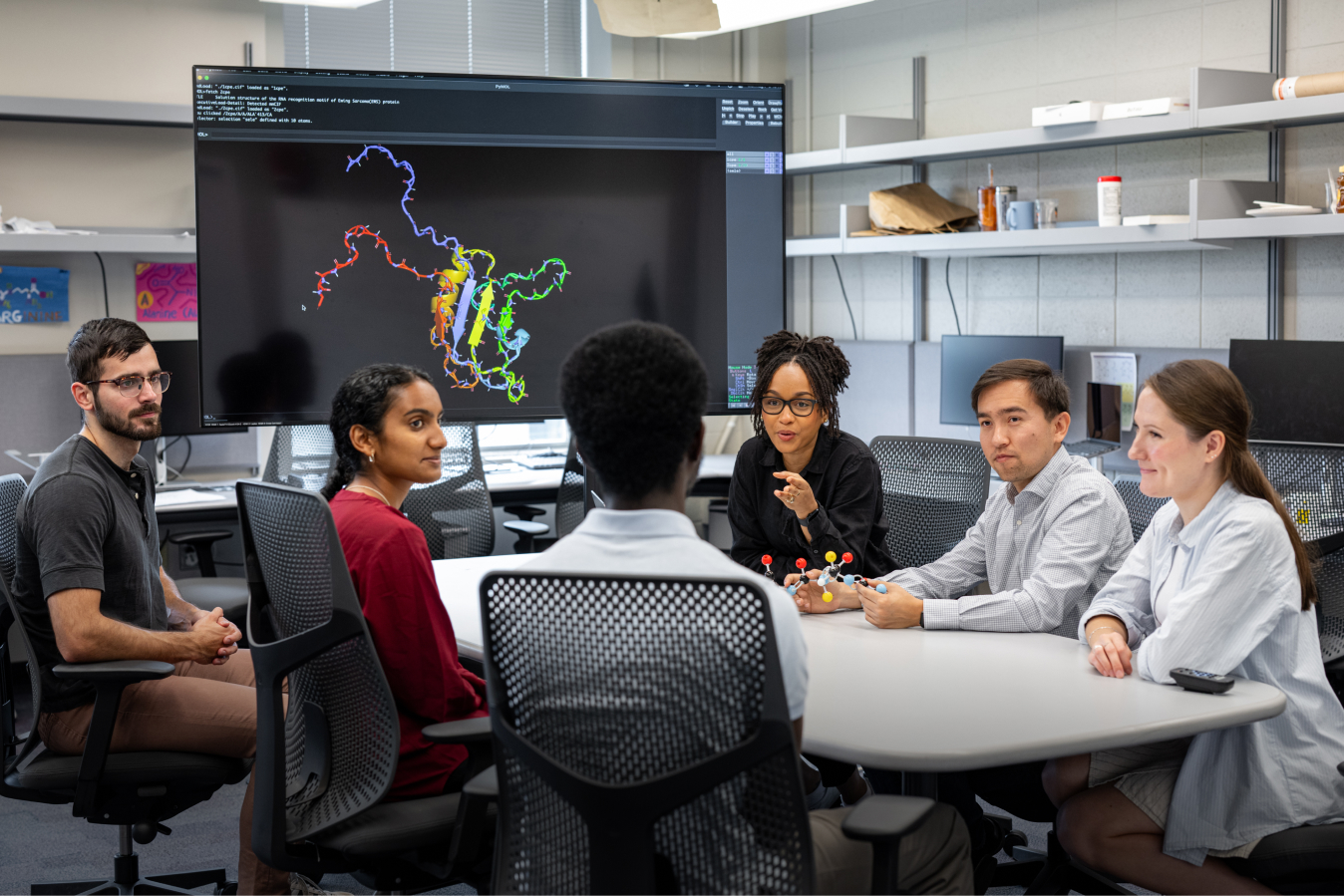
- Design. Scientists no longer draft biological pathways by hand. Specialized Bio-CAD software models genetic circuits much like electrical engineers design microchips. Researchers build digital maps of plasmids—circular DNA molecules containing vital operational logic: biological logic gates, promoters, and biosensing switches.
- Build. Digital code is converted into physical matter. Using high-throughput DNA synthesis and precision gene-editing tools, bioengineers manufacture synthetic genetic constructs and deliver them directly into host cells.
- Test. The resulting engineered cells are transferred to automated screening platforms. Robotic workstations evaluate thousands of cellular variants in seconds, verifying whether the circuit executes correctly, measuring targeted protein and enzyme yields, and screening for potential cellular toxicity.
- Learn. High-dimensional datasets generated during testing are fed into machine learning pipelines. AI detects hidden patterns in cellular behavior, flags logic bugs in the original sequence, and suggests an optimized genetic blueprint for the next design iteration.
Cell Fabs: Micro-Scale Foundries of the Future
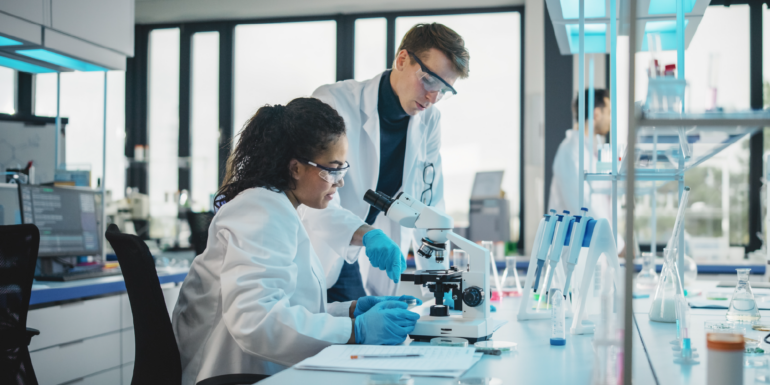
Embracing the DBTL cycle has sparked the rise of “cell fabs”—or biofoundries—across Houston. Instead of traditional assembly lines, automated liquid-handling robots move across cleanrooms; instead of mechanical gears, they assemble DNA strands. These biofoundries can build and test tens of thousands of unique genetic variations in a single day, shrinking months of meticulous benchwork into hours of automated throughput.
These cellular foundries have already expanded well beyond academic medicine. Reprogrammed microorganisms function as living micro-bioreactors capable of churning out targeted therapies for complex diseases, clean biofuels, plastics that degrade in a matter of days, and self-healing building materials. TMC is proving that when biology adopts an engineering mindset, the line between living organism and precision machine disappears.
Living, Programmable Circuits
To keep biological assembly lines running reliably, researchers have streamlined intricate cellular processes into modular, standardized toolkits.
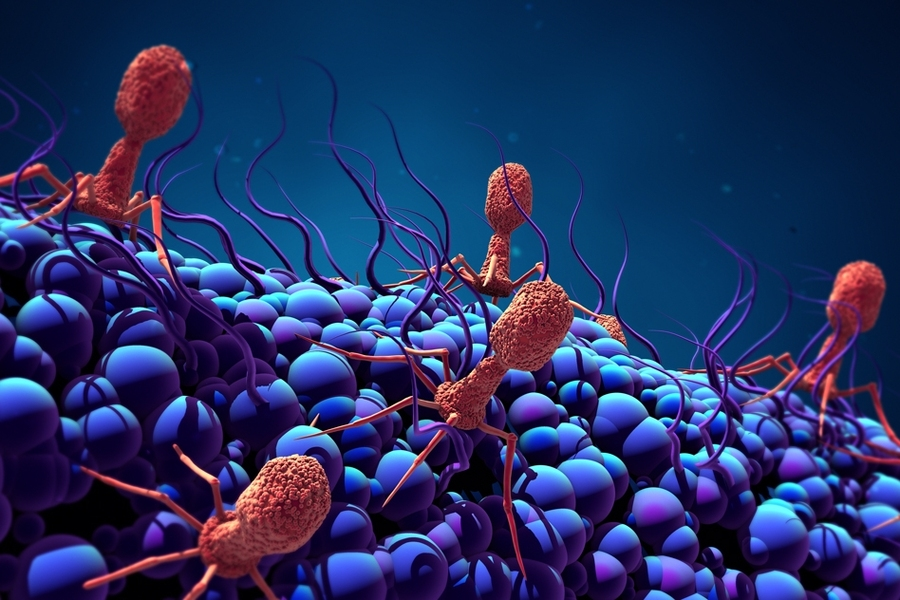
- Molecular Lego and Cellular Logic. Scientists rarely build DNA sequences from scratch anymore; they build with standardized biological “Lego bricks”. These modular genetic sequences perform discrete tasks: one initiates transcription, another tunes expression rates, and a third triggers an off-switch. By interconnecting these parts, engineers embed true computational logic into living cells. The organism begins evaluating its surroundings using “if-then” logic. For example, once it detects a specific inflammatory marker in human tissue, it autonomously synthesizes and secretes a calibrated dose of therapeutic medicine on the spot.
- Digital Blueprints and Automated Assembly. Creating a new genetic circuit now closely resembles designing an electronic device in CAD software. Specialized tools simulate the behavior of candidate DNA strands and eliminate errors long before wet-lab experiments begin. Validated blueprints are then sent to automated workstations that synthesize the required molecular constructs with sub-microliter precision—entirely free of human error.
Breakthrough Research Frontiers Across TMC Laboratories
Houston’s synthetic biology initiatives focus directly on the most challenging hurdles in modern medicine and transplantation. Instead of passively mitigating symptoms, scientists are engineering living medicines that can actively navigate the human body and make therapeutic decisions in real time.
“Smart” Hunters: Programmable Cell Therapies
At the Texas Medical Center, classic cancer immunotherapies are receiving a major digital overhaul. Scientists are developing next-generation immune cells dubbed CAR-T and CAR-NK 2.0 platforms. The primary drawback of early-generation cell therapies was non-specific targeting, which occasionally caused immune cells to attack healthy organs.
Houston engineers addressed this by fitting immune cells with dual-biosensor circuits that operate through strict biological logic (AND gates). The cell launches its cytotoxic payload only when it detects two unique tumor antigens at the same time. If only a single signal is present, the cell remains dormant. This biological failsafe prevents “friendly fire” against healthy tissue, making the intervention remarkably pinpointed.
Cell-Free Production: Speed at the Edge of Possibility
Another major frontier is the deployment of cell-free systems (Cell-free systems). Traditional biomanufacturing of recombinant proteins or vaccines requires cultivating billions of living cells in massive bioreactors, taking days or even weeks.
Researchers at TMC stripped away the cell membrane and structural clutter, preserving only the active enzymatic machinery inside a reaction mixture. Synthesizing a life-saving protein or complex pharmaceutical compound no longer depends on waiting for bacteria to divide. Genetic instructions are introduced straight into the active mixture, accelerating drug production by orders of magnitude.
Microscopic Pharmacists Inside Us
A flagship initiative in Houston is the engineering of therapeutic microbiome strains. Instead of subjecting patients to daily handfuls of pills or uncomfortable injections, scientists are programming beneficial bacteria that naturally populate the human digestive tract.
These engineered microbes act as autonomous in-body pharmacists. They continuously scan their biochemical environment. At the first sign of trouble—such as a sudden blood sugar spike or an inflammatory flare-up—they immediately synthesize and release the exact needed dose of insulin or anti-inflammatory molecules right at the site of pathology.
Comparing Paradigms: Classical Biotechnology vs. Synthetic Biology
| Metric | Classical Biotechnology | Synthetic Biology at TMC |
| Core Substrate | Naturally occurring genes and wild-type organisms | Rationally designed synthetic genetic circuits |
| Methodology | Trial and error | Standardized engineering cycle (DBTL) |
| Development Speed | Years of laboratory experimentation | Weeks using Bio-CAD and AI modeling |
| Targeting Precision | Systemic or off-target effects | Localized response triggered by distinct biomarkers |
The Translational Ecosystem: From Blueprint to Bedside
The defining strength of the Texas Medical Center is the absence of a divide between fundamental research and clinical practice. Here, bioengineering labs share walls with patient wards. Backed by high-impact accelerators and incubators like TMC Innovation, the timeline from a digital DNA sequence on a computer monitor to Phase I human clinical trials has been compressed to an unprecedented degree. Groundbreaking discoveries do not sit idle in academic journals; they translate directly into patient treatment protocols.
Synthetic biology across Houston’s institutions is moving healthcare away from a reactive model—where doctors step in only after disease takes hold—toward predictive, precision engineering. Building autonomous biological machines capable of detecting and repairing cellular malfunctions internally creates an entirely new benchmark for treating oncology, autoimmune diseases, and severe genetic conditions. By transforming living cells into instruments of precision design, the Texas Medical Center has cemented its place as a principal architect of future medicine.
