

The world is used to measuring Texas-sized ambition in millions of tons of steel, sprawling highways of sun-baked concrete, and the sheer scale of rocket launchpads. Yet the most profound shift in modern engineering occurred at the opposite end of the spectrum—where matter sheds its conventional physical rules and the geometry of individual atoms takes center stage.
Few realize that the concept of “indestructible” materials—capable of withstanding immense loads, shrugging off blistering heat, and actively monitoring their own structural integrity—did not originate in corporate R&D centers. Instead, it was sparked by raw scientific curiosity and a serendipitous discovery inside Houston laboratories. This houstoname.com story explores how atomic elegance became a cornerstone of Texas’s technological independence, forever redefining the limits of strength.
The Birthplace of Carbon Nanotubes: The Smalley and Kroto Breakthrough
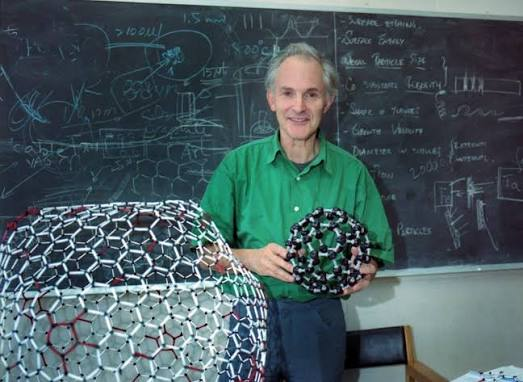
Houston’s Rice University is widely recognized as the global cradle of modern nanotechnology. It all began in the fall of 1985, when professors Richard Smalley and Robert Curl, alongside their British colleague Harold Kroto, set out on an ambitious quest: to understand how carbon chains form in stellar environments. Instead of cosmic answers, they stumbled upon an entirely new allotrope of carbon: spherical cages of 60 atoms arranged in the exact geometric pattern of a classic soccer ball. Inspired by architect Buckminster Fuller’s geodesic domes, they dubbed these structures “buckyballs” or fullerenes. The elegance and fundamental impact of this discovery sent shockwaves through chemistry and physics, earning the trio the 1996 Nobel Prize in Chemistry.
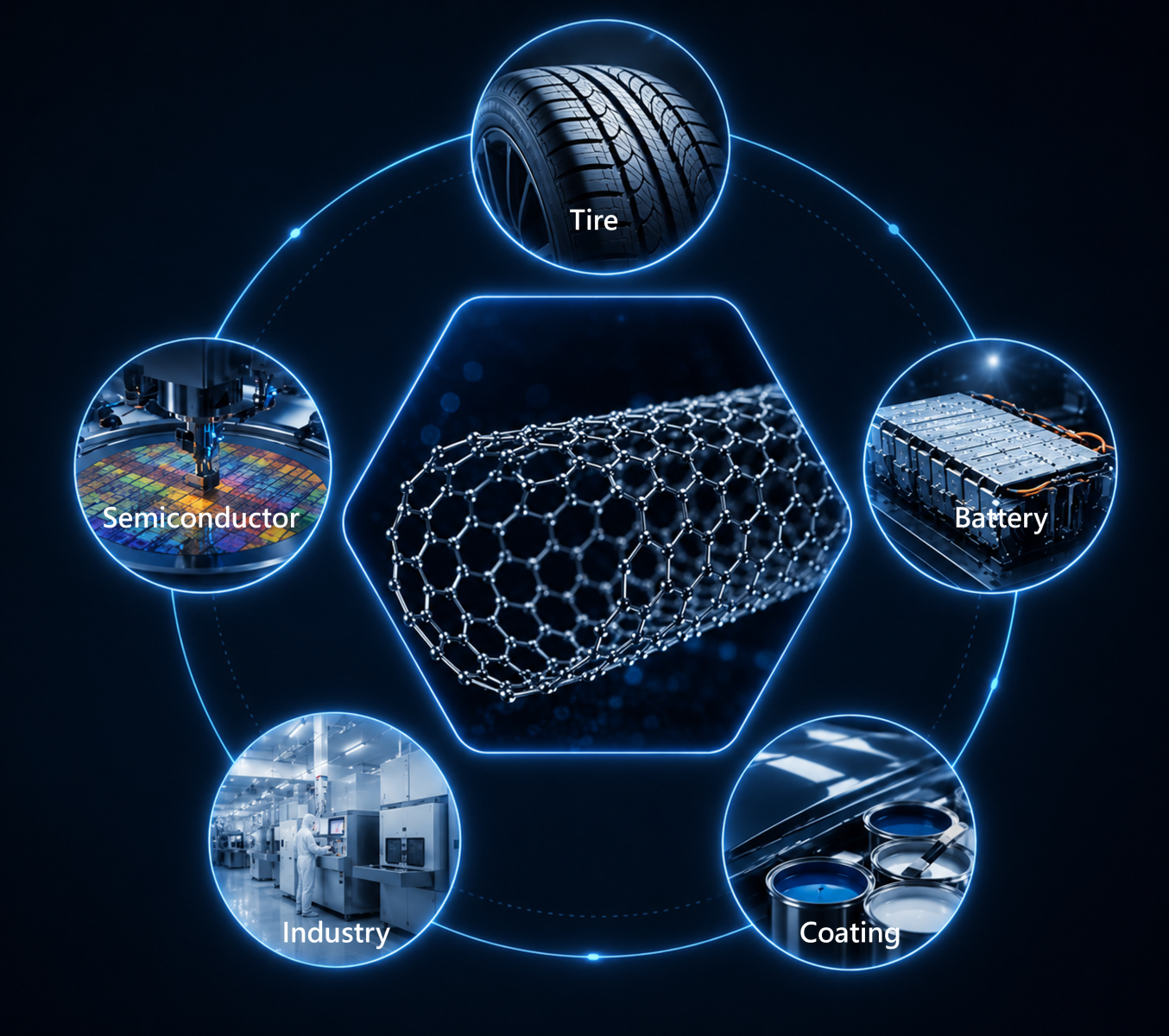
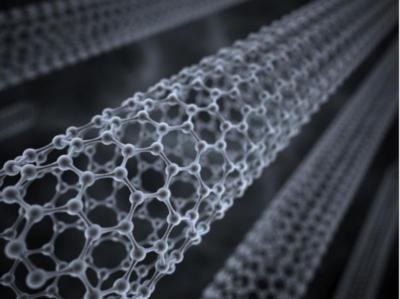
The buckyball frenzy laid the theoretical and experimental groundwork for one-dimensional carbon structures, serving as a direct bridge to the synthesis and widespread study of carbon nanotubes and graphene. If a single sheet of graphene is like a piece of paper, a carbon nanotube is that same sheet rolled into a seamless microscopic cylinder just one atom thick. Houston researchers quickly realized the game-changing potential of these tiny filaments: they are hundreds of times stronger than steel at a fraction of the weight, and they conduct electricity better than copper.
The Smalley-Curl Institute, which brought together Rice University’s premier nanotechnology initiatives, became the direct heir to this pioneering school of thought. Until his final days, Richard Smalley championed the idea of using nanotubes to build ultra-efficient power cables capable of transmitting electricity virtually without loss, even musing about the potential to construct a space elevator. Today, Houston scientists engineer next-generation composite materials that surpass top-grade steel and titanium in specific strength, electrical conductivity, and weight—turning bold visions of ultralight aircraft and resilient infrastructure into everyday reality.
The Anatomy of Strength: Carbon Nanotubes and Graphene
In materials science, carbon nanotubes have earned near-mythic status. The reason lies in their extraordinary pairing of featherweight density and immense atomic bond strength. In practice, a cylinder with a single-atom wall easily outperforms the highest-grade alloy steels in tensile strength, while weighing virtually nothing.
Molecular Reinforcement of Concrete and Polymers
For years, a major hurdle kept nanotubes from fulfilling their promise: they naturally clumped together into tangled bundles, making uniform dispersion nearly impossible. Rice University researchers solved this challenge by developing elegant chemical methods to disperse nanotubes evenly throughout conventional building mixtures and polymer matrices.
As a result, these nanoscale fibers act as microscopic rebar. They settle into the finest pores of the concrete and physically halt microcracks the moment the material begins to cure. This turns otherwise brittle compounds into robust monoliths capable of enduring extreme structural loads.
Enhancing Resistance to Deformation and Fatigue
A similar breakthrough occurs with graphene. Infusing even a tiny fraction of this 2D carbon honeycomb lattice into advanced composites yields a dramatic performance leap, boosting tensile strength and fracture resistance by 30% to 50%.
Consider bridge decks, wind turbine blades, and aircraft wings that no longer degrade under repeated cyclic loads and vibrations. By arresting fatigue damage right at the atomic level, carbon nanostructures extend the operational lifespan of major infrastructure by decades.
Industrial Applications: From Aerospace to Next-Gen Bridges
The innovative materials developed at Rice have long outgrown the lab bench. Today, they are making real inroads into commercial markets, driving breakthroughs across critical sectors of both the Texan and global economies.
- Aerospace components and space engineering. In close partnership with NASA and Houston’s commercial space industry, next-generation nanocomposites are being integrated into spaceflight hardware. Carbon nanostructures enable the manufacturing of rocket airframes, satellites, and orbital modules that deliver exceptional strength alongside dramatic weight savings. In an industry where every kilogram shaved saves tens of thousands of dollars in launch costs, these materials are game changers.
- Reinforcing Texas highways and bridges. The Texas Department of Transportation has moved into field testing nano-engineered concrete on key state infrastructure. Blending nanotubes into concrete for overpasses, viaducts, and bridge pillars creates pavements capable of enduring heavy freight traffic and brutal temperature swings. By virtually eliminating microcracking, this technology prevents potholes and frees road networks from endless repair cycles.
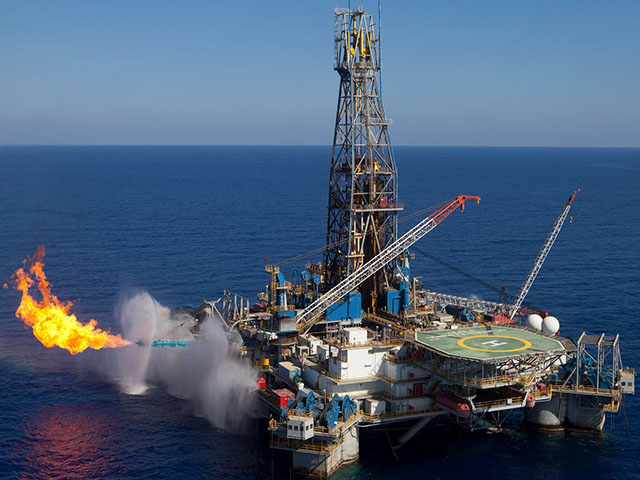
- Protecting offshore drilling platforms. The Gulf of Mexico’s oil and gas sector has turned to nanotechnology to counter a persistent enemy: corrosive marine environments. Specialized graphene and nanotube-based coatings applied to platform support structures deliver unprecedented corrosion protection. These barriers repel saltwater degradation while reinforcing mechanical resilience against violent storms and ocean currents.
From low Earth orbit to deep-sea wells and sun-scorched Texas asphalt, Houston’s breakthroughs in materials science are setting a new standard for engineering. Nanotechnology has shifted from futuristic theory into the bedrock of resilient, enduring 21st-century infrastructure.
Energy Efficiency and Conductivity in Nanostructured Materials
Beyond exceptional mechanical strength, innovations from Rice University are opening new frontiers in energy efficiency and responsive electronics. Carbon nanostructures serve not just as a rigid skeleton, but as a responsive nervous system for tomorrow’s infrastructure.
- “Smart” concrete with built-in stress sensors. Incorporating electrically conductive carbon nanotubes turns standard concrete into a distributed sensor network. Because nanotubes conduct electricity efficiently, internal stresses, structural shifts, or microfissures alter the material’s electrical resistance. Concrete can effectively “feel” its own fatigue and alert engineers to vulnerabilities long before visible damage appears, substantially lowering the cost of inspecting bridges and high-rises.
- Thermal stability in the Texas climate. Blistering Texas summers bring prolonged heat waves that push civil infrastructure to its limits. Thermal expansion in concrete and steel buckles hundreds of miles of roadway and strains load-bearing components each year. Nano-engineered composites feature an exceptionally low coefficient of thermal expansion alongside high thermal conductivity, allowing heat to dissipate evenly across a structure. This provides unmatched resistance to thermal shock and abrupt temperature swings.
Houston’s Translational Ecosystem: From the Lab to the Market
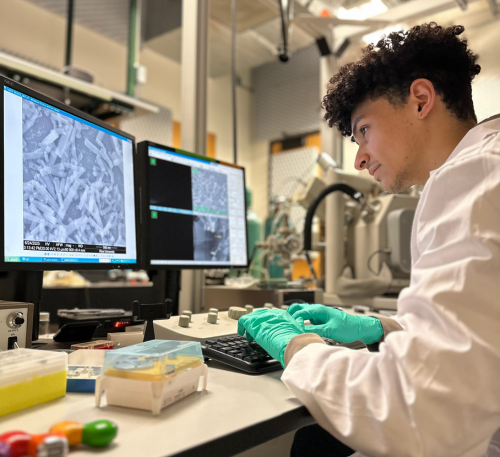
The true strength of research at Rice University lies not just in fundamental discoveries made under the microscope, but in the speed with which quantum theory translates into commercial ventures. In Houston, the distance between an academic paper and a commercial patent is measured in months, not decades. Thanks to a robust translational ecosystem, research teams collaborate directly with regional venture capital and innovation hubs, including the Liu Idea Lab for Innovation and Entrepreneurship and the biomedical powerhouse TMC Innovation.
This streamlined commercialization pipeline empowers scientists to launch high-tech startups rather than merely licensing patents to conglomerates. Today, these agile ventures tackle the central challenge of the nano industry: scaling up the synthesis of carbon fibers, graphene, and nano-additives from benchtop grams to multi-ton industrial batches. Crucially, they achieve this while preserving structural precision, making the technology viable for mass construction, automotive manufacturing, and renewable energy.
The Texas Atom and the Future of Engineering
The discovery of fullerenes at Rice University did far more than add a Nobel chapter to chemistry textbooks—it set the trajectory for 21st-century civil engineering. Carbon nanostructures provided the missing piece that allowed materials science to evolve from passively tracking structural decay to designing active, responsive systems capable of withstanding extraordinary loads and signaling internal strain.
Houston has shown that the future is built not from massive monolithic blocks, but from atomic-scale bonds. By transforming nanotechnology from an academic curiosity into a practical engine for urban development, aerospace, and energy, Texas has established a new benchmark for structural resilience—one where featherweight lightness and enduring strength go hand in hand.
