

In the world of high technology, there is a moment where rigorous mathematics transforms into pure art. The story of Larry Hornbeck and his revolutionary invention is not just a tale of another microchip. It is a chronicle of how Texan engineering genius dared to challenge the very nature of light. This is the story of the triumph of digital code over physical film, where the path to Hollywood’s most prestigious award ran through NASA laboratories and the uncompromising pragmatism of the “Silicon Prairie.”
On houstoname.com, we examine the details of the discovery that irrevocably changed the art of cinema:
- How Larry Hornbeck created a crystal that manipulates light with surgical precision;
- Why Dallas’s “impossible” invention could only survive thanks to Houston’s extreme demands;
- How DLP technology saved the telemetry of space missions from analog distortion;
- The visualization revolution in the Texas Medical Center that changed the approach to complex surgeries;
- The journey from technical prototype to an Academy Award and the total reshaping of the global film industry.
Digital Taming of Light
The technological boom in Texas was never an isolated phenomenon of a single city. While Dallas served as the “laboratory” where fundamental components were born, Houston became the massive staging ground for their implementation into the most complex systems of control, visualization, and data processing. It was in this atmosphere of Texas pragmatism—where any idea had to prove its viability in space or medicine—that the concept of the DMD (Digital Micromirror Device) was born.
From Microchips to Photon Manipulation
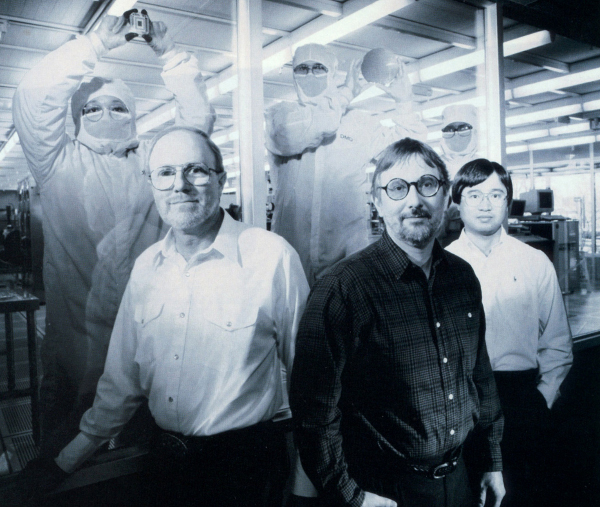
Larry Hornbeck, an engineer at Texas Instruments, began his research in the 1970s, seeking a way to manipulate light with surgical precision. His goal was to replace bulky and inaccurate analog display systems with something fundamentally new—digital. Hornbeck’s invention was so complex that many considered it impossible for mass production.
- A Technological Miracle. And yet, Larry succeeded. He created a crystal topped with millions of microscopic mirrors. Each is smaller than a human hair and capable of switching thousands of times per second, reflecting light to create an image of incredible clarity.
- The Texas Approach. This was not just a theoretical study. While Dallas stamped out the chips themselves, engineers in Houston integrated this technology into systems where failure was not an option.
This invention effectively turned light into binary code. This digital nature of light processing eliminated the flickering and color degradation inherent in old analog projectors. For the engineering world, it was akin to moving from a typewriter to a word processor—total control over every photon in real time.
The Houston Context: Where Precision Becomes Critical
Why did Houston become the “quiet harbor” for DMD development? The answer lies in the specific demands of the city. The NASA Space Center and the Texas Medical Center required a level of visualization that standard monitors of the time simply could not provide.
- Space Visualization. Processing satellite imagery and complex navigation maps required an absolute lack of distortion. Hornbeck’s technology allowed for the projection of data with crystal clarity, which was critical for mission control centers.
- The Medical Dimension. Surgeons in Houston began using DMD-based systems to display high-precision diagnostic data during operations. Manipulating light at the micro-level allowed for the creation of detailed 3D models of organs, forever changing the approach to planning complex interventions.
It was in Houston that this technology underwent its “baptism of fire” in the most extreme conditions. Houston’s pragmatic demand for reliability turned Hornbeck’s “impossible” invention into a global standard that eventually conquered cinemas worldwide.
Houston’s Contribution to the Visual Revolution
In Houston, where precision is not just a technical parameter but a matter of life and death, DLP (Digital Light Processing) technology passed its toughest test. Houston became the critical environment where this technology proved its ability to function under extreme loads and uncompromising image quality requirements.
NASA and the “Million Mirrors” at Mission Control
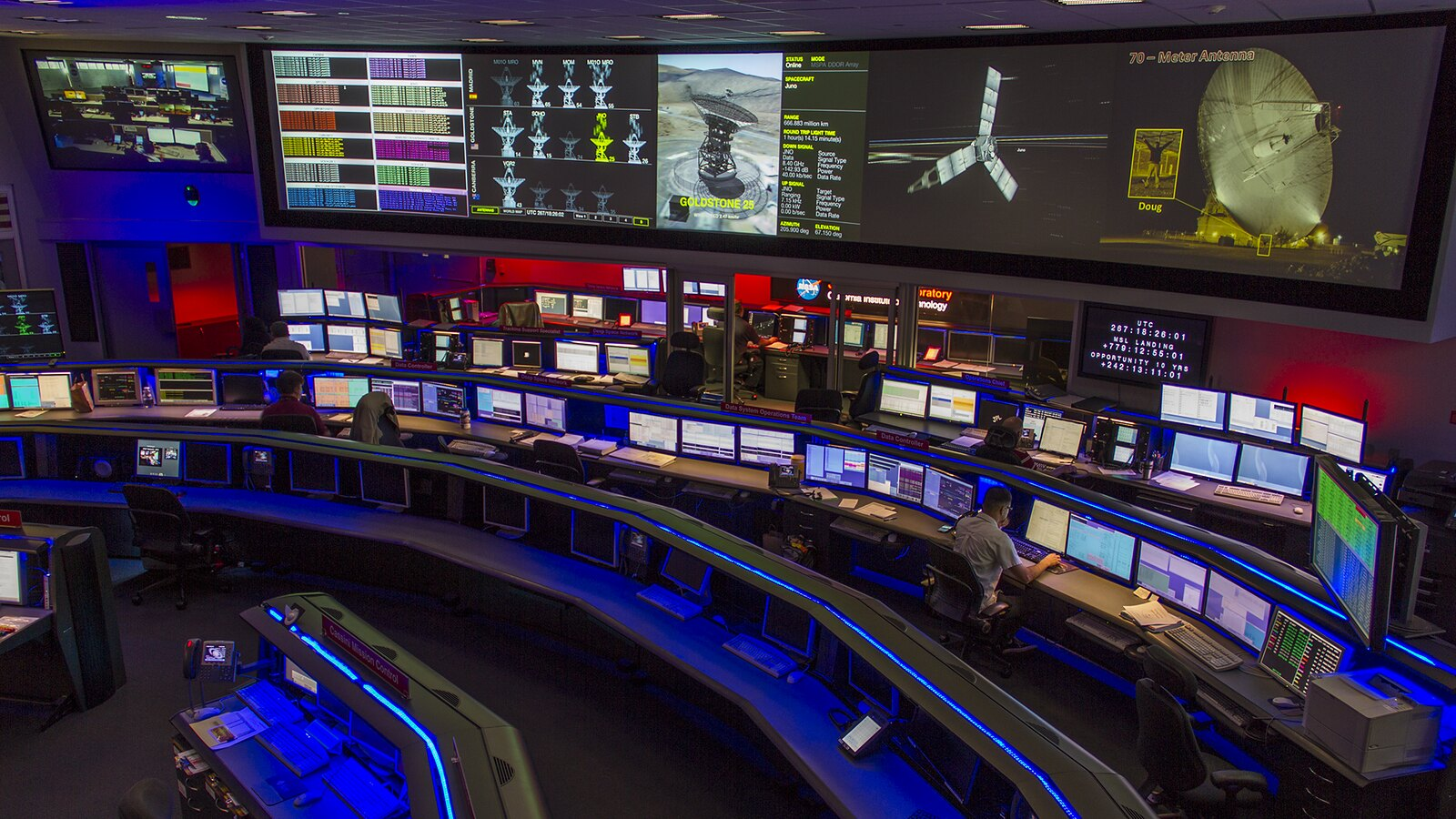
For the world’s space capital, data visualization had always been an Achilles’ heel. Before DLP, the Mission Control Center at the Johnson Space Center relied on bulky rear-projection systems or CRT monitors that suffered from phosphor burn-in, color instability, and high heat output.
- A Reliability Proving Ground. NASA needed monitors capable of 24/7 operation during multi-month missions. Houston engineers were the first to put DLP chips through stress tests. They tested how millions of microscopic mirrors held up against continuous vibration, temperature fluctuations, and intense light flow.
- Digital Stability. It was within the halls of NASA that the stability of a chip-generated digital image was proven. Unlike physical film or an analog signal, the picture did not “drift” over time. This allowed flight controllers to see telemetry with absolute clarity, where every pixel mattered for crew safety.
The Medical Standard: Color as a Diagnosis
Parallel to space, the Houston DLP proving ground expanded to the Texas Medical Center. For Houston surgeons, accurate color reproduction on projection screens during surgery became a revolutionary tool.
- Absence of Distortion. Traditional visualization methods often distorted shades of red and pink, which is critical in cardiac surgery. DLP technology, tested in Houston clinics, ensured “surgical” color purity.
- Durability in Sterile Conditions. The compactness and enclosed architecture of DLP projectors allowed them to be used in sterile surgical suites, where traditional equipment typically failed due to sensitive ventilation systems.
Triumph Over Physical Film
Houston became the site of a conceptual victory of the digital world over the mechanical. Test results in the city’s projection rooms demonstrated that a micromechanical system is far more durable than traditional film projectors.
- Wear Resistance. It was proven that the “million mirrors” do not lose quality after billions of switching cycles.
- Brightness Without Degradation. Houston tests indicated that DLP systems maintain brightness for years, whereas older technologies dimmed after just a few months of use.
Ultimately, the Houston experience of implementing DLP into critical infrastructure was the argument that convinced Hollywood and the global industry: digital was ready to replace film. Texas pragmatism proved that if a technology is reliable enough for NASA and Houston’s leading surgeons, it can handle any challenge in a movie theater or office. It was the final chord of a visual revolution that began in the labs of Texas.
The Path to the Oscar and Global Recognition
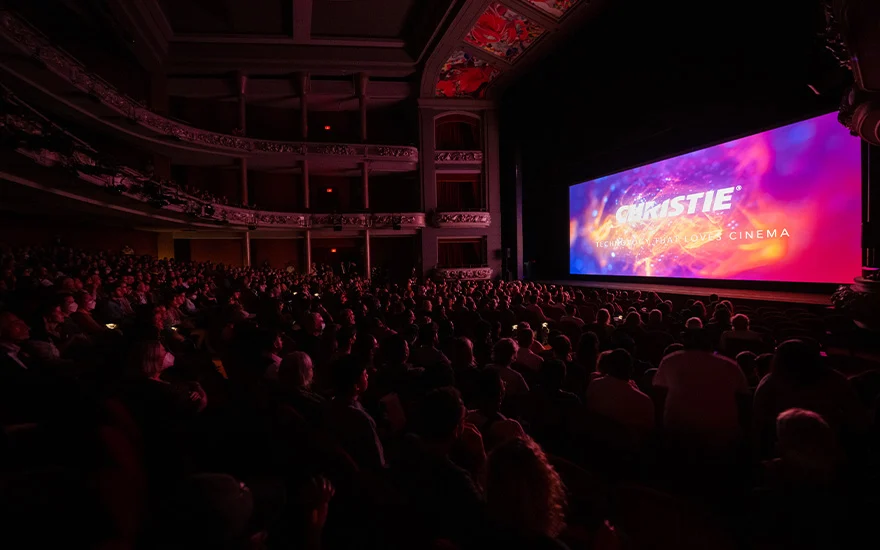
Starting as a pure engineering development for signal processing, the DMD evolved into DLP technology, which revolutionized the film industry. Thanks to this invention, the world moved away from film stock in favor of digital projection.
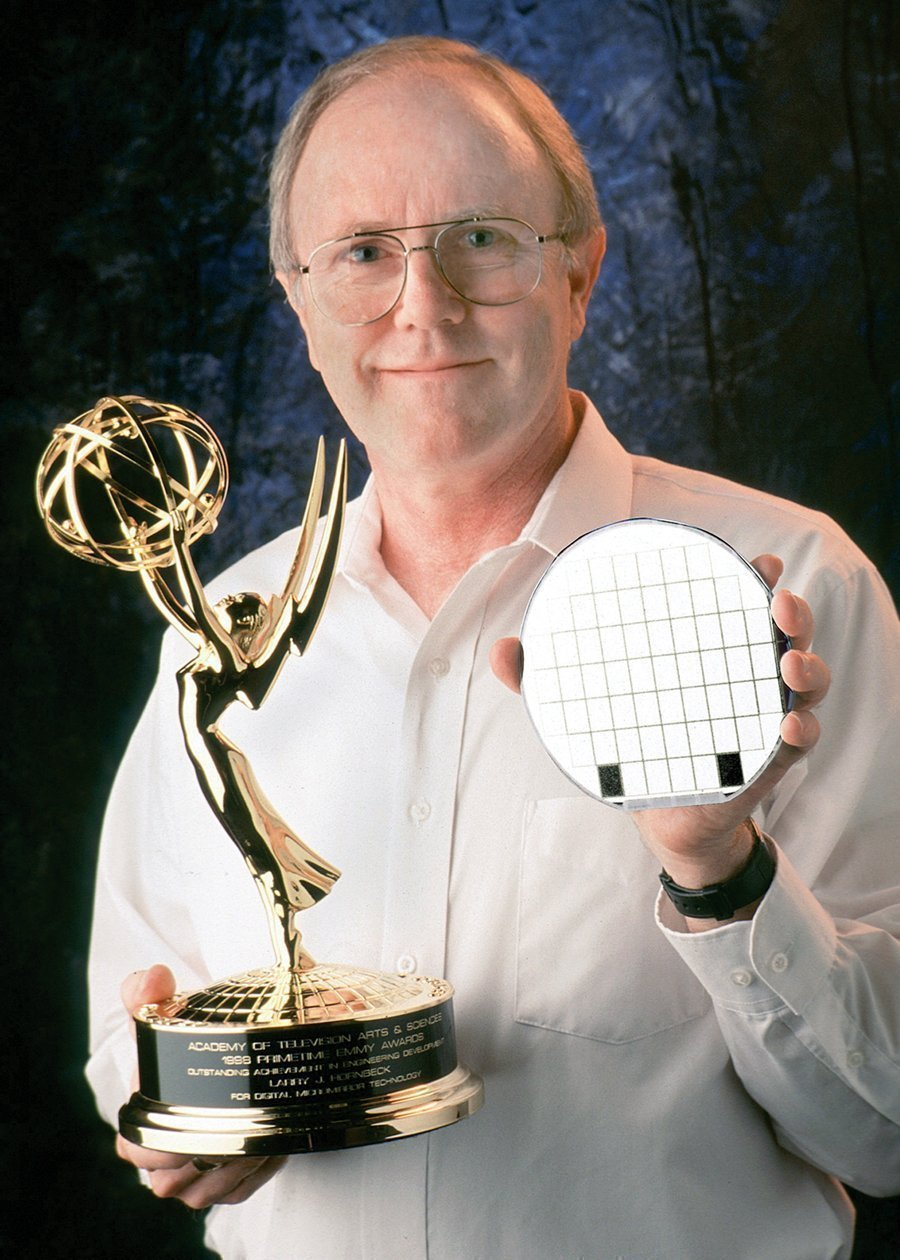
In 2015, Larry Hornbeck received an Academy Award (Oscar) for an invention that fundamentally changed how humanity watches movies. However, for Texas itself, this award was just another confirmation of a path well chosen. The DMD became the perfect embodiment of the “Silicon Prairie” legacy. An invention made in the silence of Dallas laboratories found its real, “hard” application in Houston, proving that in Texas, even light obeys the laws of precise calculation.
This device served as the final proof that the era of “hardware” had given way to the era of “intelligent matter management.” Houston, as the primary consumer of high precision, turned Hornbeck’s microscopic mirrors into a standard without which it is impossible to imagine a modern cinema or a complex diagnostic lab.
Today, when we watch laser projections in IMAX or use compact projectors, we are using Hornbeck’s legacy. His invention made high-quality imagery accessible to everyone. For Houston, Larry Hornbeck remains an example of how a single microchip can change the culture of content consumption, uniting the rigorous mathematics of microworlds with the magic of the silver screen.
Sources:
- https://www.soundandvision.com/content/let-there-be-light-larry-hornbeck-inventing-dlp
- https://spectrum.ieee.org/chip-hall-of-fame-texas-instruments-digital-micromirror-device
- https://www.bizjournals.com/dallas/print-edition/2013/08/30/tech-titans-technology-inventor.html
- https://www.invent.org/inductees/larry-hornbeck
