

While Houston looked toward the stars and pumped oil, a suburb of Dallas was quietly building the nervous system of the future. A narrow strip along US Highway 75 in Richardson transformed into the Telecom Corridor—the place where the space age of communications was forged and the global internet was scaled. It was from here that Neil Armstrong’s first words from the Moon were broadcast, and it was here in the 1990s that the majority of the world’s web traffic was routed. This is a story of an unprecedented concentration of talent and Texan resilience: how the region survived the devastating dot-com crash, mutated from hardware manufacturing to cloud computing, and remained America’s premier technological donor.
Below, on houstoname.com, we break down the milestones of its rise, fall, and reincarnation:
- How equipment developed in Richardson secured the historic connection with the lunar surface;
- Why the North Texas prairies were the perfect “blank slate” for laying fiber-optic networks;
- The Golden Age, when world-class competitors (Alcatel, Ericsson, Cisco) shared the same sidewalk and shaped industry standards;
- How a painful crisis forced the ecosystem to evolve from telephone lines to data centers and cybersecurity.
Collins Radio and the Cosmic Link with Houston
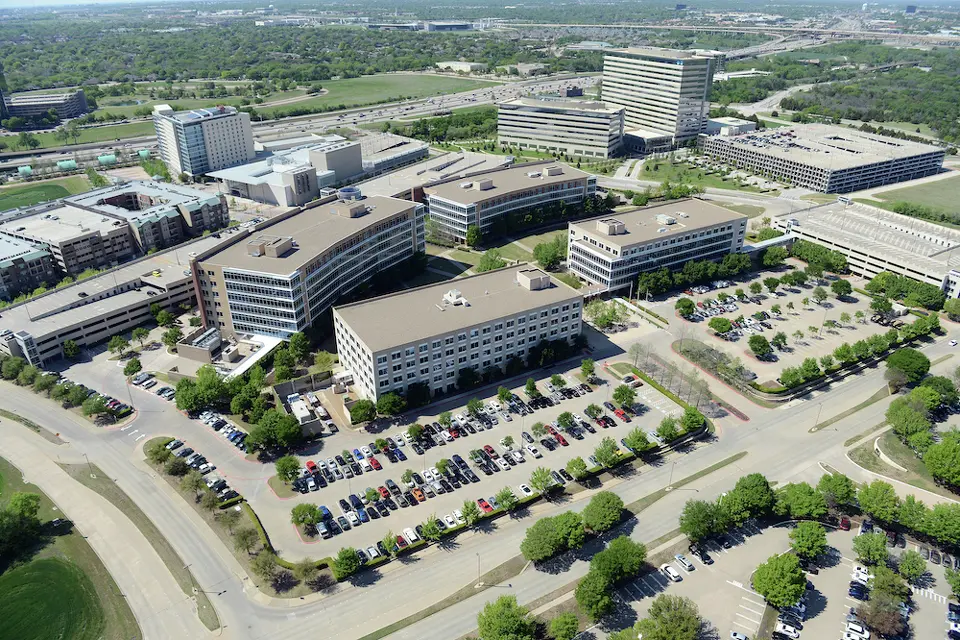
The true beginning of the “Corridor” occurred when Arthur Collins moved his company, Collins Radio, to Richardson. This was the birth of a unique Texan symbiosis.
- When Neil Armstrong spoke his famous words from the lunar surface, his voice was transmitted through equipment developed right here in Richardson.
- While the Space Center in Houston managed the flight, the “nervous system” of that connection was being built in the engineering bases of North Texas. This established a standard of quality: if the equipment could withstand a journey to space, it could handle any commercial load.
Why Richardson and Not Houston?
In the 60s and 70s, Houston was “packed” with energy giants and the massive government apparatus of NASA. Richardson offered an alternative that was perfectly suited for the new digital era:
- Infrastructure from a “Blank Slate.” Unlike the dense and humid urban sprawl of Houston, the prairies around Dallas allowed for the construction of massive campuses with ultra-modern laboratories and a custom fiber-optic system before it was even mainstream.
- The Talent Factory (UTD). The founders of Texas Instruments realized they needed their pipeline of experts and created the Graduate Research Center of the Southwest, which later became the University of Texas at Dallas. Today, this university is the “heart” of the Corridor, funneling engineers directly from classrooms to corporate offices.
- Tax Haven. Texas’s favorable tax climate was taken to the absolute maximum in Richardson. The city did everything to ensure it was cheaper for companies to build labs here than in California or on the East Coast.
The Epicenter of Global Networks
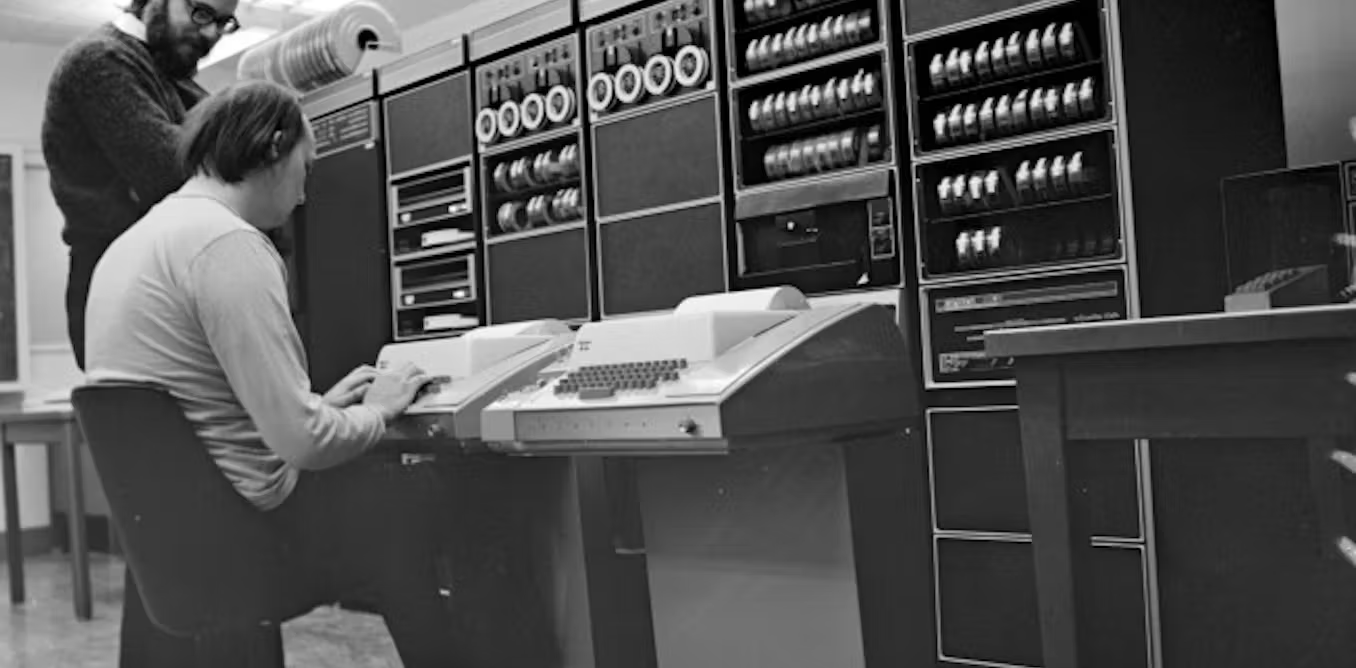
By the late 90s, the Telecom Corridor reached its zenith, becoming the densest ecosystem of high technology outside of California. It was a unique moment in history when the fate of global communications was decided not in political offices but on a few square miles of Texas prairie.
- At its peak, over 600 telecommunications companies were based here. These were not just branches—they were powerful R&D centers where the prototypes of the future were born.
- Talent Density. Every square meter of Richardson held more patent holders and communications engineers than any other city in Texas.
- The Domino Effect. The presence of one giant attracted dozens of startups and service companies, creating a closed production cycle—from the initial chip design to the finished fiber-optic system.
An Ecosystem Without Borders
Richardson became the place where world-class rivals—Alcatel, Ericsson, Fujitsu, Nortel, and Cisco—literally shared the same sidewalk. This created a specific culture of “Texas networking”:
- Circulation of Ideas. Engineers would eat breakfast at the same cafes, exchanging ideas that would become industry standards within a week.
- Infrastructure Vibe. Companies didn’t just rent offices; they invested alongside the city in a communications network that allowed for real-time testing of the most complex network protocols.
The result of this concentration was staggering: in the 90s, Richardson became the de facto “router of the planet.” Most of the world’s internet traffic at the time passed through equipment that was either designed or maintained right here. Every email, every international phone call, and every first attempt to load a webpage depended on the switches and data transmission systems bearing the “Made in Richardson, Texas” seal of quality.
Surviving After the “Bubble”
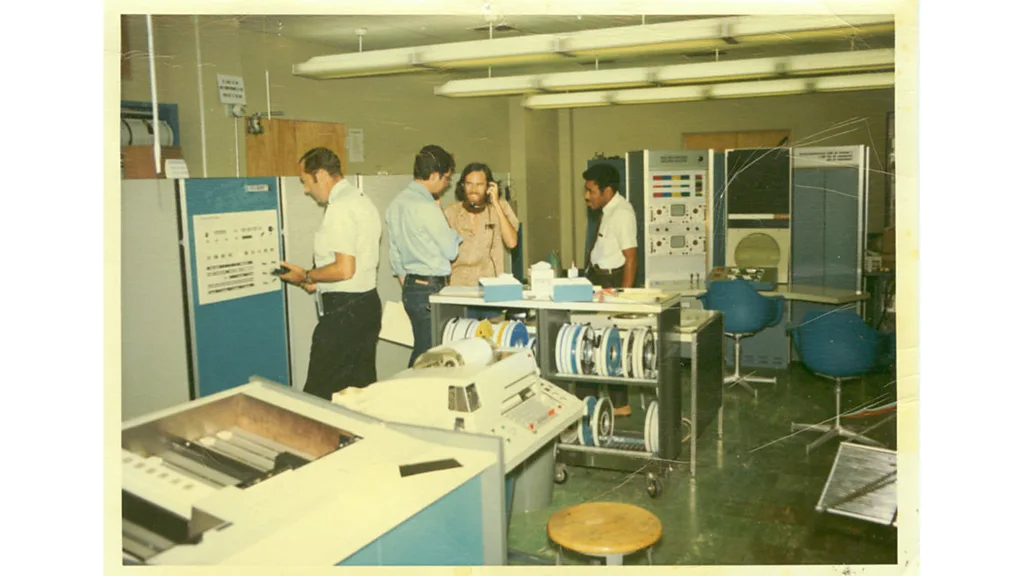
It would be dishonest to claim that the Telecom Corridor’s path was only a series of brilliant victories. In the early 2000s, when the global dot-com bubble burst, Richardson felt the blow much more severely than most other U.S. tech hubs.
The collapse of giants like Nortel and massive layoffs at Alcatel and Fujitsu left behind millions of square feet of empty offices and thousands of unemployed engineers. However, the genetic code of Texan resilience kicked in. Instead of turning into a high-tech “rust belt,” the region began a rapid mutation.
- From Hardware to Services. Engineers who once built physical switches pivoted to software development. Empty buildings with pre-existing fiber optics became perfect sites for data centers.
- Diversification. The region ceased to rely solely on telephone lines. Today, Richardson is a major cybersecurity hub, housing divisions of Raytheon and Cisco, as well as a center for financial technology where data logic processes billions of transactions.
- Cloud Reincarnation. The robust infrastructure laid in the 90s allowed the Corridor to become a primary backbone for cloud computing. What were once “wires” are now the invisible foundation of global cloud services.
The Legacy of the Telecom Corridor
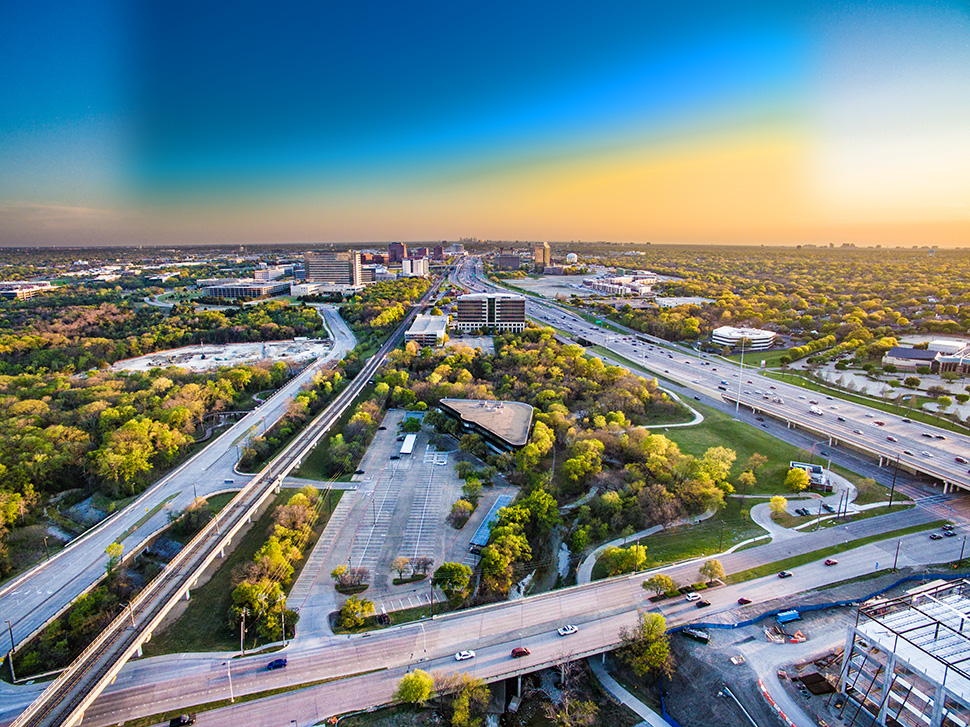
Over the decades, the Telecom Corridor has evolved from a closed engineering enclave into an open innovation ecosystem. Its impact can be structured through three main vectors:
- Technological Backbone. Providing critical infrastructure for the global internet and mobile communications (4G/5G).
- Economic Magnet. Attracting billions in investment and creating over 100,000 jobs, making it a key donor to the North Texas economy.
- Talent Forge. Through tight integration with universities like UTD, the Corridor constantly refreshes the state’s intellectual resources.
Founded by the same minds that created Texas Instruments, UTD has become an “open-air laboratory” for all of Texas. Today, UTD ensures the Corridor has a constant influx of talent in AI, biotechnology, and nanotechnology. This creates a self-sustaining cycle: companies stay in Richardson because the talent is here, and talent moves here because the best companies in the world are based here. This symbiosis ensures that even if telecommunications change beyond recognition tomorrow, the Corridor will find a way to lead the process once again.
Sources:
- https://dallasinnovates.com/comeback-of-the-corridor-the-rousing-revival-of-richardson/
- https://www.dallasnews.com/business/2016/01/11/telecom-corridor-campus-gets-multi-million-dollar-makeover-to-lure-new-business-to-richardson/
- https://theconversation.com/how-the-internet-was-born-a-stuttered-hello-67903
- https://www.bbc.com/future/article/20241028-the-failure-that-started-the-internet
