

It is impossible to discuss the cardiac revolution in Texas without mentioning the two giants whose rivalry and genius transformed the Texas Medical Center (TMC) into a global “Mecca” of cardiovascular surgery. Throughout the 1950s and 60s in Houston, Michael DeBakey and Denton Cooley created an environment where cholesterol ceased to be an abstract term in biochemistry textbooks and became enemy number one—an enemy surgeons learned to defeat through the scalpel and engineering ingenuity.
Below, on houstoname.com, we explore the details of this epochal era:
- How DeBakey and Cooley radically changed the approach to treating clogged arteries by introducing coronary artery bypass grafting;
- The story of the first Dacron vascular prosthesis and the revolution in treating aneurysms;
- The first heart transplant in the U.S. and the historic implantation of a total artificial heart;
- The Nobel Prize-winning discovery of LDL receptors by Brown and Goldstein, which stopped atherosclerosis at the chemical level;
- The journey from the scalpel to CRISPR gene editing in the modern Texas Medical Center (TMC).
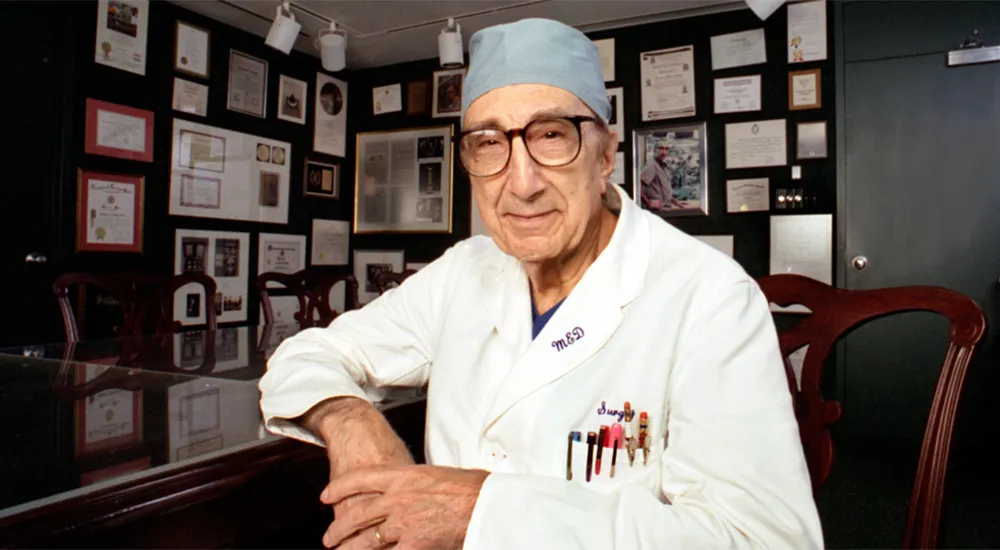
Surgical Solutions: From Clogged Vessels to a New Heart
DeBakey and Cooley saw the devastating effects of high lipid levels on their operating tables every day. Arteries were so choked with atherosclerotic plaques that blood simply ceased to circulate. Their response to this challenge was both radical and masterful.
- The Prosthetics Revolution. In 1954, DeBakey became the first in the world to use a Dacron prosthesis to replace a damaged section of a blood vessel. He famously stitched the first prototype on his wife’s sewing machine. This paved the way for treating aneurysms and occlusions that were previously considered fatal. In 1964, he performed the first successful aortocoronary bypass, creating a “detour” for blood to flow around a cholesterol-blocked segment.
- The First U.S. Heart and Artificial Devices. Cooley was an unsurpassed technician. In 1968, he performed the first successful heart transplant in the United States. A year later, in 1969, he took an even bolder step—implanting a total artificial heart (the Liotta-Cooley device) into a human for the first time in history as a “bridge” to a future transplant. This sparked an ethical and professional storm in the medical world but forever changed the rules of the game.
- The Heart-Lung Machine. Houston became the proving ground for perfecting cardiopulmonary bypass machines. These devices allowed surgeons to stop a patient’s heart to perform complex manipulations inside the organ, which was previously physically impossible. This enabled them to literally “clean” vessels and repair valves damaged by cardiovascular disease.
The work of this duo in Houston proved that medicine was capable of correcting even the most severe physical consequences of metabolic dysfunction. However, these radical surgeries forced the scientific community to consider: if replacing vessels and hearts requires such colossal resources and risk, wouldn’t it be better to find a way to stop the disease in its early stages? Houston’s surgeons demonstrated the sheer scale of the tragedy caused by atherosclerosis, serving as the catalyst for further genetic and pharmacological research.
Today, the Texas Medical Center remains a global leader thanks to the foundation laid by DeBakey and Cooley. Their legacy is not just the thousands of lives saved directly on the table, but a paradigm shift: from passive observation of a patient to active, aggressive intervention in pathology. Because of them, cardiac surgery moved from experimental attempts to standardized procedures that save millions of people worldwide today.
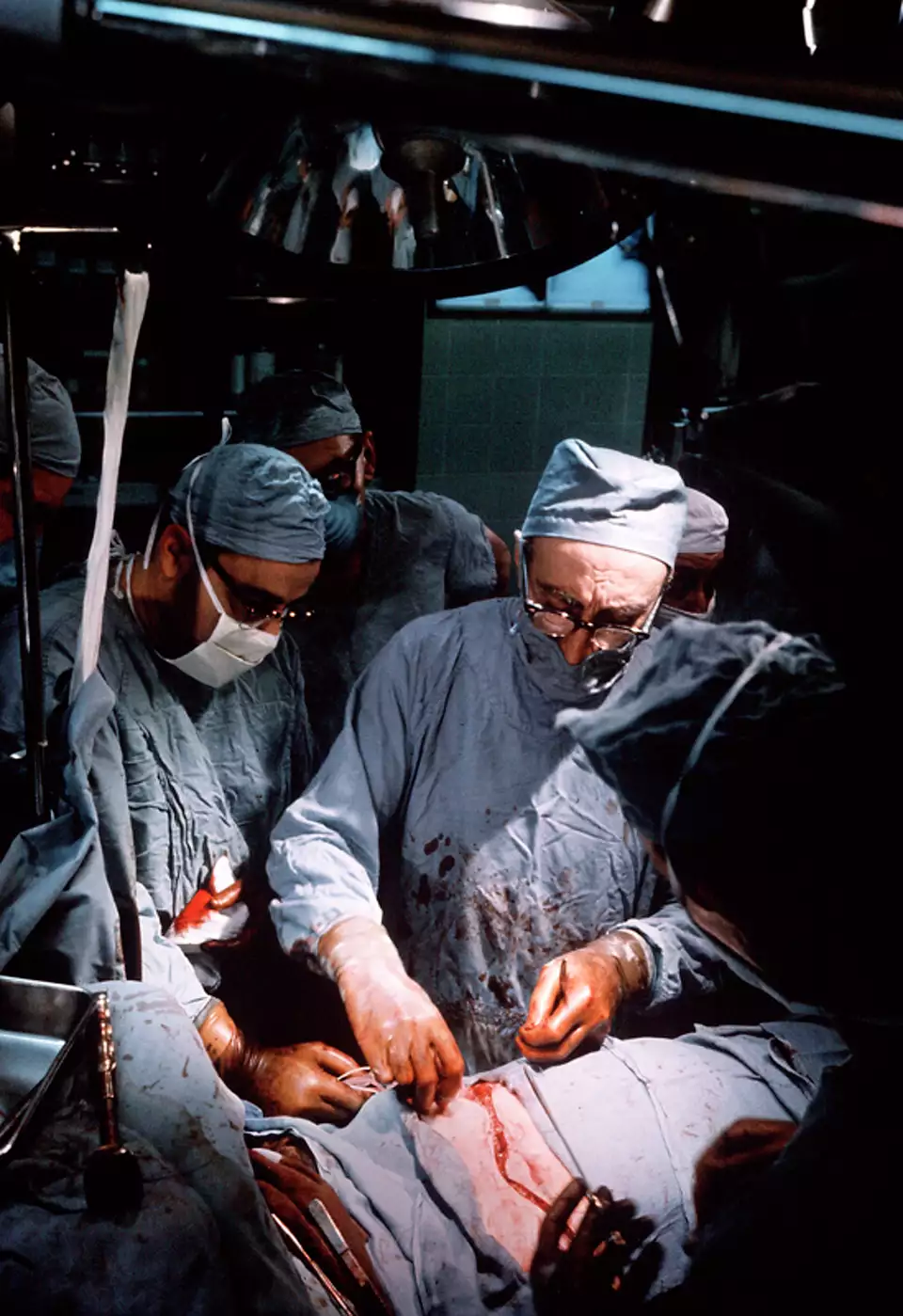
Facts and Reality: Framingham vs. Houston
To objectively understand medical history, it is important to distinguish between the source of knowledge and the place of its most effective application. While the Texas Medical Center (TMC) in Houston became the global capital of cardiac surgery, the fundamental data proving that cholesterol—specifically low-density lipoproteins—is the primary “silent killer” was largely based on the massive national Framingham Heart Study. However, it was in Texas that this theoretical knowledge was most rapidly converted into effective clinical practice, where patients were saved before their situations became critical.
Epidemiology Meets Radical Practice
The Framingham study in Massachusetts, which spanned decades, provided scientists with statistics. But Houston provided the tools and the will to act. Texas doctors didn’t just wait for the results of the next research phase; they began implementing preventive measures in real-time, creating a bridge between dry statistics and the operating theater.
- Myth: Cholesterol is the sole cause of heart disease. For many years, there was a simplified notion that merely reducing fat intake was enough to avoid a heart attack. This led to the neglect of other critical factors, which often ended tragically for patients with “perfect” blood tests.
- Fact: The Multifactorial Approach. Houston physicians were among the first in the world to insist that cardiovascular risk is a complex equation. They integrated data on genetic predisposition, smoking history, glucose levels in diabetes, and blood pressure into a single risk map. Cholesterol in this system ceased to be the lone enemy, becoming part of a complex pathological mechanism.
- The Result: Early Diagnosis Protocols. The TMC developed and implemented the first screening systems that included not only blood tests but also stress tests and early vascular imaging (angiography). This allowed surgeons to see plaque formation at stages when the patient was still asymptomatic, effectively preventing heart attacks rather than just treating their aftermath.
Today, this symbiosis of epidemiological knowledge and Texan decisiveness is the gold standard of global cardiology. The Houston school of medicine proved that honesty with the patient regarding their lifestyle and heredity is just as important as the surgeon’s skill with a scalpel. The implementation of mandatory lipid profiles and risk assessment using multifactorial scales became routine procedures because the TMC was not afraid to test complex theories in practice.
This tension and subsequent collaboration between the “theorists” of the East and the “practitioners” of the South changed how humans view their health. We moved from an era where a heart attack was considered “inevitable fate” to an era of managed risks. Dallas and Houston remain at the forefront of this movement, continuing to refine diagnostic methods where high technology and a deep understanding of biology work to stay ahead of the disease.
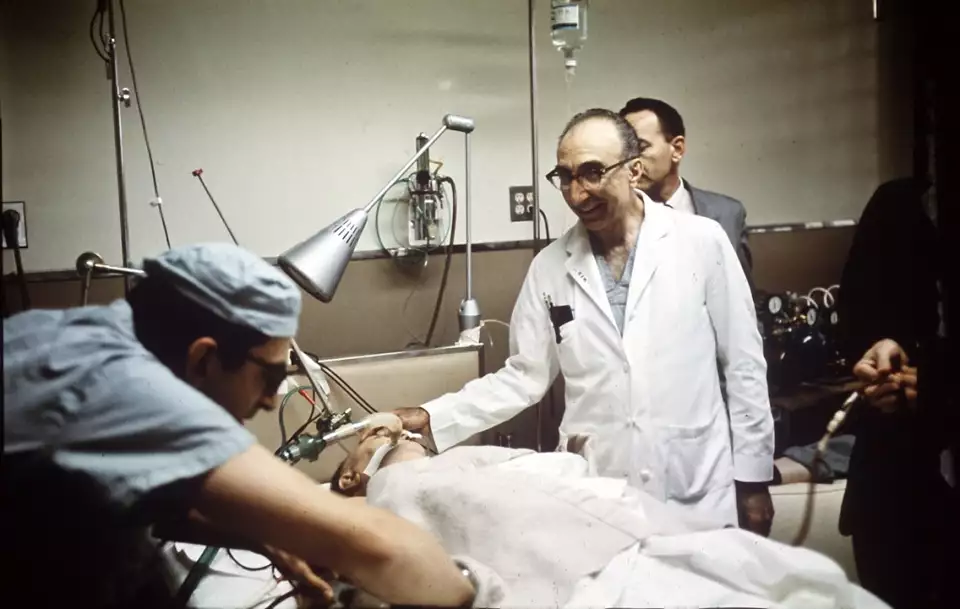
The Molecular Breakthrough and the Texas Foundation
While Houston’s surgeons mastered the repair of cardiovascular catastrophes, the next generation of scientists in Dallas and clinicians in Houston decided to change the very “chemistry” of the disease. The fight against cholesterol moved from operating rooms to molecular laboratories, where the complex pathway of lipid synthesis in the liver was unraveled. Texas became the place where fundamental science met clinical practice, ushering in the era now known as the “statin revolution.”
Receptors That Save Lives
In 1985, the world learned the names of two scientists from the University of Texas Southwestern Medical Center (UT Southwestern) in Dallas—Michael Brown and Joseph Goldstein. Their research was a true intellectual explosion in cardiology.
- Discovery of LDL Receptors. Brown and Goldstein figured out exactly how body cells absorb cholesterol from the blood. They discovered special receptors (“traps”) that pull low-density lipoproteins out of the bloodstream.
- The Mechanism of Disease. The scientists proved that if these receptors are insufficient or function incorrectly (due to genetics or lifestyle), cholesterol accumulates in the vessels, forming the same deadly plaques that DeBakey and Cooley once removed by hand.
- A Roadmap for Therapy. This discovery became the “Holy Grail” for pharmacology. It provided a clear answer to the question: “Where exactly do we need to step on the brakes to stop atherosclerosis?”
On the Threshold of Gene Editing
Today, the Texas Medical Center is not just a hospital; it is the largest medical complex on the planet, a “city within a city” employing over 100,000 specialists. The fight against cholesterol here has reached an entirely new, futuristic level.
- PCSK9 Inhibitors. This newest generation of drugs “turns off” a protein that destroys the very receptors discovered by Brown and Goldstein. The results are staggering: “bad” cholesterol levels drop by 50–70%, even in those who were not helped by classic medications.
- Gene Editing. TMC scientists are experimenting with technologies like CRISPR to permanently alter the genetic code of patients with congenital lipid metabolism disorders. The goal is a single injection that insures a person against the risk of clogged arteries for life.
- Digital Cardiology. Using artificial intelligence to analyze millions of EKGs and genetic profiles allows Houston doctors to predict heart attack risks decades before they are likely to appear.
The Texan Heart of Medicine
The history of the fight against cholesterol in Texas is a fascinating journey from desperate surgery to sophisticated genetics. Dallas and Houston formed a unique tandem: the former gave the world fundamental knowledge and Nobel discoveries, while the latter provided unprecedented clinical courage and a platform to save millions.
We have traveled the path from the 1950s, when a diagnosis of “atherosclerosis” sounded like a death sentence, to the 2020s, when we have learned to manage our body’s own biochemistry. The Texan contribution proved that innovation works best when academic genius (like Brown and Goldstein) unites with practical determination (like DeBakey and Cooley). Thanks to this synergy, Dallas and Houston have forever secured Texas’s status as a global leader where the “heart” of world medical innovation beats.
Sources:
- https://www.scirp.org/journal/paperinformation?paperid=23025
- https://www.nytimes.com/2007/11/27/health/27docs.html
- https://www.gainesville.com/story/news/2008/07/13/michael-debakey-rebuilder-of-hearts-dies-at-99/31571637007/
- https://www.chron.com/news/houston-texas/health/article/45-years-later-Houston-s-heart-transplant-5374505.php
