

Almost every country has its own distinctive reservoir. Ukraine has the Dnipro, Egypt has the Nile and Turkey has the Bosphorus. There are also symbolic rivers for some cities. The symbolic river for Houston is Buffalo Bayou. It has an interesting origin story. Throughout its existence, it has witnessed unusual and tragic events, as well as has observed all of the city’s history, and continues to be an important waterway for Houston. Learn more at houstoname.
From the source
Buffalo Bayou originates in Fort Bend County, flows west of Houston and runs through the city itself before entering the Houston Ship Channel. The river’s length is only 137 kilometers. The river is constantly getting fuller since it has numerous more tributaries and springs that feed the Buffalo Bayou downstream. It is the oldest of all four main reservoirs in the city. Researchers discovered that it was formed no earlier than 18 thousand years ago. The river, although small in comparison to other waterways in the United States, for a long time, was home to the Akokisa and Karankawa indigenous peoples, who lived on its banks, which provided them with food and natural shelter. The oldest known interaction with these tribes can be found in the works of the Spanish conquistador Cabeza de Vaca, who stayed among them in 1535, long before Houston was founded. He stated that Indigenous people settled along the river, built communities and subsisted on hunting and fishing, highlighting the river’s significance in Native American life.
The river’s name is derived from the words “Buffalo” (a type of bison) and “Bayou” (a slow, swampy watercourse from French). Bison have undoubtedly existed on the river’s banks for a very long time. Archaeological study indisputably validates this theory, as excavations carried out in this area revealed the remains of many animals of this species, dating back to the late Stone Age. There is no need to undertake research on the reservoir being calm and swampy, you may simply take a look at the river to determine this.
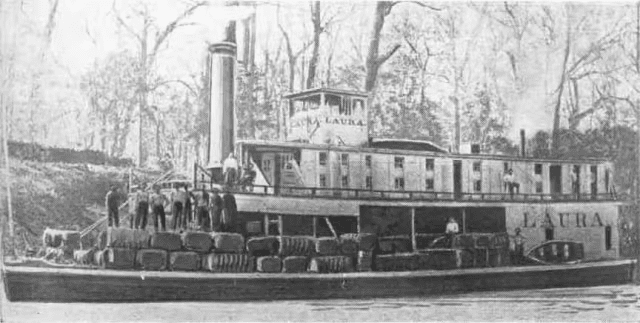
Buffalo Bayou, a witness to the founding of Houston
Only later, in 300 years, would the river serve as the main setting for a watershed moment in Texas history, as a deadly battle will take place where Buffalo Bayou merges with its sister San Jacinto. We are referring to the year 1836 when Sam Houston defeated Antonio Lopez’s forces. In the same year, the Allen brothers founded the city of Houston. In their advertising of the future metropolis, in order to urge new inhabitants to settle more actively and attract investors, they frequently promoted Buffalo Bayou as an accessible bay for trade ships. However, this was not true. At the time, the river was too narrow and shallow for even small schooners to sail through. The city’s founders were well aware of this, as they had taken a small steamboat Laura for three days to reach the location where Houston would eventually develop, traveling only about 30 kilometers. The river was so overgrown that the Laura crew had to make forced stops and manually clear the way. But, as you know, advertising is the motor of commerce, therefore such marketing had fruitful results: people established new settlements, entrepreneurs opened offices and investors participated in the development of river infrastructure.
It was Buffalo Bayou that helped establish Houston as a significant economic center, transporting cotton, timber and other goods in small batches. As a result, the advertising slogan came true, and Buffalo Bayou continued to be an important river trade route for the city’s development. The river still remains important for the industry.
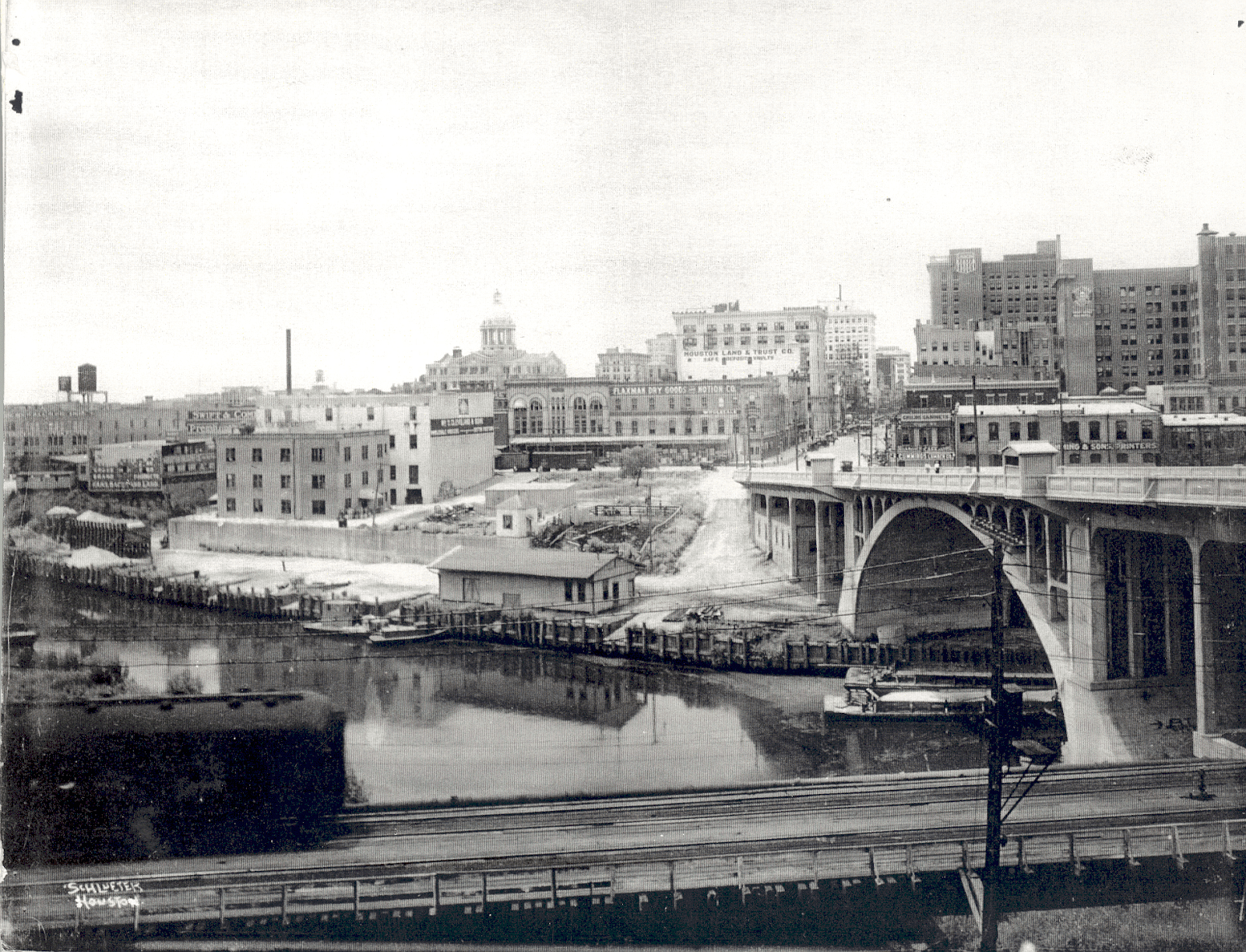
A river with character
However, the relationship between Houston and Buffalo Bayou was not always so pleasant. The river has caused a great deal of tragedy throughout the city’s history. Despite its tranquil waters, the reservoir occasionally caused major damage. In a few instances, the river’s water level surged to such an extent that the current reversed course. Hurricane Harvey in 2017 served as a good demonstration of the river’s temper. This biggest rainfall in US history caused substantial damage in Houston, resulting in severe floods, overflowing entire neighborhoods. There have been numerous such occurrences over the city’s 200-year history.
However, the most significant damage produced by Buffalo Bayou is the movement of a considerable volume of bottom sediment. For example, during the previously mentioned hurricane, the river carried 27 million cubic meters of precipitation downstream. This caused the siltation of portside infrastructure and temporarily paralyzed the river transportation system. 350 million dollars were invested to restore navigation and return the waterway to its original state. Therefore, the authorities are compelled to address such issues. As a result, dams and two artificial reservoirs were constructed upstream to control water levels and the movement of sediment. In addition, to avoid disastrous flood repercussions, the city established a dedicated monitoring center that maintains a close eye on the weather and the river. It is intended to avoid or mitigate the detrimental effects of Buffalo Bayou-related natural disasters on Houston.
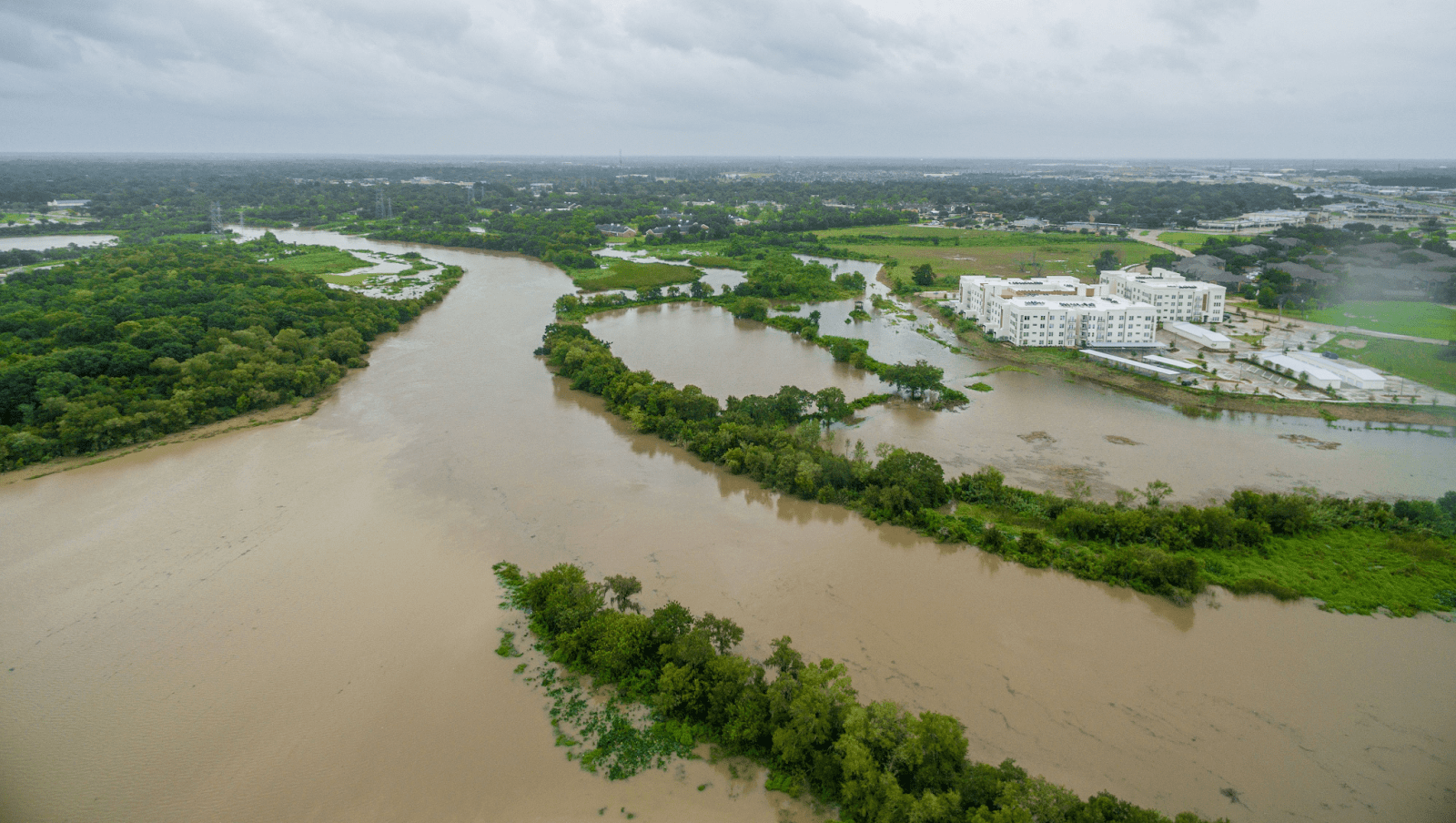
Recreational oasis of the city
The river’s modern role has evolved beyond its economic function. Buffalo Bayou is becoming increasingly popular as a recreational and leisure area. Trees and bushes planted in the 1940s to keep the banks from eroding have become ideal locations for this in the current stage of the city’s development. Under pressure from public organizations, the city government agreed to establish a leisure zone along the river. Following the overall planning of this area, a special directive forbade cutting down plantings and doing construction activity in the Buffalo Bayou area. However, these plots were designated for parks, squares, golf courses and walking trails. It is now an excellent destination for families, canoeing and kayaking enthusiasts, morning joggers and cyclists. Cozy spots sheltered by big trees where birds chirp provide an escape from Houston’s noisy daily life. As a result, it comes as no surprise that the river’s banks are always packed, especially on weekends. However, there is enough space to avoid disturbing vacationers and spend time alone with nature.
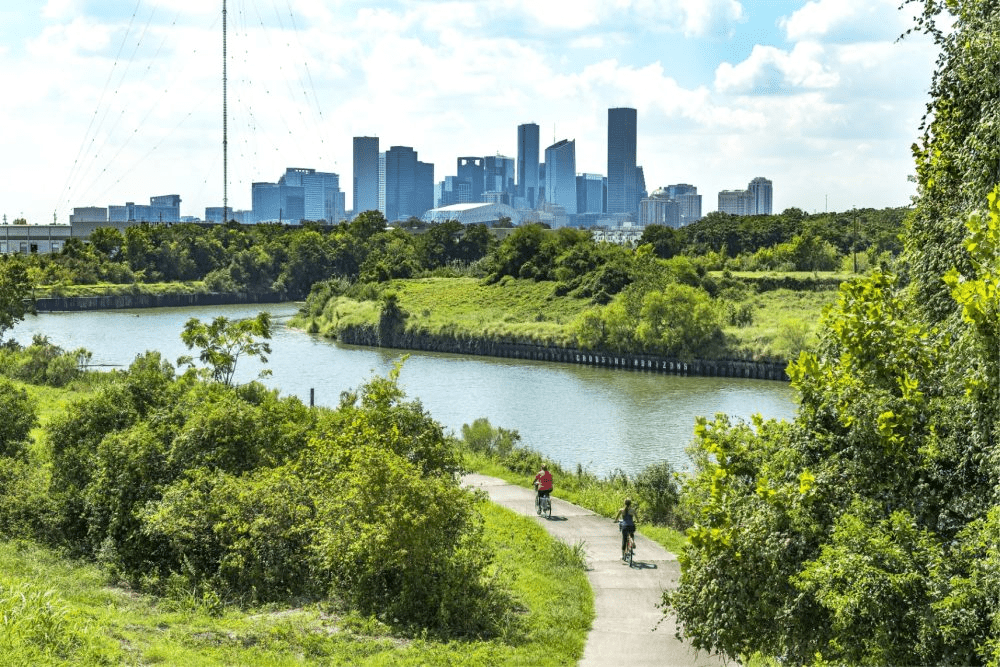
Significance of the river
Buffalo Bayou has become engrained in Houston people’s minds as a kind of bridge connecting the city to its history and past, a kind of soul. For Houston, Buffalo Bayou is more than simply swampy water, it is a life-giving spring, a green oasis and an economic driver. As more Houston citizens become aware of the river’s ecological importance, significant efforts are being made to protect and increase its biodiversity. Buffalo Bayou has evolved throughout time from Native American pathways on the shores to a major industrial artery for the region. Thus, it remains not just a vital economic component in Houston, but also a well-known and adored symbol of the city.