

While humanity may be seen as the pinnacle of creation, nature has a way of humbling us, reminding people of the fragility of their achievements. For the United States, hurricanes are a common occurrence, but despite extensive preparations, they still cause significant damage, often taking lives. One of the most devastating hurricanes for Houston was Hurricane Alicia. Next on houstoname.
Calm Before the Storm
Houston had experienced hurricanes before. According to archival data, the city had endured about 50 significant hurricanes or tropical storms over its history. In 1900, the deadliest hurricane in U.S. history, the Galveston hurricane, destroyed the nearby city, claiming over 6,000 lives. This tragic event impacted Houston as well, as the cities’ infrastructure and economies were interconnected. To prevent another disaster of this magnitude, a nearly 5-meter-high seawall was built near Houston. The following decades were relatively calm, with some climate disruptions but nothing catastrophic. However, this calm would soon prove to be the prelude to a major storm.
The Unpredictable Storm
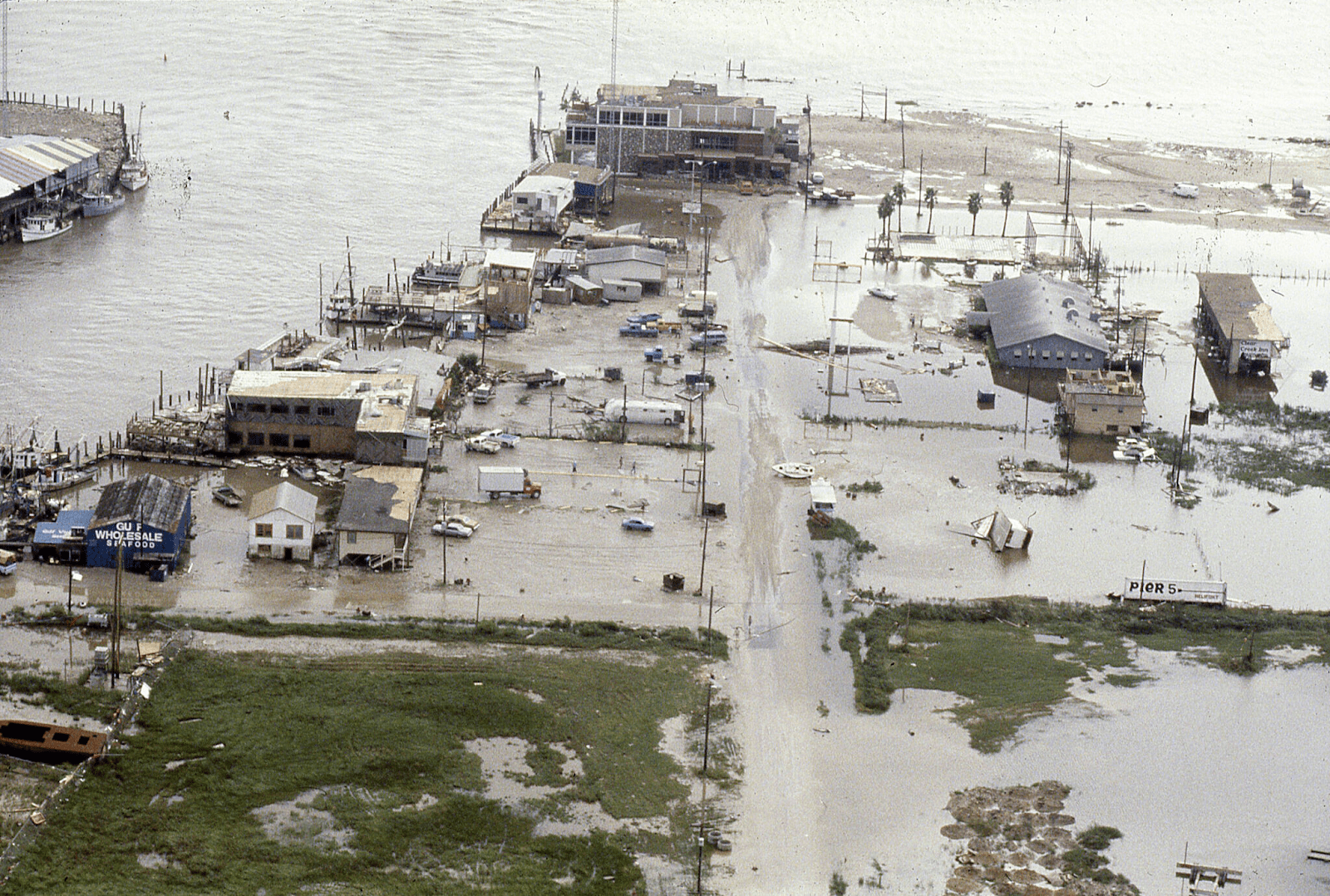
On August 15, 1983, meteorologists warned the region’s residents about the formation of a cyclone, urging them to prepare for a possible hurricane. The observation systems at the time, including research planes from the National Oceanic and Atmospheric Administration (NOAA), detected the formation of a hurricane, but they were unable to predict the scale of the impending disaster. Initially, Alicia seemed like a moderate storm, but in just 18 hours, it gained significant strength, forming south of New Orleans in the Gulf of Mexico and rapidly heading toward the coast. The hurricane’s intensity and speed increased quickly. Within a few hours of its formation, Alicia spawned several tornadoes—at least 14 between Galveston and Houston.
Galveston was the first to take the hit, suffering significant damage and structural losses. The seawall that had been built after the 1900 disaster helped prevent a repeat of that catastrophe by holding back the storm surge and saving the shoreline from complete devastation. However, Alicia continued on, reaching Houston within hours. The hurricane’s winds exceeded 185 kilometers per hour, unleashing a wall of wind and water upon the city, destroying everything in its path. The experience was terrifying, even for the bravest of residents, as witnesses described cars being lifted off the ground and thrown into buildings, shattering windows in spectacular displays.
Aftermath of the Disaster
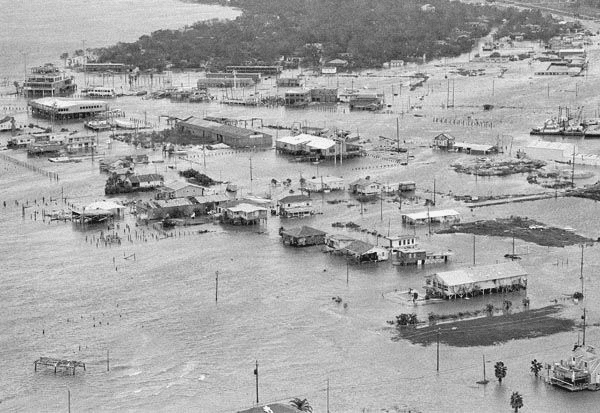
After the hurricane subsided three days later, Houston was unrecognizable. Nearly all windows were shattered, more than 2,000 buildings were completely destroyed, and another 16,000 were severely damaged. Alicia knocked out around 13,000 kilometers of power lines, leaving the city without electricity for 12 days. A total of 750,000 residents were affected, and tragically, 21 lives were lost.
The Johnson Space Center also suffered extensive damage, with its main buildings destroyed, the roof torn apart, and windows shattered. Almost all trees around the area were felled. Overall, Hurricane Alicia caused $2.6 billion in damage to the city. At the time, President Ronald Reagan declared the region a disaster area.
In the years to come, Houston would face more hurricanes, such as Rita (2005), which led to mass evacuations, Ike (2008), which flooded entire neighborhoods, and Harvey (2017), which set a record for rainfall in the city’s history. However, Alicia will be remembered as the first unpredictable and treacherous hurricane in Houston’s modern history.