

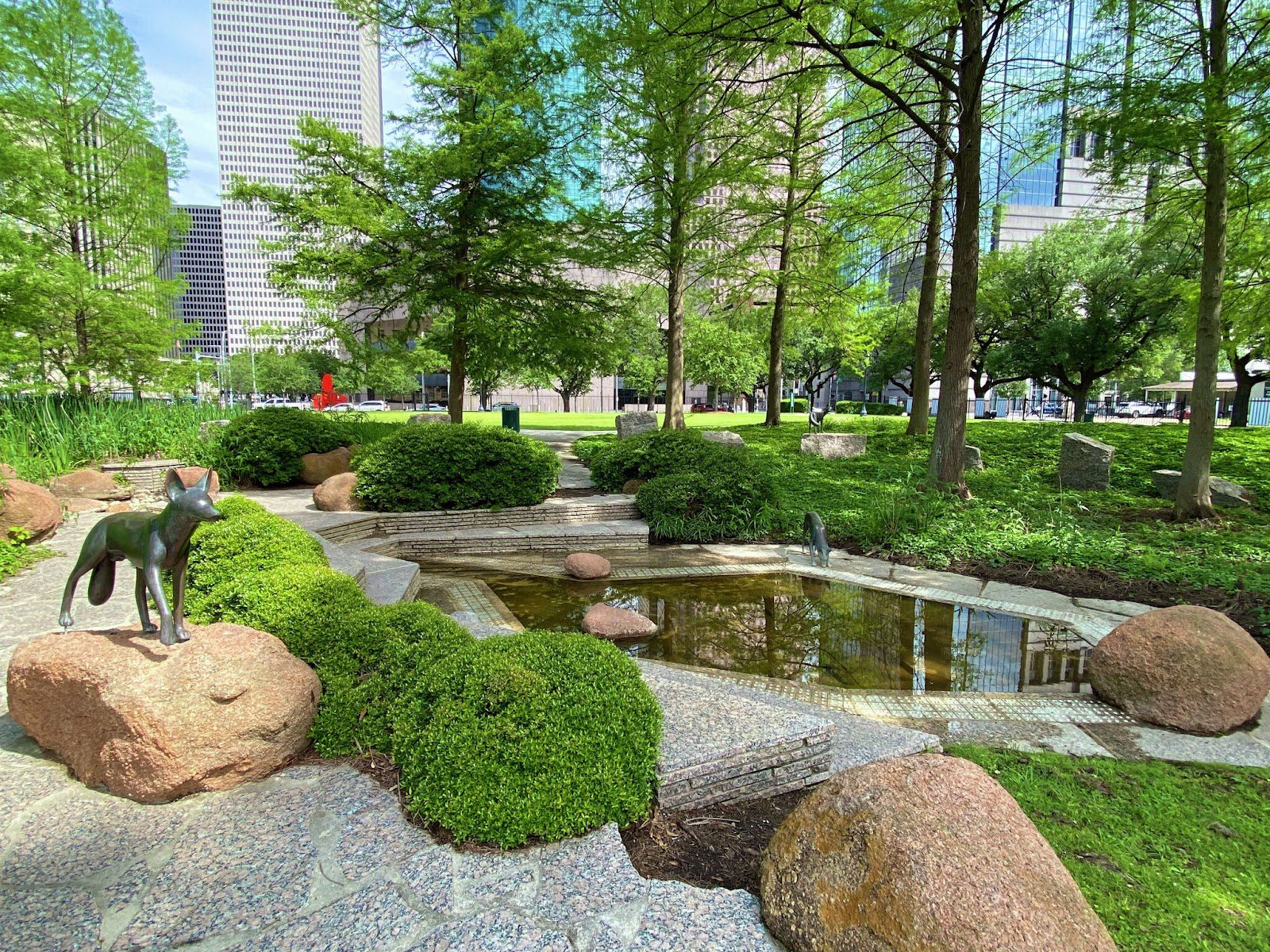
Sam Houston Park, located in the heart of Houston and surrounded by skyscrapers, is the city’s first and oldest public park. This is a true sanctuary in the midst of towering buildings, complete with lawns, oak trees, ponds and trails. However, the picturesque green space is more than just a park. It is an urban historic site featuring museums, sculptures and historical buildings that represent Houston’s history from its establishment to the early twentieth-century oil boom. Read more at houstoname.
Idyllic Victorian space
The history of Sam Houston Park began when Nathaniel Kellum bought a piece of land to use for commercial purposes and build his residence. Gradually, Kellum expanded the territory, buying more and more buildings and land. In 1847, he constructed a two-story brick house for his family.
In 1899, at the public’s request, the city government of Houston established a park on this site. Then 20 acres were landscaped in the Country Victorian style, with walking trails near an old mill and a bridge built across a little stream. The new venue became a perfect recreation destination for Houston residents.
It was formerly referred to as a city park before being officially designated the name Sam Houston Park in 1903. Samuel (Sam) Houston was a lawyer, military man and politician after whom the city of Houston was named. Houston rose to prominence as the leader of the Texas Revolution. After commanding Texas troops in the Battle of San Jacinto, which led to a victory over Mexican forces, he became the first president of the Republic of Texas. In addition, he was one of the state’s first two senators from the United States.
The park now features a small pond with a fountain, a swampy garden, a gazebo, walks, paths, sculptures, two cemeteries and a number of historical buildings.
Collection of historically significant structures
As a result of the construction boom in the 1950s, many historic buildings in Houston were under threat of demolition. Then, concerned residents advocated for their preservation. They first saved the Kellum-Noble House, which the Heritage Society later converted into a public museum. Following that, the organization acquired, renovated and opened several more historic structures, which were then relocated to the park.
The Heritage Society was founded by Houston residents Faith Bybee, Harvin Moore and Marie Phelps in 1954, and Sam Houston Park has served as its home ever since. The mission of this nonprofit organization is to preserve the history of the community and region by renovating historic buildings, displaying historical artifacts and delivering educational programs about the past of Houston and Harris County.
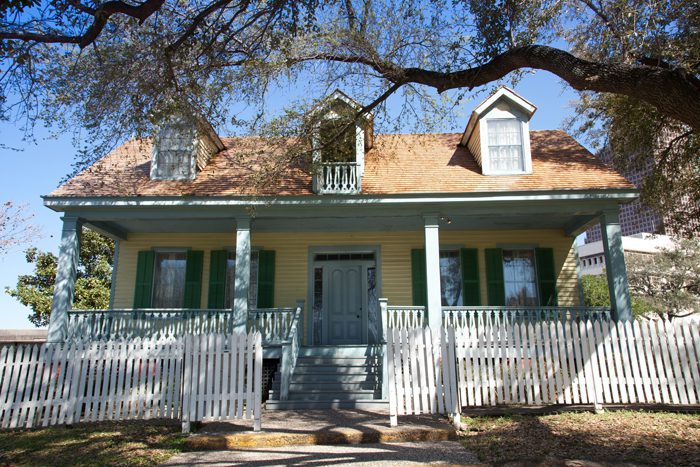
- The Kellum-Noble House, built in 1847, displays the contrast of the lives of African-Americans in Houston before and after the Civil War, which includes the history of slavery in the city. It is Houston’s oldest surviving building, with its original foundation and brick walls. The house is split by an entryway and enclosed by a double gallery.
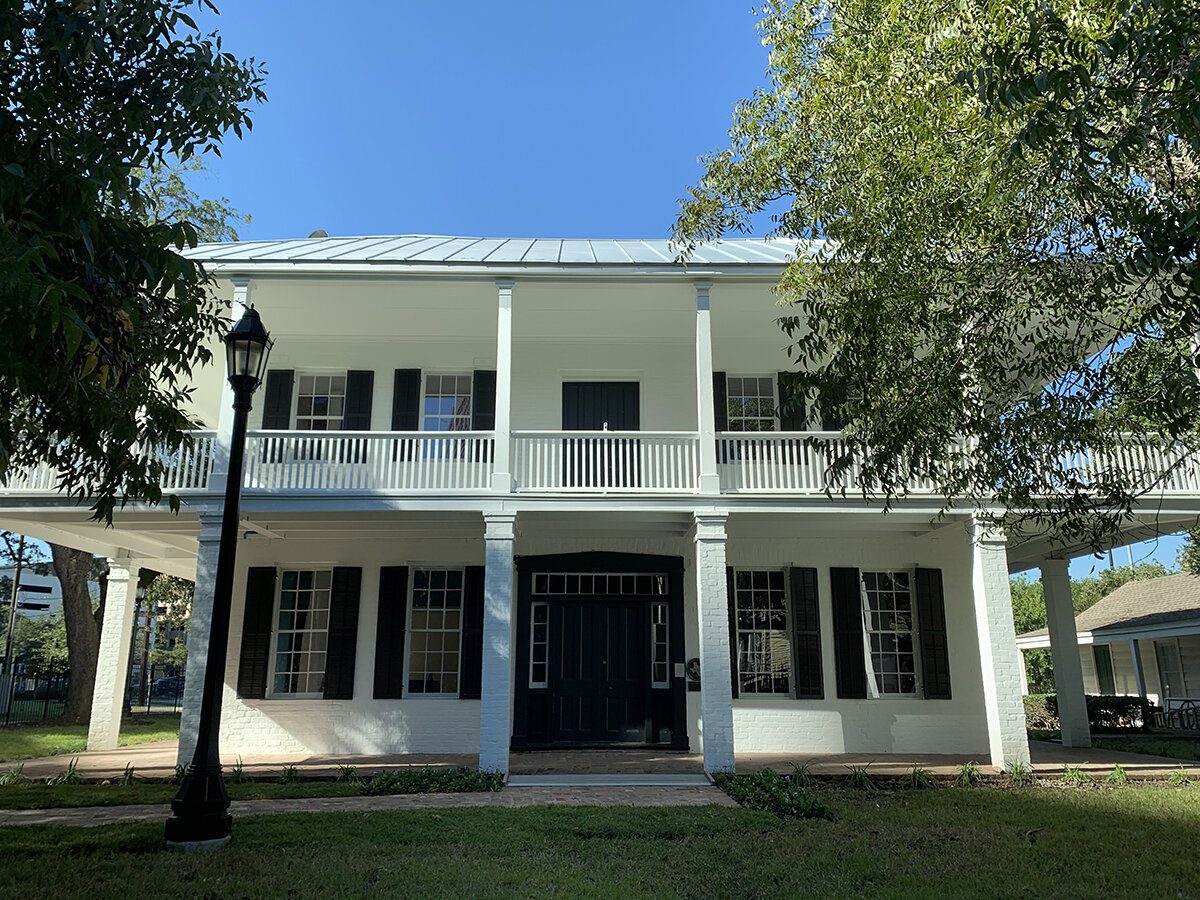
- The Old Place log cabin, characterized by scratchy cedar logs and spikes, was relocated to the park in 1973. The cabin exemplifies the defining characteristics of Texas border architecture. The Old Place was built around 1823 by Austin colonist John R. Williams. It is the oldest surviving structure in Harris County.
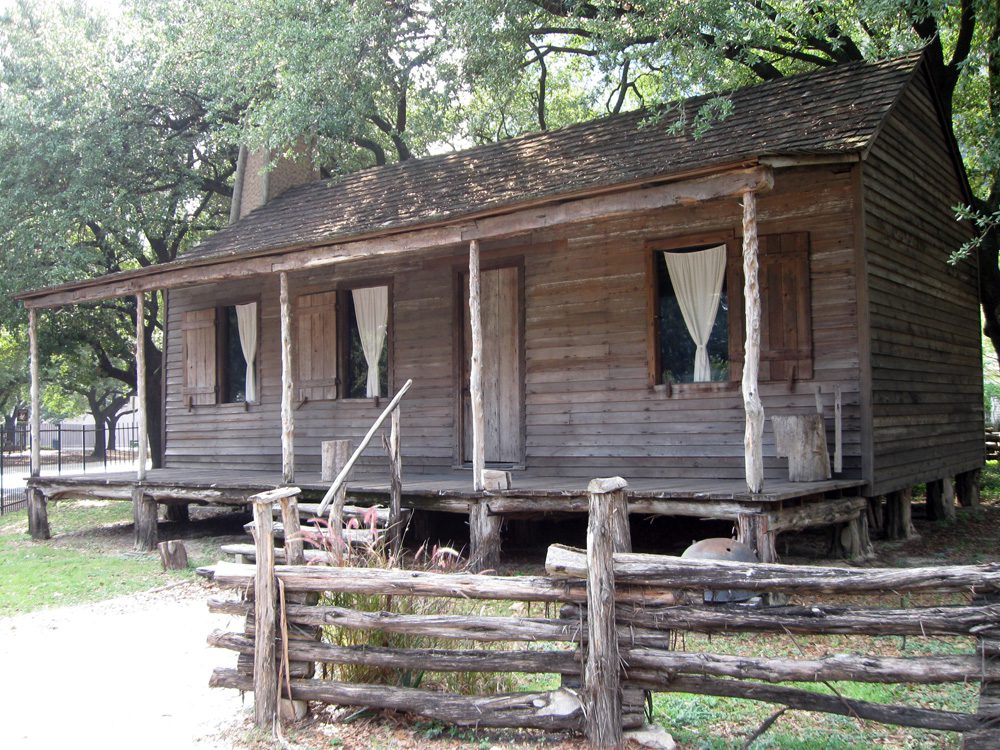
- The Nichols-Rice-Cherry House was built around 1850 by Houston merchant Ebenezer Nichols. It was previously located across the street from the Harris County Courthouse. Nichols sold the house to junior business partner William Marsh Rice, and it was later purchased by Houston artist Emma Richardson Cherry, who moved it to the Montrose area. The Heritage Society relocated the property to the park, repairing some of the old features and designing a room reminiscent of Cherry’s art studio.
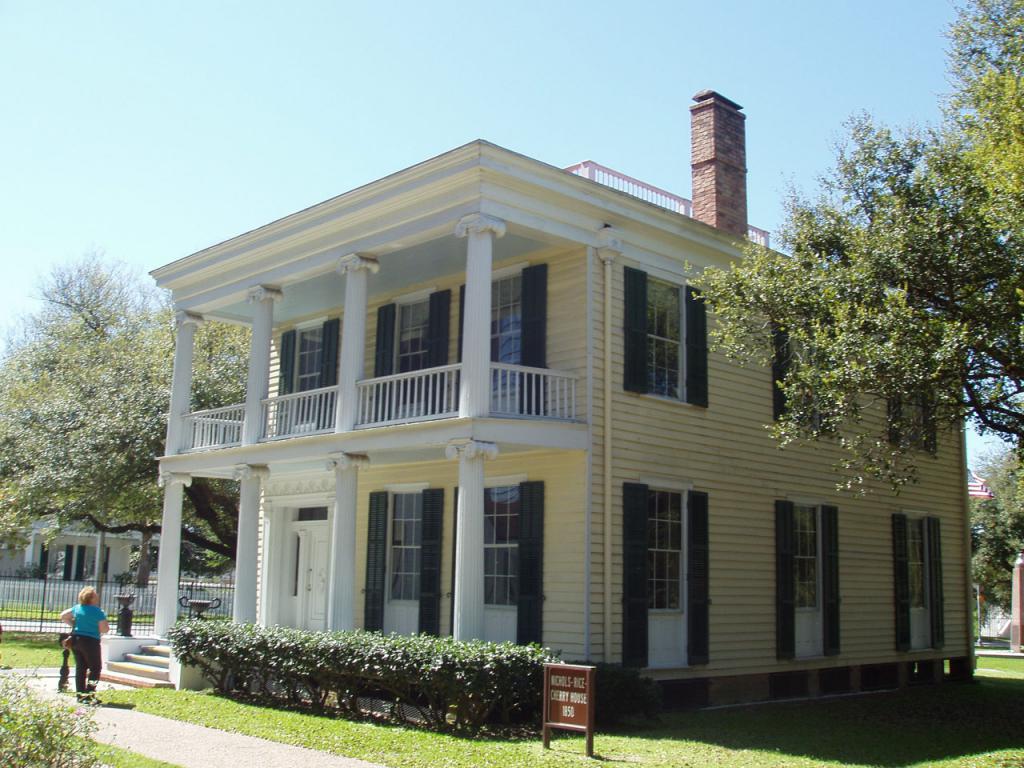
- The Fourth Ward Cottage tells the story of life after emancipation in Freedmen’s Town, a community established by African Americans. Following the Civil War, African Americans relocated to the Freedmen’s Town area. The Heritage Society moved the building to the park in 2002. The house’s shape is similar to shotgun houses found in former Houston neighborhoods.
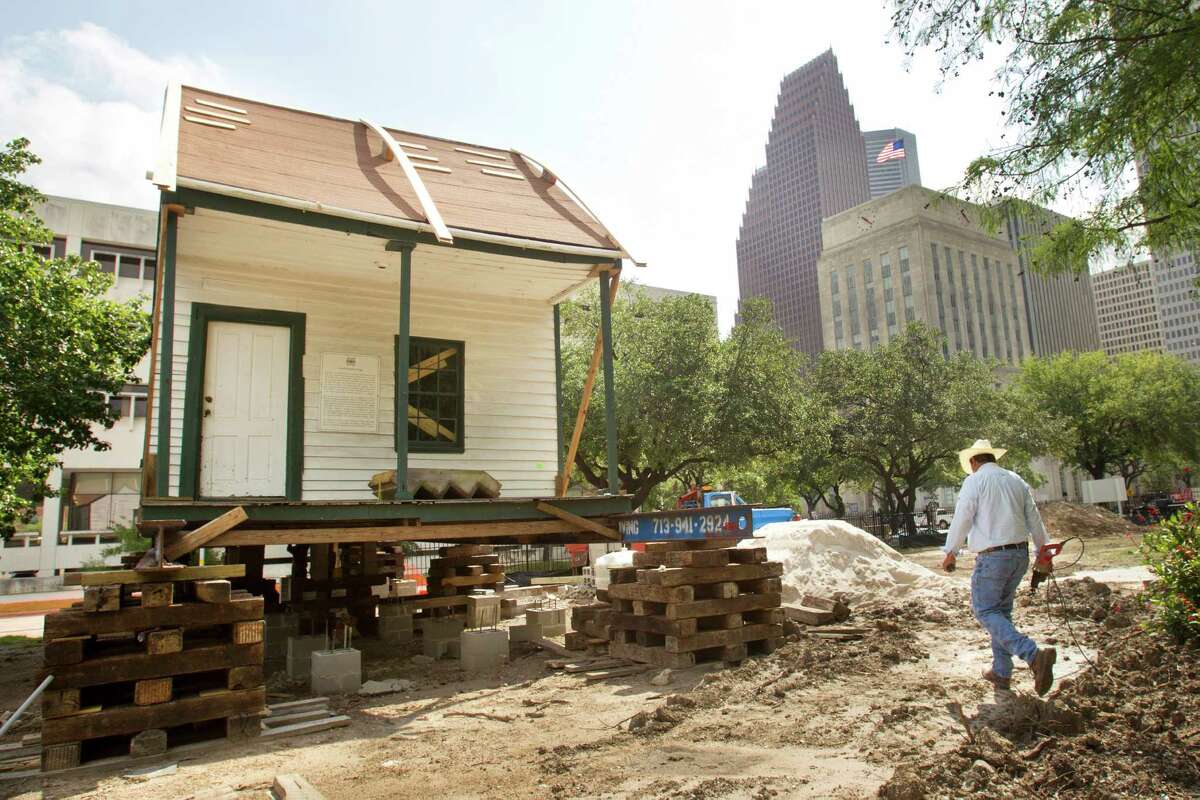
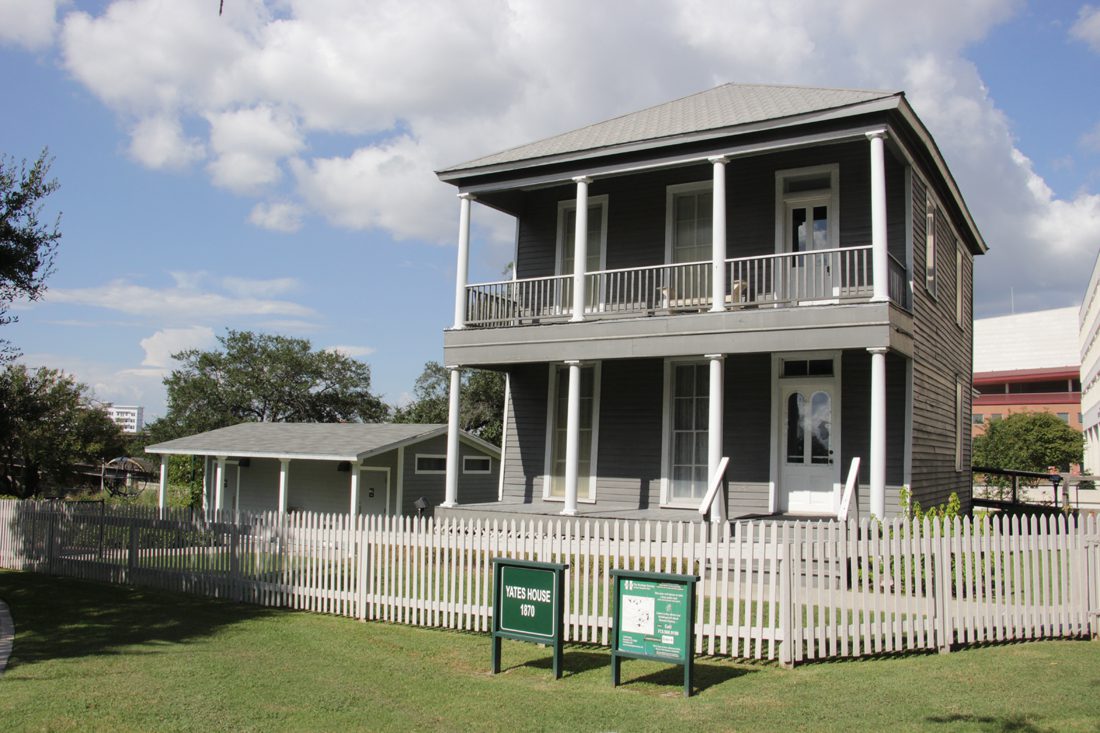
- The Yates House is another home in the park that depicts the history of African-American life. It belonged to Yates, an enslaved Houston minister and tutor.
- The 1868 San Felipe Cottage exemplifies the conventional architecture of Houston’s late nineteenth-century German working-class community.
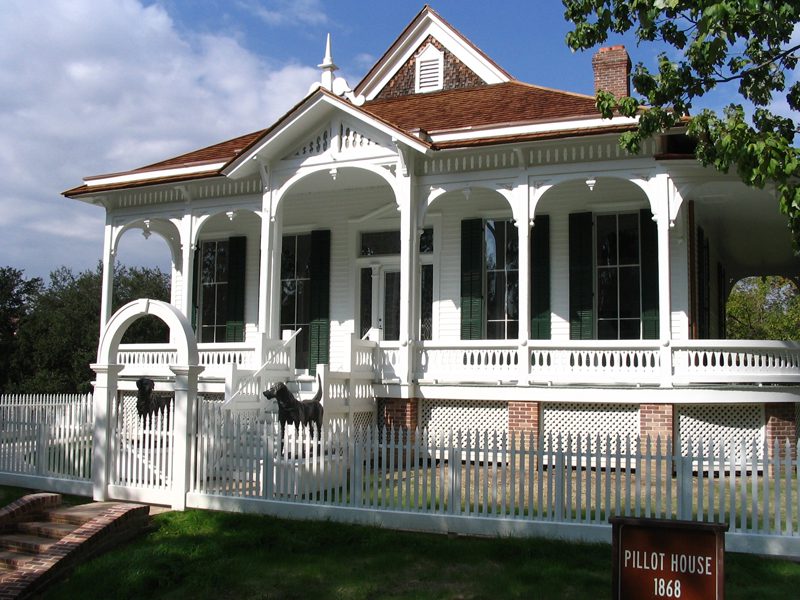
- The Pillot House, built in 1868, was one of Houston’s first to feature an integrated kitchen, running water and gas lighting. The crowd’s attention is drawn to two dog statues that keep guard at the entrance. The structure is named for its former owner, Eugene Pillot, a Houston-based entrepreneur. Pillot and his family ran a timber processing business.
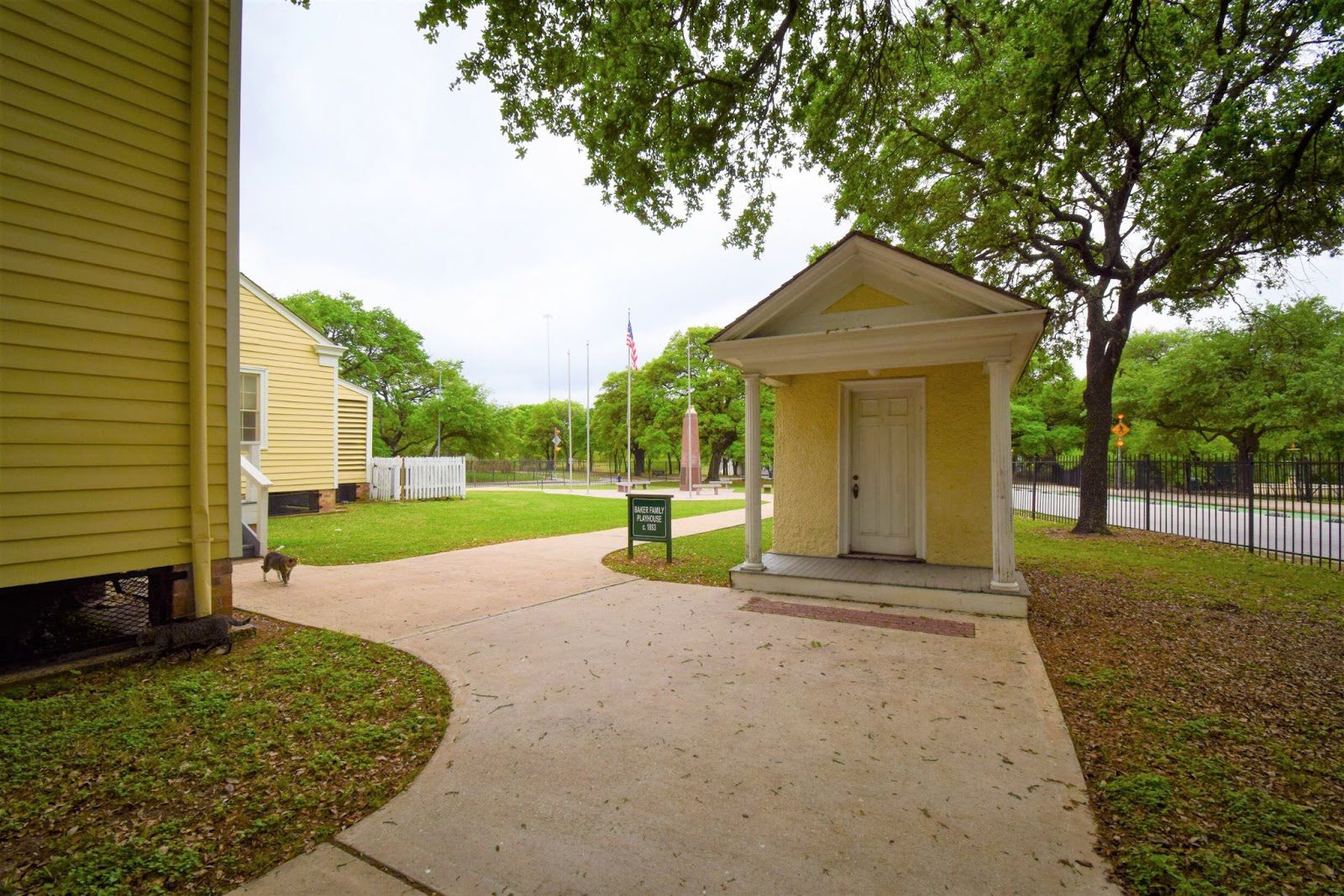
- The 1893 Baker Family Playhouse opened in the park in 2010. Looking through its windows, you may see vintage toys, dolls and children’s furniture. The Baker Family Playhouse was built around 1893 by Houston statesman and diplomat James A. Baker for his daughter Alice.
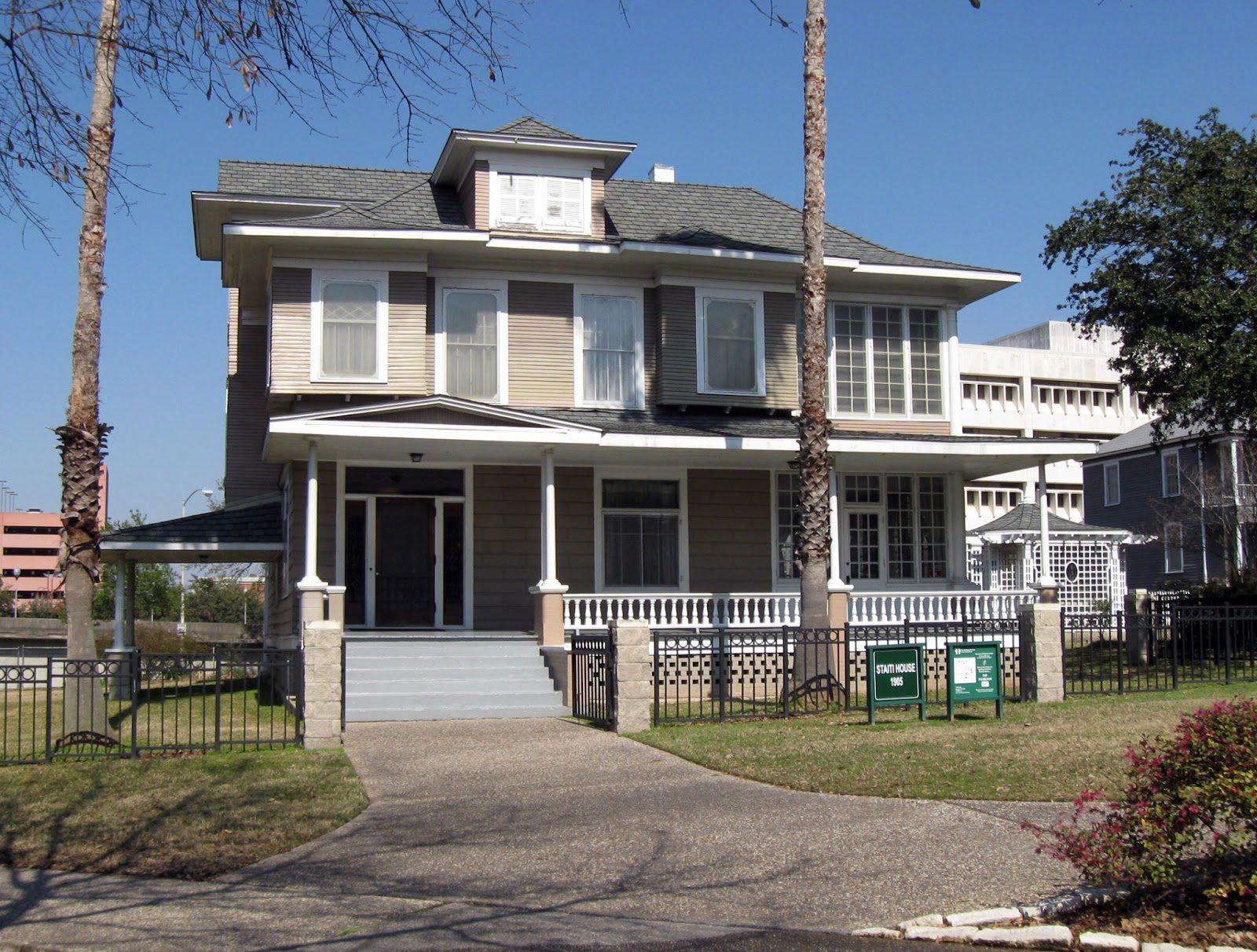
- The Staiti House was built in 1905 for Henry Staiti as an investment property. The structure has features that were ahead of their time, these include push-button electrics, internal plumbing, a kitchen that is attached to the house and a telephone. The building has fitted sunrooms, a framed patio, an internal communication system and lavish gardens.
Iconic sculptures
The statues in the park honor prominent Houston historical figures and events. Some of them complement the local authentic structures. In addition, there are some modern monuments and bronze statues.
The monuments are dated, which adds to the time travel effect. Visitors can access all monuments, buildings, fountains, gazebos and a small pond by sidewalk paths from any entrance. The park also includes a modest museum dedicated to preserving Houston’s history.
Some facts about the park
- Some Houston citizens contributed animals to Sam Houston Park until 1905 when city officials prohibited it. The animals included two wolves, Mexican eagles, rabbits, a great horned owl, prairie dogs, jaguars, capuchins, an alligator and a black bear. It was not possible to build a zoo here, but the Heritage Society regularly supports stray cats and dogs.
- A portion of the park was previously a cemetery. Among the deceased were the descendants of an American lawyer and poet, Francis Scott Key Fitzgerald, and Anson Jones, the last president of the Republic of Texas.
- The historic houses in the park were originally inhabited by people of many ethnicities, including Anglo-Africans, Germans, Italians and French, but no Latin Americans. As a result, to honor their culture, the Heritage Society commissioned a large mural demonstrating Mexican-Houston holidays and buildings.
- The park is a popular venue for weddings and other special occasions. Local buildings are frequently used as sets for music videos and movies.
- Every year, approximately 250,000 people visit the park for guided tours of historic buildings, festivals, sporting events or simply walking around.