

The development of education and culture in a city greatly influences the impression it leaves. As the fourth most populous city in the United States, Houston excels in these areas. The city boasts a variety of universities, has a strong presence in the arts—especially in film and theater—and features an exquisite botanical garden that combines education and culture. Let’s explore this more on houstoname.
A Long Journey to Reality
The dream of having a botanical garden in Houston has been alive among the city’s elite for a long time. Discussions about its creation date back to the mid-20th century, but no concrete steps were taken. At the turn of the 21st century, conversations about creating a recreational space featuring regional flora and fauna were revived. At the time, Houston remained one of only two major U.S. cities without such an institution. The project truly began to take shape in 2019 when Houston’s mayor, Sylvester Turner, proposed “a long-term investment in Houston’s tourism.” The idea was initially met with skepticism, as there seemed to be no available space within the city limits for such a large-scale project. However, a solution was found. The Glenbrook Park Golf Course, located along Sims Bayou southeast of downtown, was chosen as the perfect location. The local community raised $21 million to lease the land, while the city itself did not allocate funds.
Construction of the Houston Botanic Garden began, with global engineering firm Walter P Moore leading the project. The firm engaged more than 20 specialists who, as it turned out, created a true oasis that mimics the natural beauty of the Texas coast and the Gulf of Mexico. Spanning 53.5 hectares, this urban paradise came to life, officially opening on September 18, 2020.
Unique Design
The project planners undertook a monumental task. To grow and nurture plants from different climate zones in Houston’s subtropical monsoon climate, they had to modify the soil composition. The topsoil was removed, several tons of various clay types were imported, and innovative engineering solutions were implemented, allowing non-native plants to thrive. The botanic garden sits on both sides of Buffalo Bayou, an area prone to flooding. To protect against potential washouts and water damage, a special flood drainage system was installed.
A Place for Rest, Enjoyment, and Learning
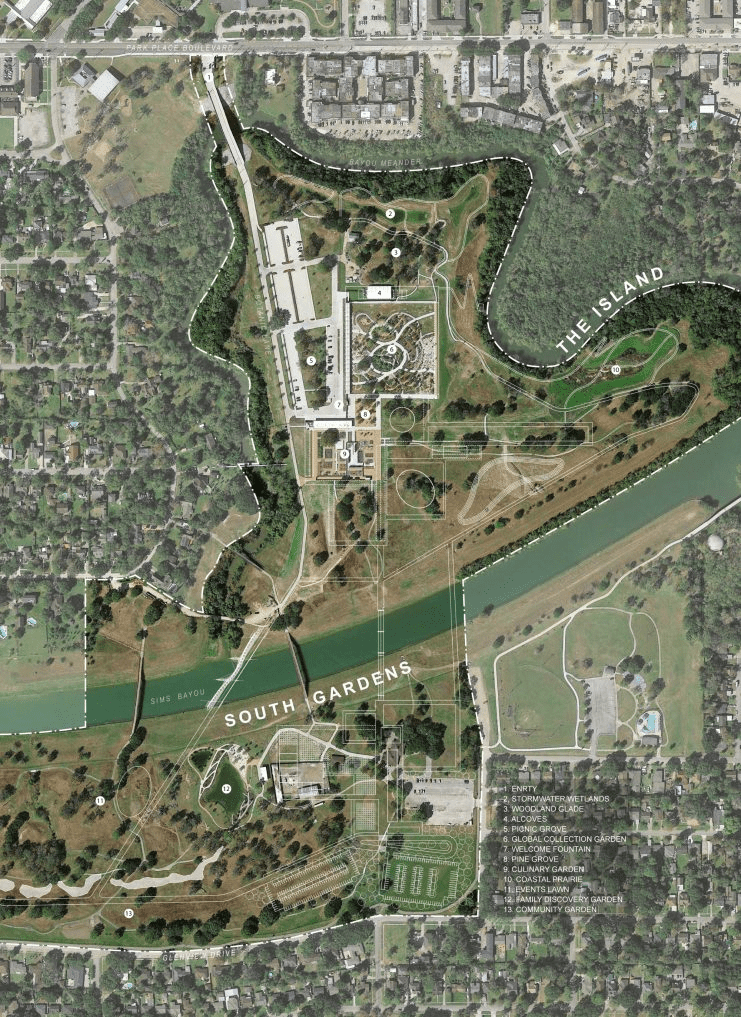
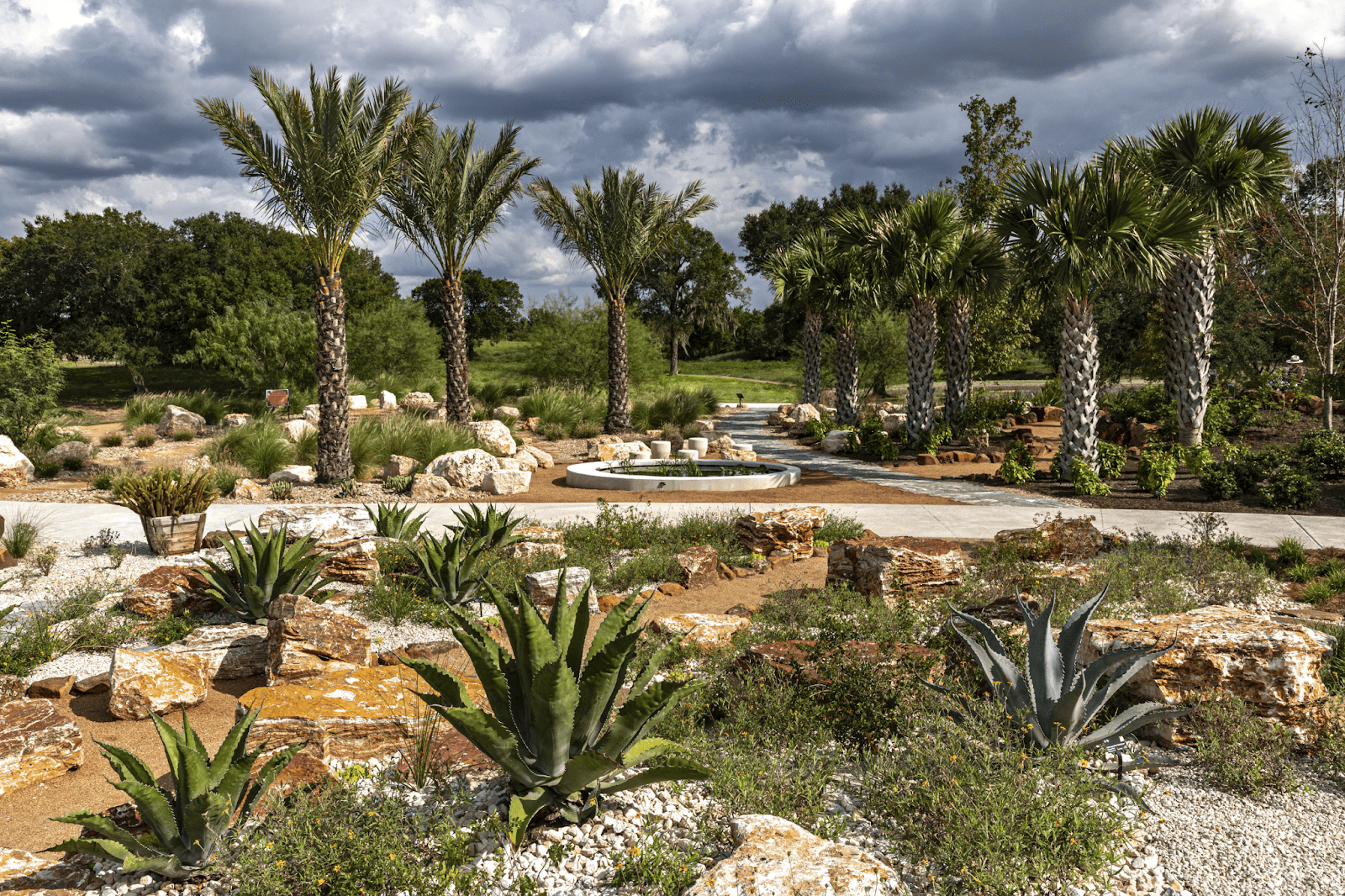
The Houston Botanic Garden offers visitors eight distinct locations, each serving as more than just a place to relax or enjoy aesthetic beauty—it is also a powerful educational resource. Upon entering, visitors are greeted by an alley of live oaks, symbolizing the transition from the bustling city to the peaceful oasis of nature. The next areas include the Global Collection Garden, Susan Garver Family Discovery Garden, Culinary Garden, Pine Grove, Community Garden, Woodland Glade, Wetlands, and Coastal Prairie. Exploring all the locations requires walking over four kilometers. Each zone offers something unique: in the Global Collection Garden, visitors can see a wide array of global flora and fauna. Other sections offer deeper insight into local ecosystems, the beauty of colors and forms, and the scents of various plants and the sounds of Texas’ wild nature. In the Culinary Garden, visitors can also indulge their taste buds by sampling nature’s bounty.
As a family-friendly destination, the garden also offers a water play area where children can let loose while parents rest. For intellectually curious visitors, there are sections providing detailed descriptions of the medicinal properties of various plants. After an eventful day of learning and exploration, guests can recharge at several eateries or bring their own food for a picnic. Before leaving, a visit to the gift shop is a must, where visitors can purchase souvenirs, literature, and even seeds to plant at home.
Educational Programs
The Houston Botanic Garden is more than just a place for relaxation and entertainment. The garden regularly hosts various educational events, scientific research activities, conferences, lectures, and hands-on workshops. Visitors can learn about concrete steps for environmental conservation, try their hand at planting, and discover fascinating facts about the region’s flora. The garden’s mission is to foster harmonious growth in Houston’s residents through knowledge of the natural world, its sustainable use, and the joy of coexistence. The garden’s slogan aptly reflects this: “Enriching life through discovery, education, and the conservation of plants.”