

A megalopolis that grew in a low-lying area on the coast of the Gulf of Mexico has always been vulnerable to hurricanes and floods. However, it was devastating events like Hurricane “Harvey” in 2017, and subsequent weather phenomena such as Tropical Storm “Beryl,” which served as a reminder of the danger, that became catalysts for fundamental changes in the city’s environmental and urban planning policies. These catastrophes not only exposed Houston’s vulnerabilities but also forced it to fundamentally re-evaluate its philosophy of water resource management and interaction with the environment. Read more about how the city is responding to these challenges at houstoname.
Point of No Return
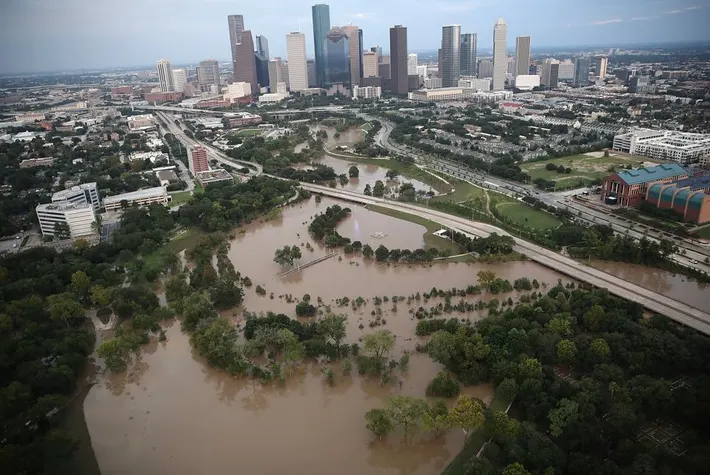
“Harvey” went down in history as one of the most destructive hurricanes in the United States. It struck Houston with unprecedented rainfall. In some areas, over 1500 mm of rain fell in just a few days. This led to widespread, catastrophic flooding that submerged hundreds of thousands of homes, caused dozens of deaths, and resulted in billions of dollars in damages.
The consequences of “Harvey” clearly demonstrated Houston’s systemic problems. Years of rapid, uncontrolled expansion without proper zoning led to the development of natural water absorbers – coastal prairies and wetlands. Concrete and asphalt replaced soils that could have absorbed rainwater, turning it into surface runoff. The existing water management systems – bayous, reservoirs, and drainage canals – proved unprepared for such a volume of water. One of the reasons identified by the hurricane’s analytical commission was the outdated data used in the city’s design. Furthermore, “Harvey” exposed issues of environmental justice, as low-income communities located in low-lying areas were the most severely affected.
“Harvey” uncovered many systemic problems. For example, the previous algorithm for such natural disasters – “drain it as quickly as possible” – proved ineffective and even dangerous.
Reinforcing Lessons
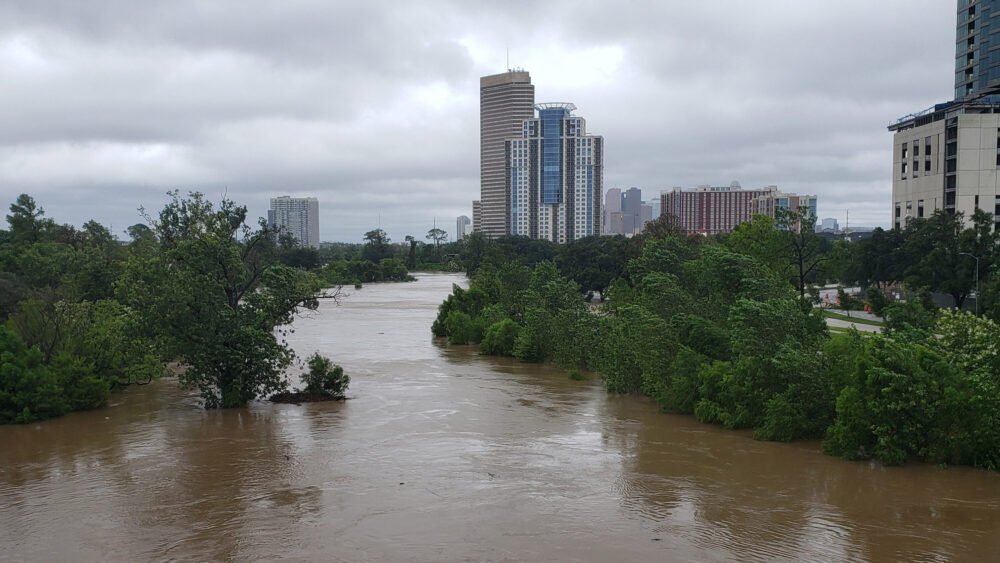
“Beryl” did not have the same destructive scale, but it played the role of a “reminder” and “reinforcer” of the lessons learned from its older brother, “Harvey.” Each subsequent major rainfall event or storm reinforced the understanding that this was not a one-time occurrence but a new reality to which the city must adapt. The faster effective decisions are made, the easier Houston will adapt and with less hardship.
“Beryl” highlighted problems in the implementation of new strategies or revealed new vulnerabilities. For instance, in the city’s power grid, warning systems, or evacuation procedures. This maintained pressure on city authorities and the public not to deviate from the chosen course of change.
From Concrete to Green
Following these destructive lessons, Houston’s environmental policy is undergoing fundamental changes. The city, which for decades relied on traditional, mostly “gray,” engineering solutions to manage water, has now recognized their insufficiency. This painful experience has forced the city authorities and the community to rethink their interaction with nature. The city government was compelled to acknowledge that further development is impossible without considering the growing climate threat.
Now, Houston is actively transitioning to an integrated strategy that prioritizes sustainability and harmony with the environment. This is no longer just about building dams or draining land but a holistic approach that seeks to utilize natural processes to protect the city. The focus has shifted to creating “green” barriers and absorption systems that allow the city to “breathe” and cope with excess water, rather than simply repelling it. This transformation reflects a deep understanding that Houston’s future depends on its ability not only to recover from storms but also to strategically build a resilient urban ecosystem.
- Shift from “drain it” to “detain it.” Instead of trying to remove rainwater from the city as quickly as possible, the new policy focuses on retaining it, storing it, and gradually releasing or absorbing it into the ground.
- Massive investments in flood control projects. In 2018, Harris County voters approved a $2.5 billion bond issuance to fund over 200 flood control projects. The city is also actively seeking federal funds to modernize existing systems and expand and deepen bayous.
- Revision of building codes and zoning regulations. Stricter limitations are being implemented on development in the most vulnerable flood zones. New buildings and significant renovations are required to have foundations raised significantly above the 100-year flood plain level.
- Emphasis on nature-based solutions (“green infrastructure”). The idea of integrating “green” infrastructure such as rain gardens, bioswales, and permeable surfaces into the urban landscape is being promoted to absorb water and reduce surface runoff.
- Preservation and restoration of prairies and wetlands. The city and county are actively collaborating with conservation organizations to protect and restore remaining coastal prairies, which are effective natural water absorbers.
- Improved data and mapping. Investments in more accurate flood zone mapping and the implementation of real-time water level monitoring systems have been significantly increased to improve early flood warning.
Challenges and Ongoing Struggle
Despite significant changes, Houston still faces serious challenges.
| Problem | Description |
| Cost | Large-scale infrastructure projects require enormous financial investment. |
| Political Will | Maintaining political will and funding at all levels of government is essential. |
| Scale of the Problem | Solving a problem that spans the entire region is extremely complex. |
| Private Property Rights | In Texas, private property has an exceptionally high degree of protection. This sometimes complicates the implementation of regulatory changes or the acquisition of land for flood control purposes. |
| Accelerating Climate Change | The pace of climate change may outpace the pace of adaptation and infrastructure construction. |
Confrontation or Living in Harmony?
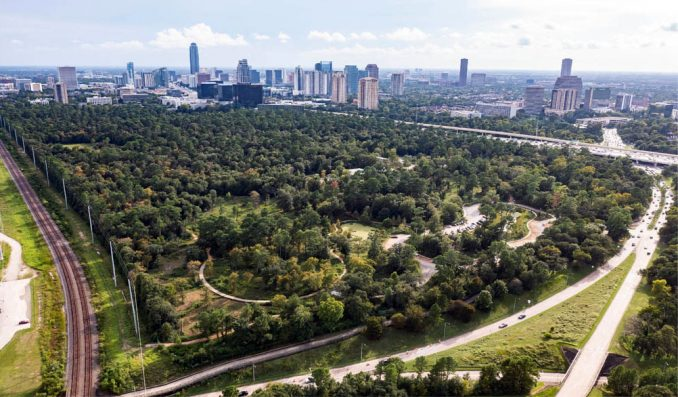
Recent years have clearly demonstrated that the world is changing, especially its ecology. Therefore, the challenges from nature, which is forced to defend itself against human activity, will only increase. Humanity must also draw conclusions. Houston proves that preparing for natural cataclysms is possible and worthwhile. Of course, this transformation is not without difficulties. The enormous financial investments required to modernize infrastructure, the political will that must overcome short-term interests for long-term sustainability, and the very speed of Houston’s urbanization – all these create huge obstacles. The need to balance relentless economic growth with environmental sustainability remains the main task.
The city, once symbolizing limitless expansion, is now becoming a testing ground for exploring how megacities can adapt to the new climatic reality. Its experience – painful yet valuable – serves as a lesson for any city worldwide facing increasing climate threats. Houston’s future will depend not only on its ability to recover from storms but also on its tireless determination to rethink its relationship with nature, transforming disasters into a catalyst for a more sustainable and safe existence.Hurricane “Harvey” and subsequent events like “Beryl” served as a harsh but necessary lesson for Houston. They profoundly changed the city’s mentality and environmental policy, forcing it to shift from a reactive to a proactive strategy. The city now recognizes that its future is inextricably linked to its ability to withstand extreme weather events and live in harmony with nature. This is a path of continuous investment, scientifically informed planning, and active public participation. The struggle for a clean and sustainable future for Houston is ongoing.
